


Piranmalai Kodunkundreeswar Temple
About Piranmalai Kodunkundreeswar Temple
Local tradition attributes the formation of Piranmalai itself to a mythological contest. According to the account preserved in temple lore, Vayu (the wind god) and Adisesha (the cosmic serpent) once disputed which possessed greater strength. Their competition involved Adisesha coiling around Mount Meru while Vayu attempted to move it through sheer force. As Vayu's winds intensified, fragments broke away from Meru and fell to earth. One such fragment became the hill now known as Piranmalai, originally called Parambu Malai during the reign of the Chola-era chieftain Pari, one of the legendary seven great patrons. The name evolved over centuries into its present form.
The Mangaibagar Shrine and Its Significance
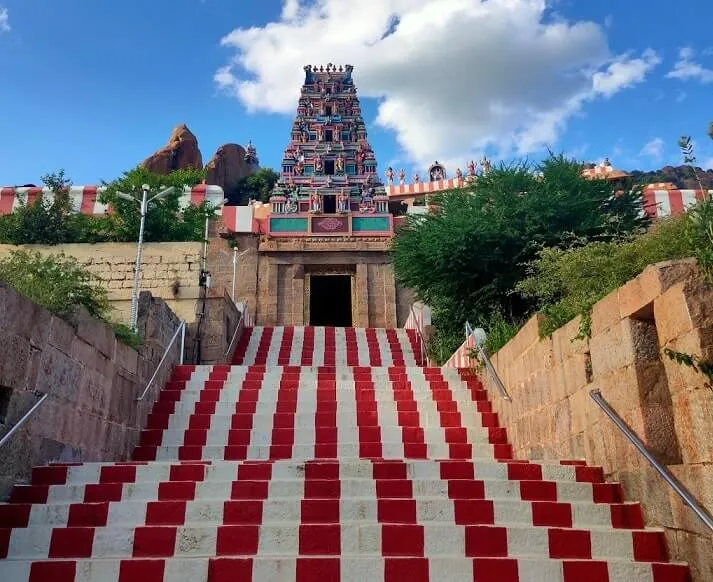
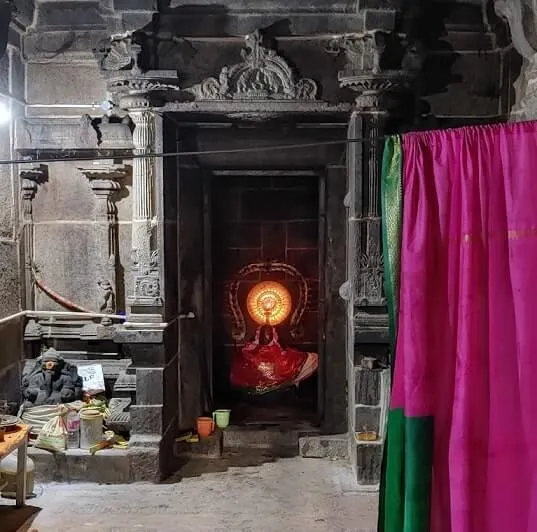
The hilltop sanctuary presents Shiva in an unusual iconographic form—as Mangaibagar (literally "half-woman"), depicted in bridal regalia alongside the goddess. This representation commemorates a boon granted to the sage Agastya, who sought the privilege of witnessing the deity in wedding form whenever he wished. The image is carved from a composite of nine medicinal herbs rather than stone, and consequently receives no ritual ablution. Instead, on full moon days, devotees apply fragrant oils and sandalwood paste. The shrine notably lacks the customary Nandi (bull) figure and flag post, as these are said to have remained at Kailash during the wedding ceremony depicted here. Worshippers believe that offerings made at this shrine, particularly those involving sandalwood and fragrant oils, can resolve marriage obstacles and fulfill desires.
Daily Worship and Visiting Hours
The temple operates on a divided schedule across its sanctuaries. Morning darshan runs from 6:00 AM to 12:00 PM. Evening hours are split: Mangaibagar and Vaduga Bhairavar receive worship from 4:00 PM to 6:30 PM, while Kodunkundranathar's evening darshan extends from 4:00 PM to 8:00 PM. Visitors should plan their visit according to which shrine they wish to access, as the hilltop location requires climbing and the staggered timings reflect the practical arrangement of worship across multiple levels. The temple follows the ritual practices of Shaivite tradition, with regular puja and abhisheka ceremonies conducted according to the Karana Agama.
Sacred Waters and Temple Features
The temple complex includes two significant theerthams (sacred water sources): Madhu Pushkarini and Thenaazhi Theertham. The site is also noted for its ancient Awak Puli (sleepless tamarind) tree, which holds religious significance in the temple's spiritual landscape. The architecture reflects cave temple construction, with carved sanctuaries integrated into the hillside itself. The sculptural work demonstrates considerable craftsmanship, though the temple's primary appeal lies in its spiritual significance and unique topography rather than monumental scale.
How to Reach and Practical Information
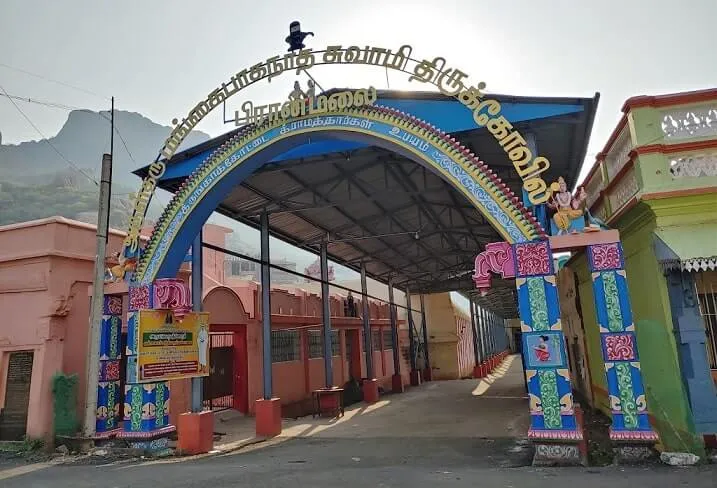
Piranmalai is located in Singampunari Taluk, Sivaganga District, Tamil Nadu, at coordinates 10.23861111, 78.43694444. Regular bus services connect the village to Madurai (approximately one bus per hour from Anna Bus Stand via Ponnamaravathi), Singampunari, and Melur. The nearest major town is Ponnamaravathi. The postal address is Arulmigu Kodunkundreeswarar Temple, Piranmalai Post, Sivaganga District, PIN 624503. Visitors should wear modest clothing appropriate to temple etiquette and be prepared for the climb to the hilltop shrine. The site's elevation means sturdy footwear is advisable. Another Paadal Petra Sthalam, Tirupputtur, lies approximately 26 kilometers away via Ponnamaravathi, allowing for combined visits to multiple sacred sites.
How to reach


Temples near Piranmalai Kodunkundreeswar Temple

Irani Kovil
Irani Kovil is one of nine temples built by Nattukkotati Nagarathars in Sivaganga District, Tamil Nadu, housing multiple shrines including the primary deity Aatkonda Nathar and…
Sowmya Narayana Perumal temple
An ancient Dravidian temple in Thirukoshtiyur, Tamil Nadu, dedicated to Sowmyanarayana Perumal (Vishnu) and his consort Thirumamagal (Lakshmi). One of the 108 Divya Desams, it i…
Elai Kaatha Amman Temple
Elai Kaatha Amman Temple is a rural Hindu shrine in Madurai district, Tamil Nadu, revered for its September festival where seven young girls are ceremonially honored as goddesse…
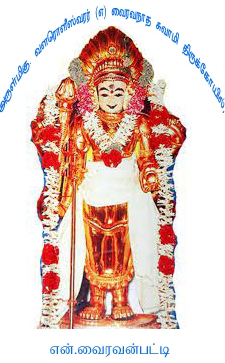
Vairavanpatti Vairavan Temple
The Arulmigu Valarolieswarar and Vairavaswamy Temple in Vairavanpatti is an ancient Bhairava shrine approximately 500 years old, featuring distinctive Tamil architectural elemen…

Pazhamudircholai Murugan Temple
Pazhamudircholai Murugan Temple is a forest-set shrine dedicated to Lord Murugan, uniquely positioned as the only Arupadai Veedu (six abodes of Murugan) located within a natural…
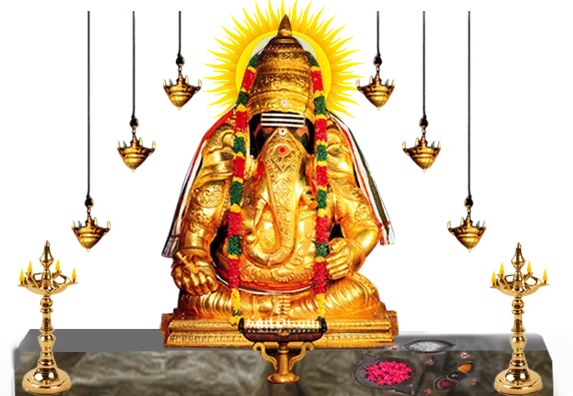
Karpaka Vinayakar Temple
Karpaka Vinayakar Temple is a 7th-century rock-cut cave shrine in Pillayarpatti village, significantly expanded over centuries, dedicated to Lord Ganesha and renowned for its gr…