Vairavanpatti Vairavan Temple
About Vairavanpatti Vairavan Temple
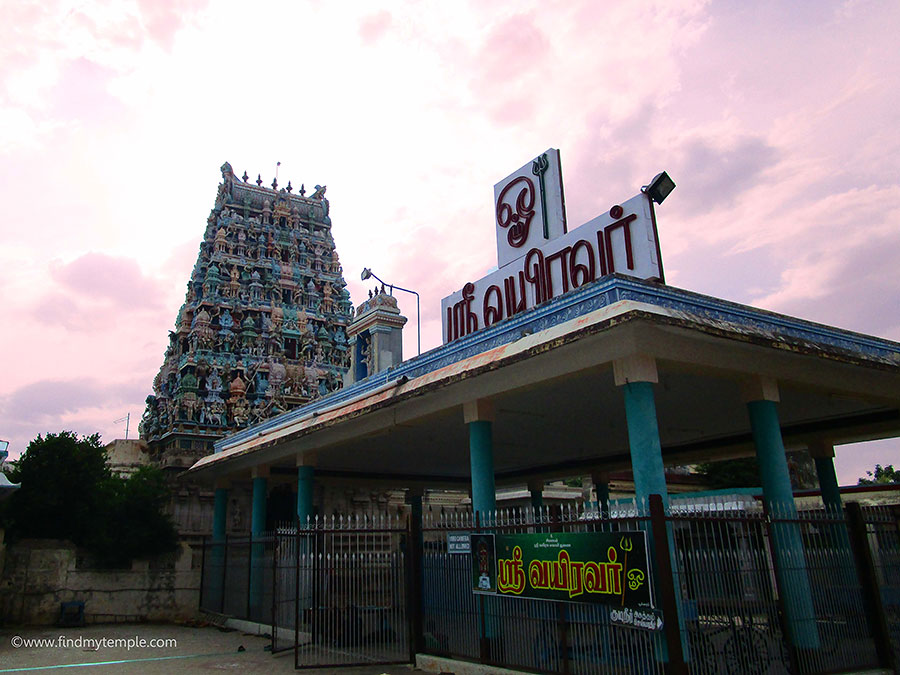
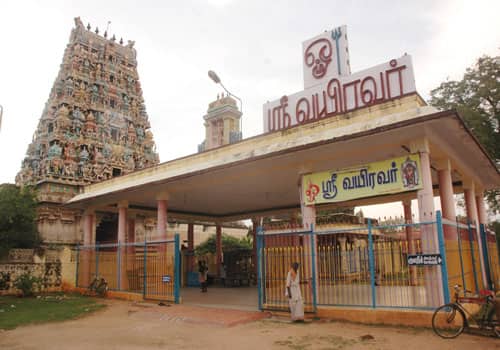
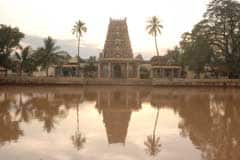
The temple's origins trace back roughly five centuries, when it was known historically as Vadukanathapuram. Over this long period, it has accumulated distinctive architectural features that reflect Tamil temple-building traditions. The structure includes a five-tiered rajagopuram (temple tower) that rises above the entrance, marking the shrine's presence in the landscape.
The temple demonstrates considerable sculptural sophistication. Within the sanctum's goshta (inner chamber), an image of Lord Rama appears in the form of Vishwarupa Anjaneya—Hanuman in his cosmic manifestation—in an attitude of worship. A mandap housing Lord Dakshinamurthy features a pillar carved with seven musical tones, while a separate shrine honours Chandikeswara. A mandap dedicated to Nandi, Shiva's bull vehicle, stands independently. The sculptural programme includes a warrior on horseback and a representation of a cave temple carved from single rock, all executed in the distinctive Tamil style. Three lizard sculptures positioned behind the Ambica shrine serve devotional purposes for those seeking relief from specific doshas (astrological afflictions).
Worship and Devotional Practices
The temple observes daily worship cycles aligned with traditional Hindu practice. Bhairava receives particular veneration on the eighth day of the lunar fortnight (Ashtami), when devotees offer vadamala—garlands woven from vada, a savoury Tamil preparation—as thanksgiving offerings. This practice reflects the integration of local culinary tradition into devotional expression.
The sacred spring created by Bhairava holds special significance in the temple's spiritual economy. Devotees traditionally bathe in these waters before worship, believing this practice brings blessings including the boon of children and liberation from fear and sin. The temple also attracts those seeking Rama's blessings through the Anjaneya image, with worship here believed to cultivate the quality of simplicity in devotees' lives.
Festivals and Auspicious Days
The temple observes Champakasura Sashti and Vinayaka Chaturthi (Pillayar Nonbu) as principal festivals. Beyond these fixed observances, certain lunar days and planetary configurations draw heightened devotional activity. Ashtami, Theipirai Ashtami, Sundays, Tuesdays, Pradosham, Maha Shivaratri, Pournami (full moon), and Amavasya (new moon) are considered especially auspicious for worship at this shrine. Visitors planning their pilgrimage around these dates will encounter the temple at times of particular spiritual significance.
Visiting Information
The temple opens at 6:00 a.m. and closes at 1:00 p.m. in the morning session. The evening session runs from 4:00 p.m. to 8:30 p.m. These timings allow flexibility for both early morning and evening darshan. Visitors should plan accordingly, as the midday closure is substantial.
As with most Hindu temples, modest dress is customary—covered shoulders and knees are appropriate. Leather items are typically removed before entering the sanctum. The temple maintains traditional protocols for worship; if you wish to perform specific rituals or make offerings, the temple staff can provide guidance. Photography policies vary; it is respectful to ask before photographing within the sanctum or during active worship.
Location and Access
Vairavanpatti lies approximately 8 kilometres from Tiruputhur. The village is situated on bus routes connecting to Karaikudi, making it accessible by public transport. The temple's coordinates are 10.128726, 78.657807. For those travelling by private vehicle, these coordinates can be entered into navigation systems. The address is Sri Vairavanswami Temple, Vairavanpatti, Sivagangai District, Tamil Nadu 630212. The temple's phone number is +91-4577-264237, should you wish to confirm timings or make enquiries before visiting.
How to reach
Temples near Vairavanpatti Vairavan Temple
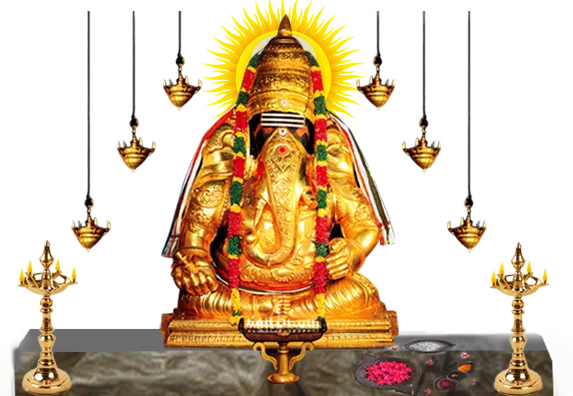
Karpaka Vinayakar Temple
Karpaka Vinayakar Temple is a 7th-century rock-cut cave shrine in Pillayarpatti village, significantly expanded over centuries, dedicated to Lord Ganesha and renowned for its gr…
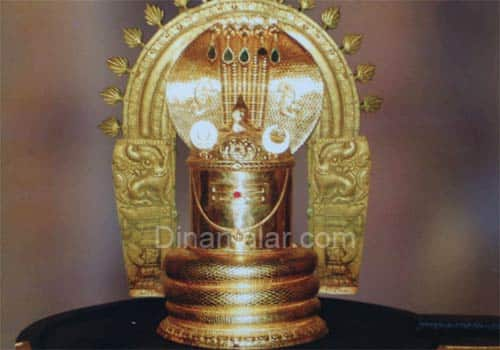
Nemam Jeyangkonda Choleswarar Temple
An ancient Shiva temple in Nemam near Karaikudi, dedicated to Lord Chozheeswarar (Soleeswarar) and his consort Soundara Nayaki. One of nine ancestral Nagarathar temples in the C…
Shanmughanathar Temple, Kunnakudi
Shanmughanathar Temple in Kunnakudi is a sacred Murugan shrine perched on Mayilmalai hill near Karaikudi, featuring eighth-century Pandyan rock-cut caves with rare guardian deit…

Irani Kovil
Irani Kovil is one of nine temples built by Nattukkotati Nagarathars in Sivaganga District, Tamil Nadu, housing multiple shrines including the primary deity Aatkonda Nathar and…
Nagarasoorakudi Desikanathar Temple
Desikanathar Temple in Nagara Surakkudi is one of nine Nagarathar temples in the Chettinad region, dedicated to Lord Shiva with his consort Avudainayaki. The temple's origins tr…
Sowmya Narayana Perumal temple
An ancient Dravidian temple in Thirukoshtiyur, Tamil Nadu, dedicated to Sowmyanarayana Perumal (Vishnu) and his consort Thirumamagal (Lakshmi). One of the 108 Divya Desams, it i…