
Nuggikeri
About Nuggikeri
The temple's roots extend into antiquity, with traditions linking it to the Mahabharata era. However, the temple as it exists today was reinstalled in the 15th century through the efforts of Sri Vyasaraja Tirtha, a significant religious figure whose intervention shaped the temple's modern form. The presiding deity is represented by a Saligram stone idol, a sacred stone form traditionally associated with Vishnu and his avatars in Hindu worship.
This layering of ancient origins with medieval restoration reflects a common pattern in Indian temple history, where sacred sites undergo cycles of decline and renewal across centuries. The 15th-century reinstatement marks an important chapter in the temple's documented history, establishing it as an active place of worship in its current location.
Daily Darshan and Worship
The temple opens for darshan twice daily: from 06:00 to 12:00 in the morning, and from 14:00 to 20:00 in the afternoon. These timings allow devotees flexibility in planning their visits according to their schedules and spiritual preferences. During peak visiting periods, darshan wait times typically range from 30 minutes to one hour, though this varies depending on the day and season.
Visitors should plan their approach strategically. Early morning and late evening hours generally offer a more peaceful darshan experience with fewer crowds. The temple's dual-session schedule accommodates both those who prefer the spiritual atmosphere of dawn worship and those who visit in the cooler evening hours.
Saturdays and Hanuman Jayanti
The temple experiences notably increased devotee traffic on Saturdays, when special observances for Lord Hanuman draw larger congregations. Hanuman Jayanti, the celebration of Hanuman's birth, similarly attracts significant crowds to the shrine. These occasions hold particular importance in the devotional calendar, as Saturday is traditionally associated with Hanuman worship across many Hindu communities, and his birth anniversary represents a major festival in his honour.
Visitors planning to attend during these special occasions should expect crowded conditions and may wish to adjust their expectations regarding darshan wait times and the overall pace of worship. The surge in devotees during these periods reflects the temple's role as a major centre of Hanuman veneration in the region.
Location and Access
The temple sits on Airport Road in Nuggikeri, approximately 18 kilometres from central Hubli and roughly 2 kilometres from the Hubballi-Dharwad bypass on the Dharwad-Kalghatgi Highway. The coordinates 15.4130738, 75.005425 provide precise location data for those using navigation applications. The temple's proximity to the bypass makes it reasonably accessible for travellers moving between Hubli and Dharwad, though the distance from the city centre means visitors should plan transport accordingly.
Parking is available at the temple, facilitating visits by those arriving by private vehicle. The location near Nuggikeri Lake adds to the temple's setting, though the sources do not detail the extent or nature of this water feature's relationship to the shrine.
Visiting Practicalities
Visitors should arrive with realistic expectations about darshan duration and temple facilities. The temple follows standard Hindu worship protocols; modest dress is customary, and shoes are typically removed before entering the sanctum. The temple's multiple shrines mean that a complete visit encompassing all deities requires adequate time and physical stamina, particularly during crowded periods.
The temple's location on a highway approach means that facilities may be limited compared to larger urban temples. Visitors are advised to carry water and plan their visit duration accordingly. Those seeking specific pujas or rituals should inquire at the temple regarding availability and procedures, as the sources do not detail the full range of ritual services offered beyond standard darshan.
How to reach
Temples near Nuggikeri
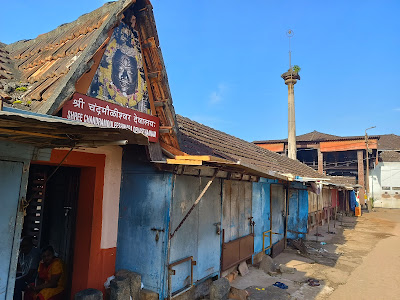
Chandramouleshwara Temple, Unkal
An 11th-century Shiva temple in Unkal, Hubballi, showcasing exceptional Chalukyan architecture with a rare four-faced Linga and intricate black granite carvings.
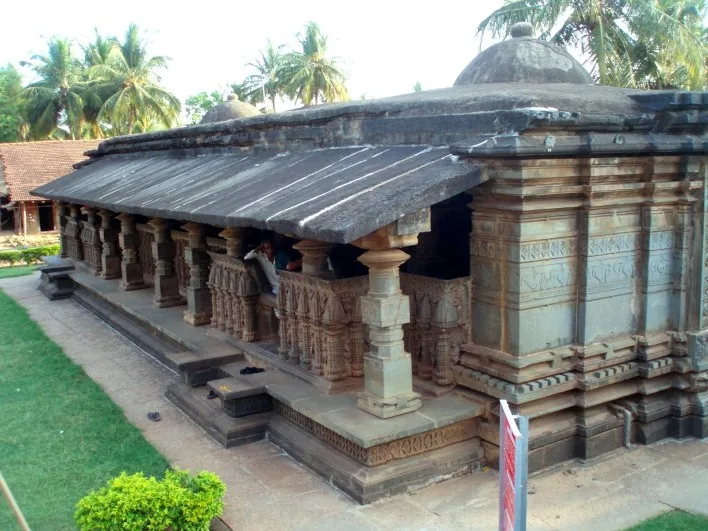
Kamala Narayana Temple, Degaon
Kamala Narayana Temple in Degaon, Karnataka, was constructed in 1174 CE by the Kadamba dynasty and features three shrine cells dedicated to Lord Narayana, Lakshmi Narayana, and…
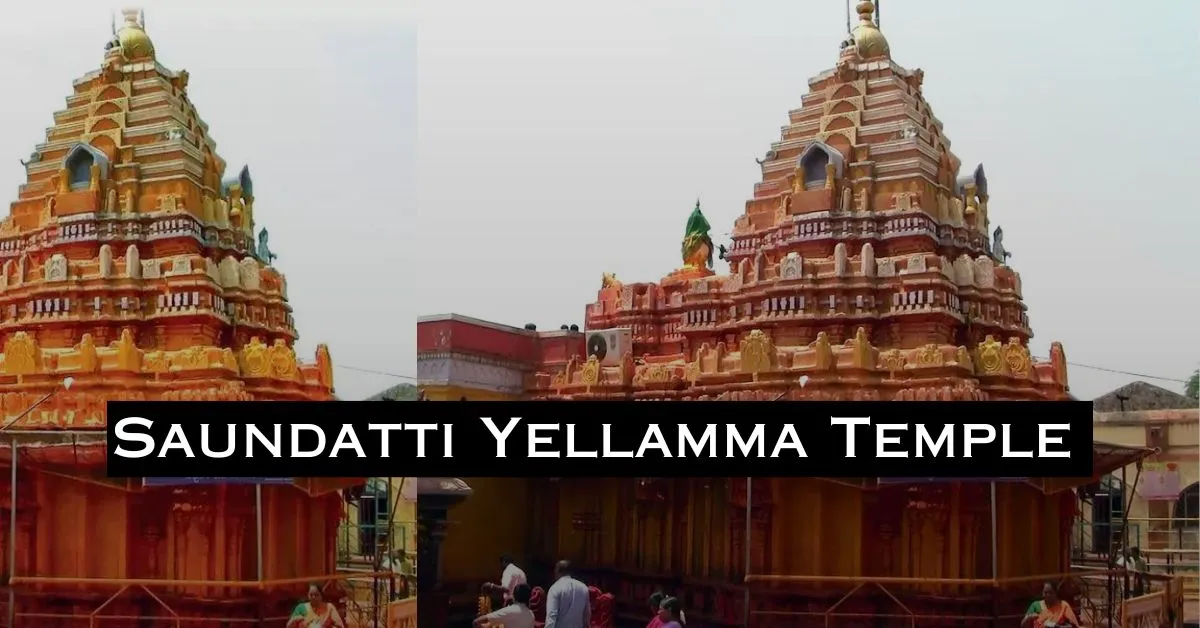
Yellamma Temple, Saundatti
Yellamma Temple in Saundatti, Karnataka, is a hilltop shrine dedicated to Goddess Renuka, revered as a fertility deity and an important pilgrimage destination located about 5 ki…
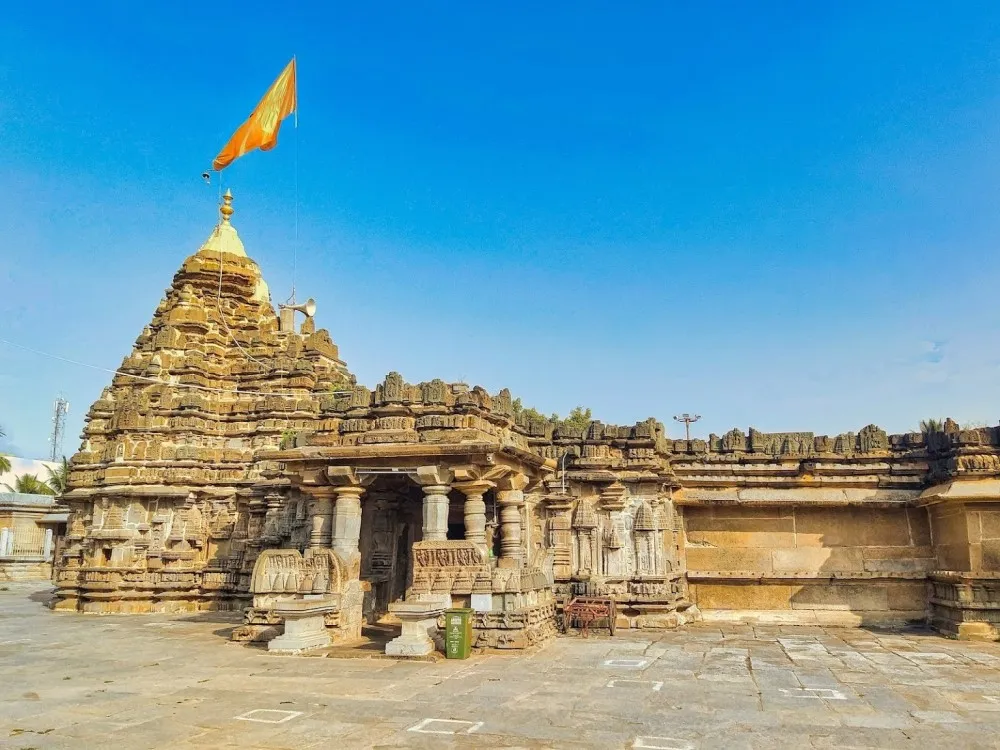
Someshwara Temple, Lakshmeshwara
Someshwara Temple in Lakshmeshwara is a Hindu shrine dedicated to Lord Shiva, originally constructed by the Kalyani Chalukyas and restored between 2012 and 2015 by the Archaeolo…
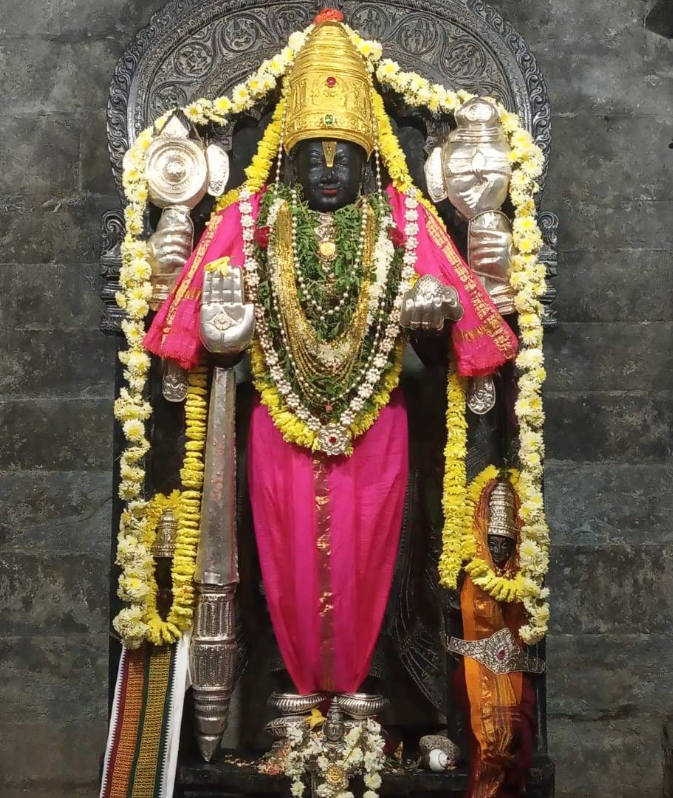
Veeranarayana Temple, Gadag
Veeranarayana Temple in Gadag is an 11th-century Hindu shrine dedicated to Narayana (Vishnu), built by the Chalukyas of Kalyani and protected as an archaeological monument.
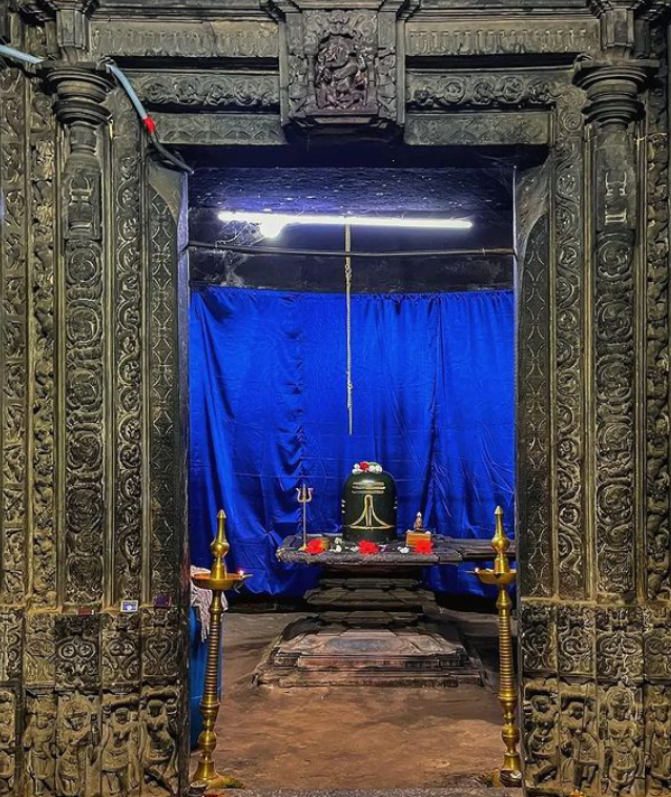
Tarakeshwara Temple, Hangal
The Tarakeshwara Temple in Hangal, Karnataka, is an ancient Hindu sanctuary dedicated to Lord Shiva, renowned for its exquisite Vesara architecture and the celebrated 'Lotus of…