Karya Binayak Temple
About Karya Binayak Temple
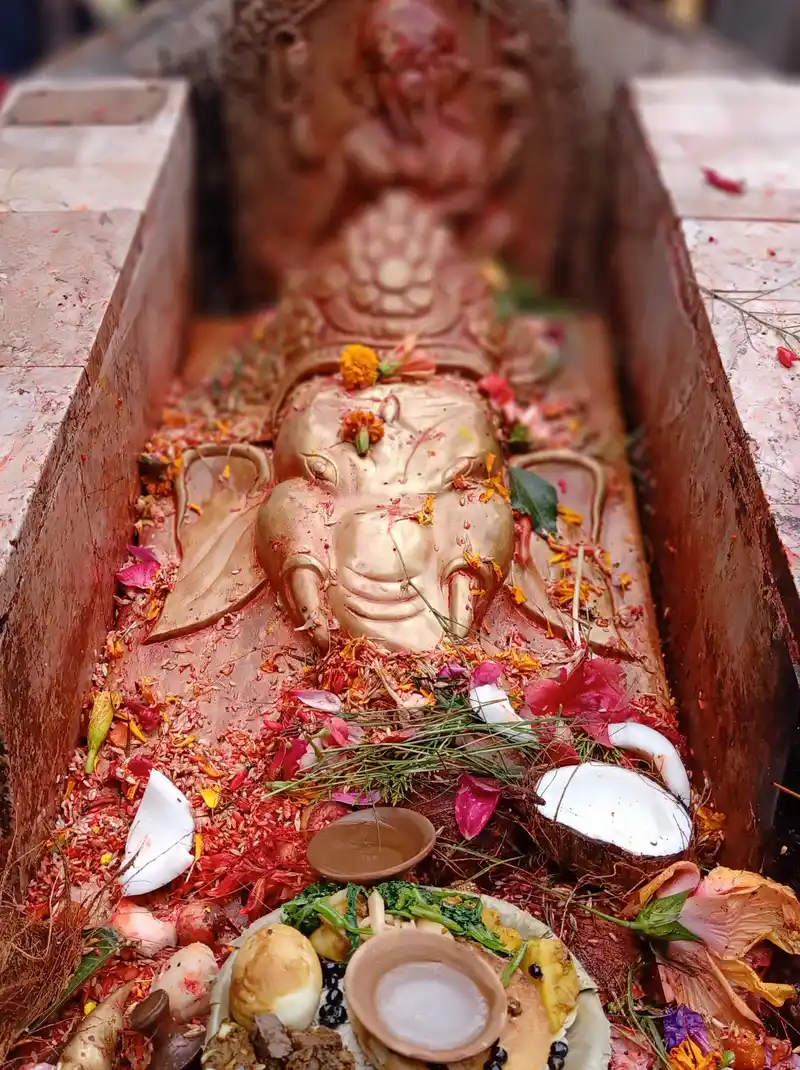
The temple was established in 1661 AD (Nepal Sambat 781), according to local records. Its founding is linked to the construction of Rato Machhindranath Temple, one of the valley's most significant shrines. According to local tradition, the temple was created to secure divine favor and good fortune for the successful completion of that major religious project. This connection to Rato Machhindranath places Karya Binayak within a broader sacred narrative of the Kathmandu Valley, where multiple temples and shrines form an interconnected spiritual landscape shaped by centuries of devotion and community effort.
Location and Setting
Karya Binayak sits on a forested ridge positioned between the historic settlements of Bungamati and Khokana in Lalitpur District, approximately 10 kilometres south of central Kathmandu. The temple occupies what local sources describe as a vital position within the valley's ancient sacred geography. Its placement in this rural, wooded setting distinguishes it from urban temples, offering visitors a quieter, more village-centered atmosphere while remaining accessible to pilgrims from the city.
Architecture and Appearance
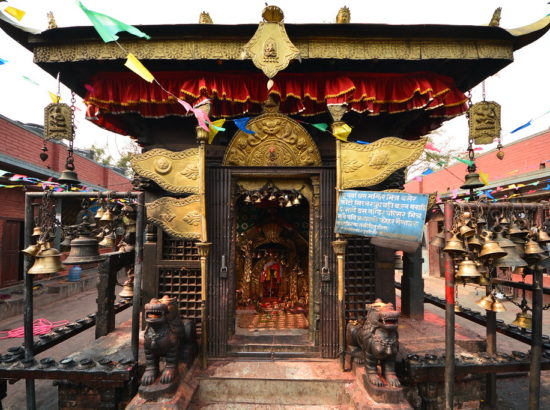
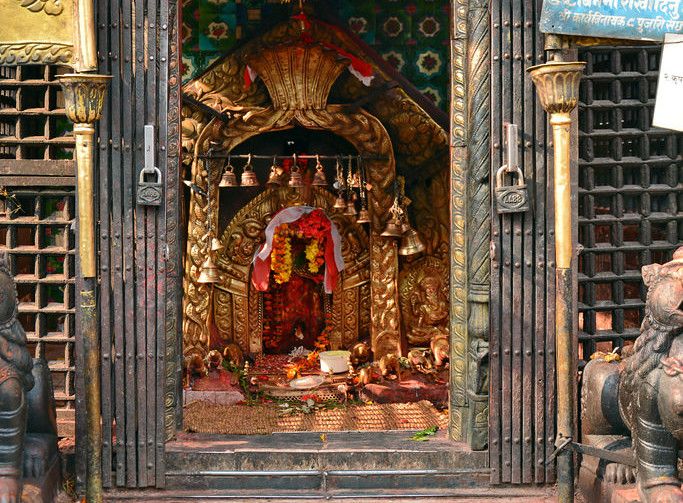
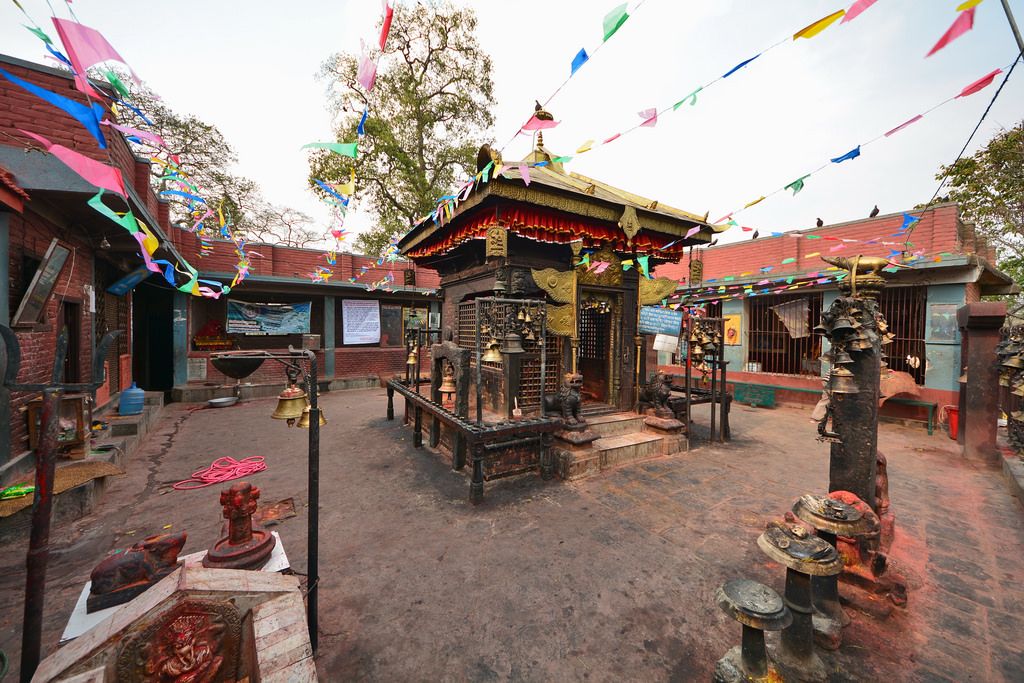
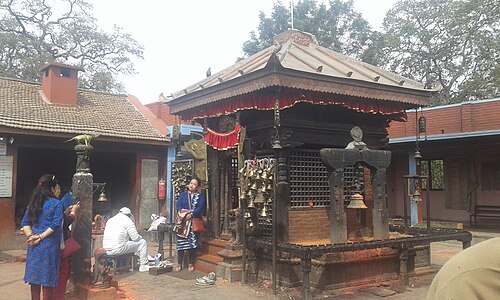
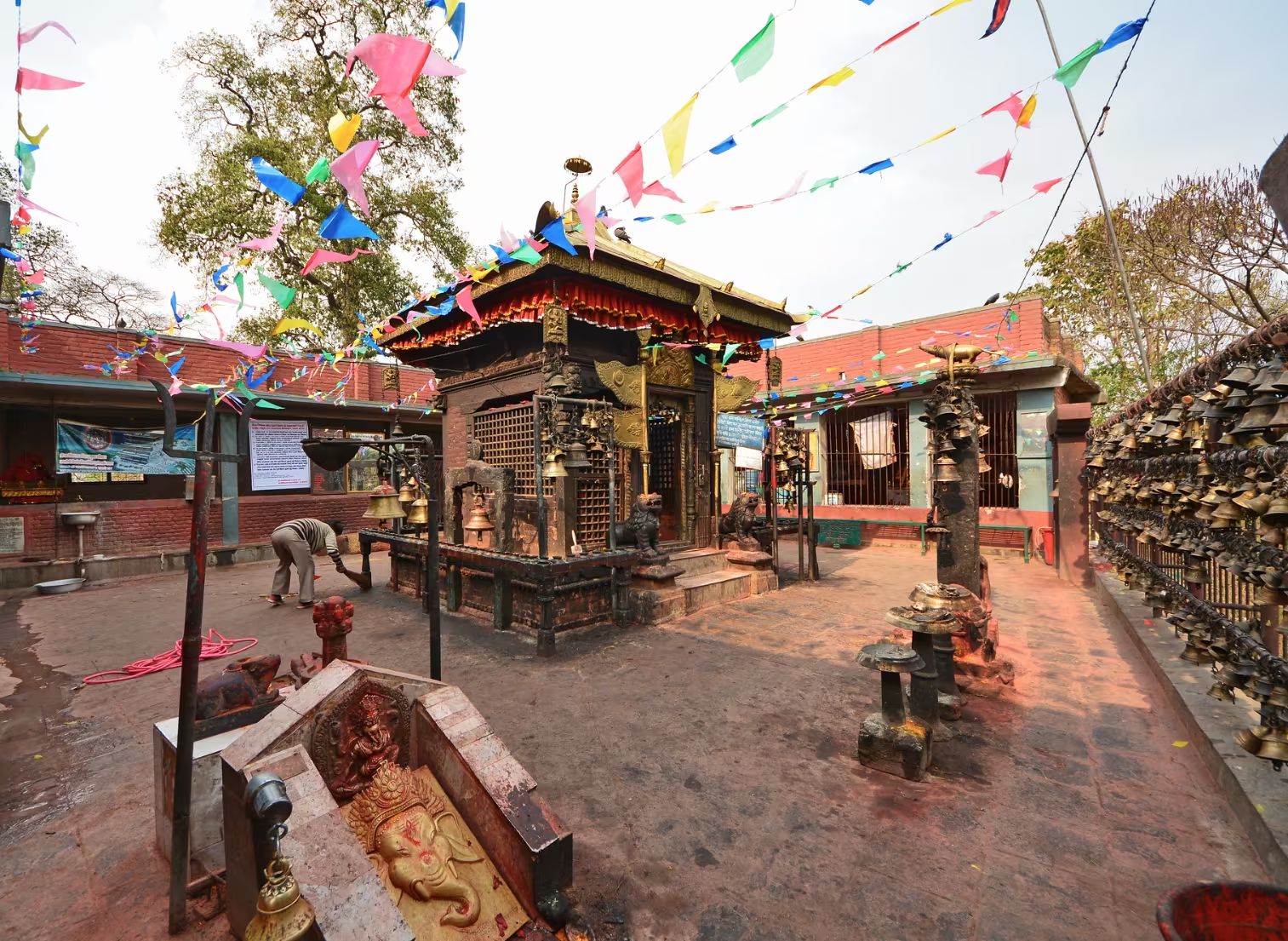
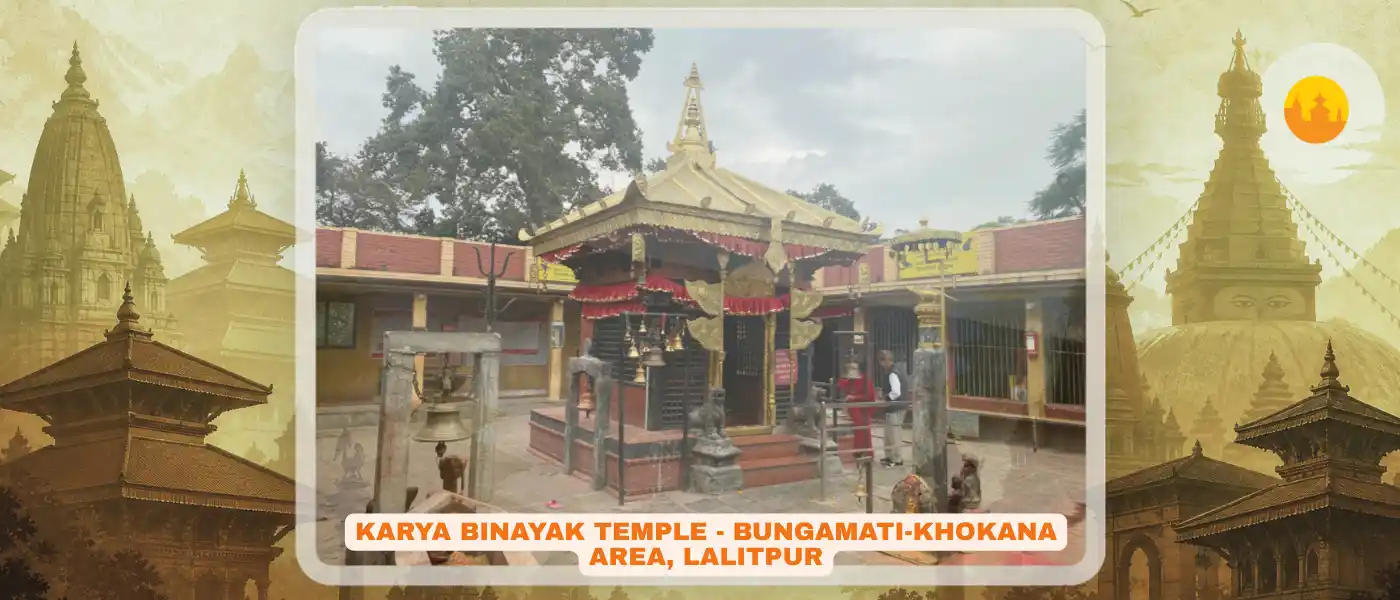
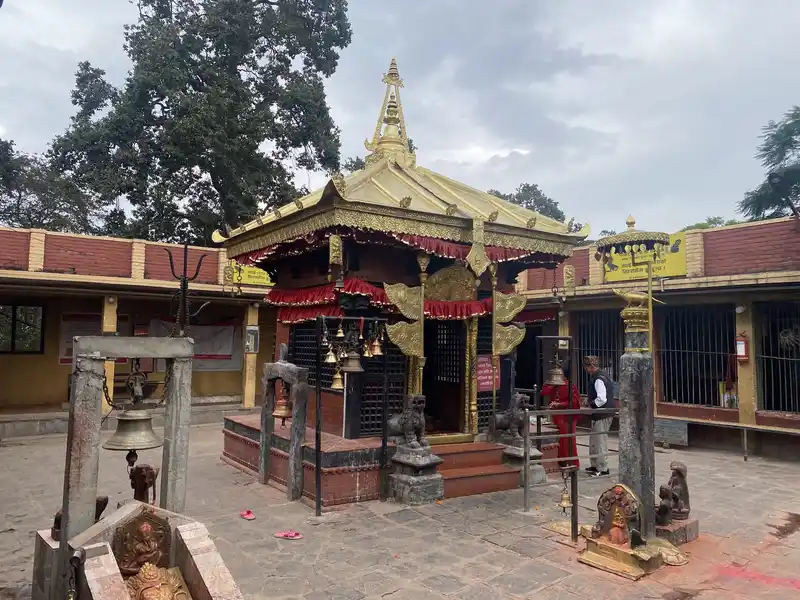
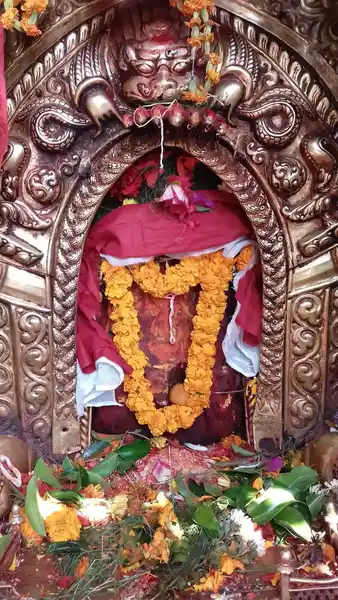
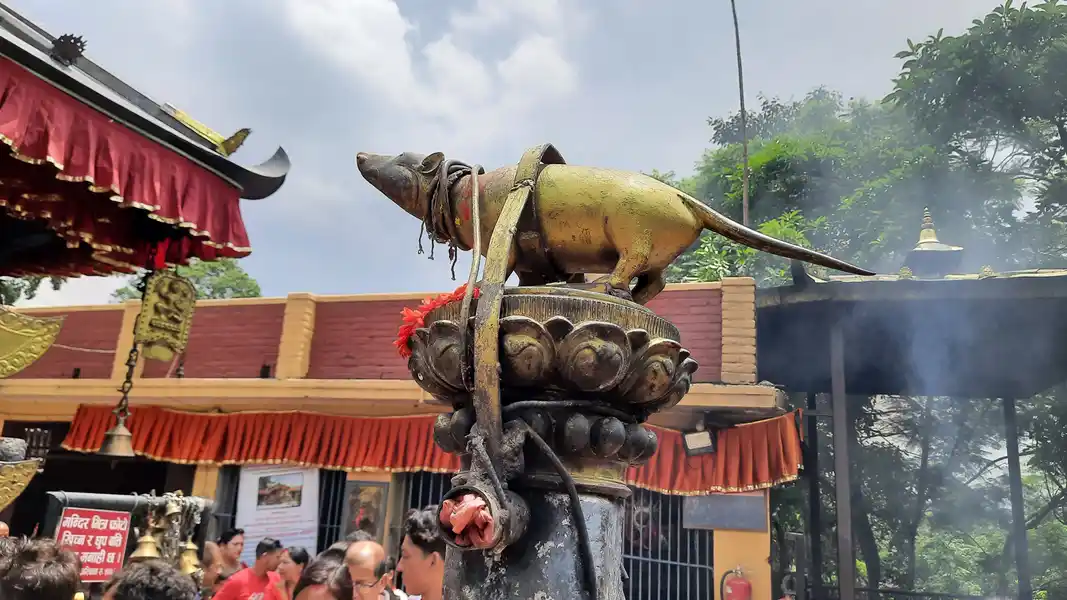
The temple is modest in scale but distinctive in its artistic character. Bells adorn all facades of the structure, lending it a traditional aesthetic. Two metal flags flank the doorway on either side, contributing to its vintage appearance. Within the courtyard stands a figure of the mouse or rat—the traditional vehicle (vahana) of Ganesh—facing the shrine. This sculptural element is a signature feature of Ganesh temples throughout the region and remains visible even from a distance, serving as a recognizable marker of the shrine's dedication.
Worship and Ritual Observance
Ritual activity at Karya Binayak follows patterns aligned with both weekly cycles and the lunar calendar. Tuesday and Saturday are regarded as especially auspicious days for worship and visitation. Beyond these weekly observances, devotional intensity peaks during specific months—Vaishakha, Bhadra, and Chaitra—and during Ganesh Chaturthi, the festival dedicated to Ganesh. The temple also hosts an annual Karyabinayak Ganesh Jatra, a procession in which the deity is brought to Rato Machhindranath Temple, carried around it three times, and then returned to the priest's home. This annual ritual reinforces the historical and spiritual connection between the two temples.
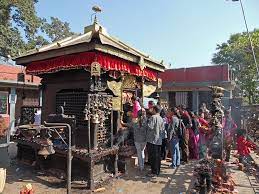
Devotees gather at the shrine to perform worship before undertaking significant endeavors, seeking the deity's blessing for successful outcomes. The temple remains deeply embedded in local Newar devotional practice, serving families and individuals from surrounding villages as well as pilgrims from further afield.
Visiting Information
Access to the temple is public, and the site presents no significant physical difficulty for visitors. The best times to visit are Tuesdays and Saturdays, when ritual activity is heightened and the atmosphere is most vibrant. Those planning a pilgrimage should consider visiting during the months of Vaishakha, Bhadra, or Chaitra, or during Ganesh Chaturthi for a fuller experience of the temple's sacred calendar. Visitors should observe standard temple etiquette: remove shoes before entering the shrine, dress modestly, and approach the deity with respectful intention. The temple's location between two villages means that facilities may be limited; visitors should plan accordingly and bring water if visiting during warmer months.
How to reach
Temples near Karya Binayak Temple
Jal Binayak Temple
Jal Binayak Temple is a sacred Hindu shrine dedicated to Lord Ganesh located in Chobhar, Kathmandu Valley, Nepal. It stands as one of the four principal Ganesh temples of the va…
Sheshnarayan Temple
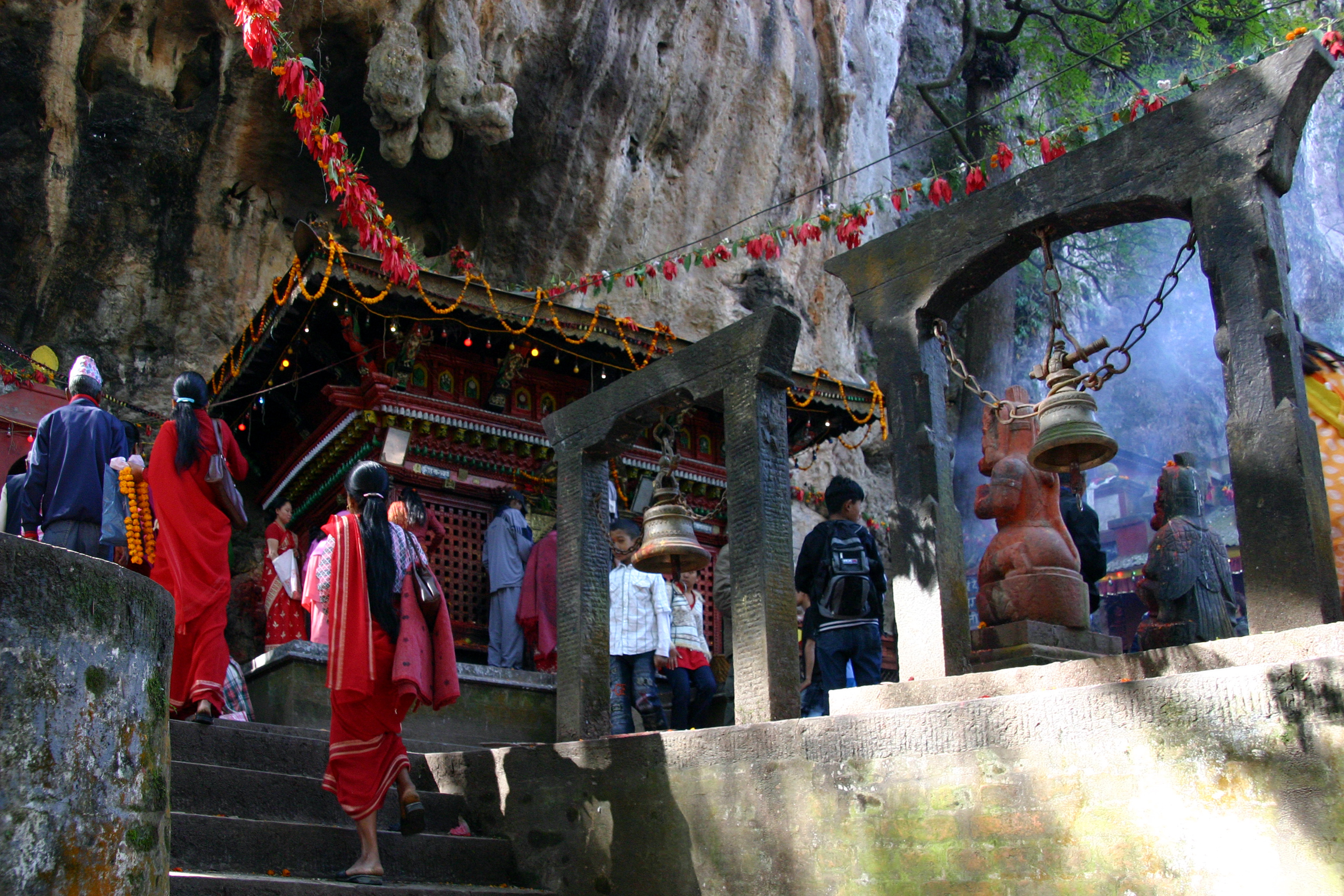
Sheshnarayan Temple is an ancient Hindu temple complex located near Pharping in the Kathmandu Valley, approximately 20 kilometers southwest of Kathmandu, Nepal.
Krishna Mandir
Shree Dwarkadhishji Mandir in Mumbai is a historic Hindu temple dedicated to Lord Krishna, worshipped as Dwarkadhish ('King of Dwarka'), standing for over 150 years as a promine…
Balkumari temple
Balkumari Temple in Lalitpur District, Nepal, is a mysterious 17th-century Newari pagoda shrine dedicated to Goddess Balkumari, a form of the Astamatrikas, distinguished by its…

Kumbheshwar Temple
Kumbheshwar Temple is one of Patan's oldest Hindu temples, a five-story structure built in the 14th century by King Jayasthiti Malla and dedicated to Shiva, distinguished by its…
Dakshinkali Temple
Dakshinkali Temple in Pharping, Nepal, is a sacred shrine dedicated to the goddess Kali, where animal sacrifice remains a central form of worship, particularly during the Dashai…