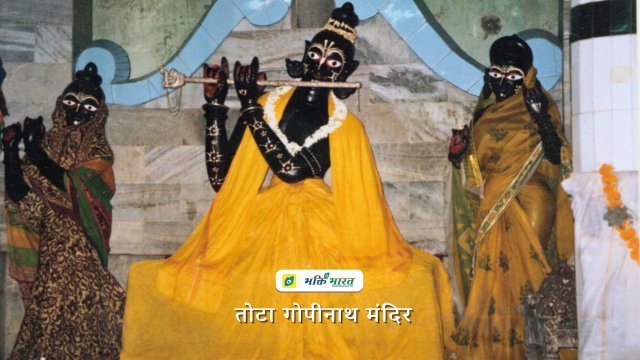


Tota Gopinatha Temple
About Tota Gopinatha Temple
The temple's founding is connected to Chaitanya Mahaprabhu, the 16th-century saint-reformer central to Gaudiya Vaishnav practice. According to the account maintained at the shrine, Chaitanya discovered the Krishna idol while digging in a garden, moved by a state of spiritual longing for the divine. He entrusted the idol's care to Gadadhara Pandita, one of his principal disciples.
Gadadhara's devotion to this service became legendary. As he aged and his health declined—becoming frail by his mid-forties—the physical demands of daily worship grew difficult. Rather than abandon his duty, he sought a solution through prayer. The tradition records that Krishna, responding to his sincere distress, miraculously changed form, becoming seated so that Gadadhara could continue his service without strain. This narrative underscores the temple's spiritual identity: a place where devotion and divine grace intersect.
The Temple's Architecture and Layout
The entrance presents an ornate carved gateway, flanked by peacock sculptures at the top—a detail reflecting the aesthetic conventions of Odia temple design. Two lion statues stand as guardians at the threshold, a common protective motif in Hindu sacred spaces.
The interior sanctum houses multiple altars. The central altar holds the seated form of Tota Gopinatha, flanked by images of Radha and Lalita. To the right, devotees encounter idols of Gaura Gadahara and Radha-Madana Mohan. The left altar displays Lord Balarama alongside his consorts Varuni and Revati. This arrangement reflects the theological emphasis of Gaudiya Vaishnav practice, which celebrates Krishna and his divine companions within an integrated spiritual cosmos. The temple's overall design is described as simple, prioritizing the devotional experience over architectural grandeur.
Visiting the Temple: Practical Information
The temple opens daily from 6:00 am to 7:00 pm, with no entry fee required. Morning and early evening hours offer a calmer atmosphere for worship and reflection, making these times preferable for visitors seeking a quieter darshan experience.
The temple is located approximately 3.9 kilometres from Puri Railway Station and 4.1 kilometres from the Puri Bus Stand. Auto-rickshaws, cycle rickshaws, and battery-operated vehicles are readily available from both transport hubs. The nearest airport is Biju Patnaik International Airport in Bhubaneswar, roughly 60 kilometres away. Visitors should dress modestly, as is customary in Hindu temples, and remove footwear before entering the sanctum. Photography policies should be confirmed with temple staff upon arrival.
The Spiritual Atmosphere and Visitor Experience
The temple is known for its peaceful, meditative environment. After offering prayers, visitors often spend time in quiet reflection within the shrine. The intimate scale of the space and its connection to the Gaudiya Vaishnav tradition create an atmosphere distinct from larger pilgrimage temples. Many who visit describe the experience as spiritually restorative rather than crowded or commercial.
The temple functions as part of Puri's broader sacred geography. Devotees and travellers frequently visit it alongside other significant shrines in the area, including Loknath Temple, Gundicha Temple, Bedi Hanuman Temple, and the ISKCON Temple, each representing different facets of Krishna devotion and Odia religious life.
Connection to Gaudiya Vaishnav Tradition
Tota Gopinatha holds deep meaning within the Gaudiya Vaishnav lineage, which emphasizes devotional service, divine love, and the teachings transmitted through Chaitanya Mahaprabhu. The temple's association with Gadadhara Pandita—one of the tradition's foundational figures—makes it a place of pilgrimage for practitioners seeking to deepen their connection to this spiritual path. The seated deity itself embodies a principle central to Gaudiya thought: that the divine responds with compassion to sincere human devotion.
How to reach
Temples near Tota Gopinatha Temple
ISKCON TEMPLE PURI
ISKCON Jagannath Puri is India's second-largest ISKCON temple, a sprawling 22-acre complex dedicated to Lord Jagannath built in traditional Kalinga architectural style.

Barahi Temple
Barahi Temple, situated on an island in Phewa Lake, is Pokhara's most significant religious monument dedicated to the goddess Barahi, accessible only by boat.
Shveta-Ganga
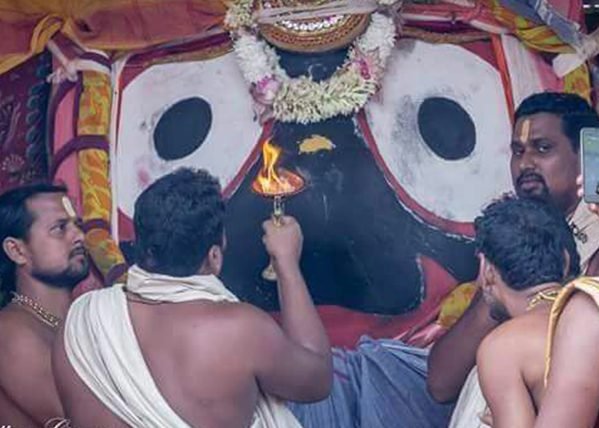
The Shree Jagannatha Temple in Puri is an ancient shrine dedicated to Lord Jagannatha, revered as the Supreme God of the Universe. It maintains centuries-old rituals and daily c…
Jagannath Puri
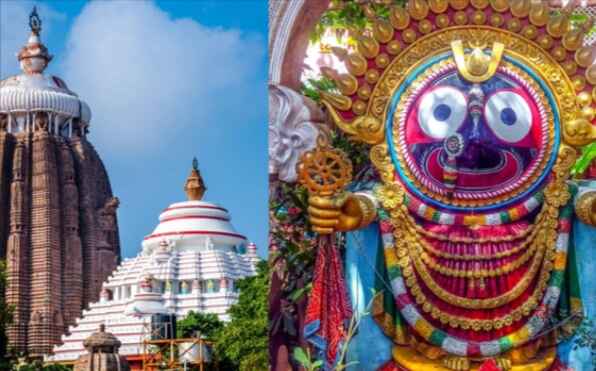
Jagannath Temple in Puri is one of the four sacred Char Dhams of Hinduism, housing the divine trinity of Lord Jagannath, Balabhadra, and Subhadra. Revered as the eternal abode o…

Lokanatha Temple
Lokanatha Temple in Puri is a revered Shiva shrine where the lingam remains perpetually submerged in water, believed to represent the eternal flow of the Ganges. According to le…

Markandeya Temple
Markandeya Temple in Puri is a 12th-century Shiva shrine located on Brahmagiri Road, offering free darshan with extended daily hours and a principal Sandhya Aarti at 7:00 PM.