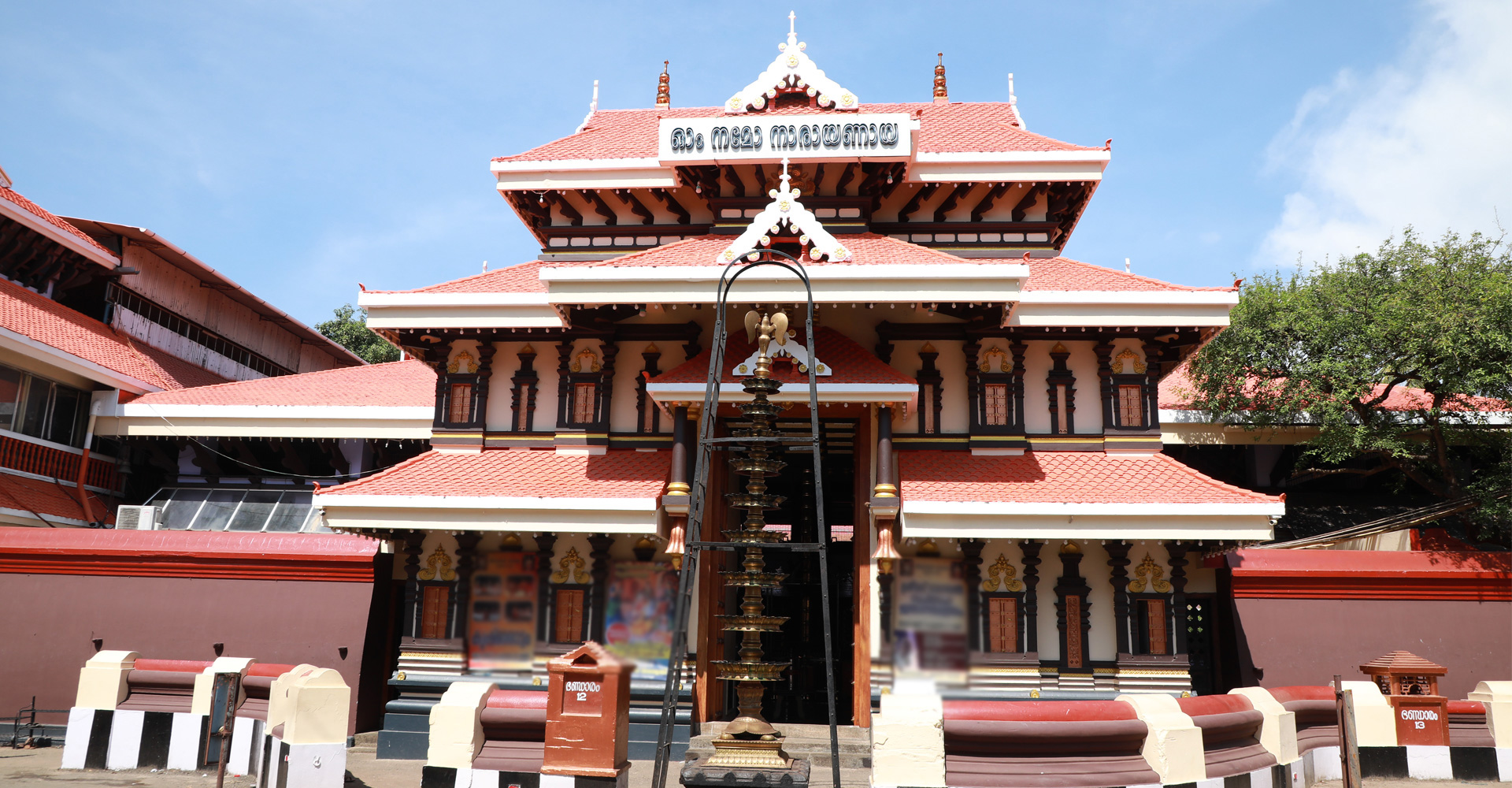
Thiruvambadi Sri Krishna Temple
About Thiruvambadi Sri Krishna Temple
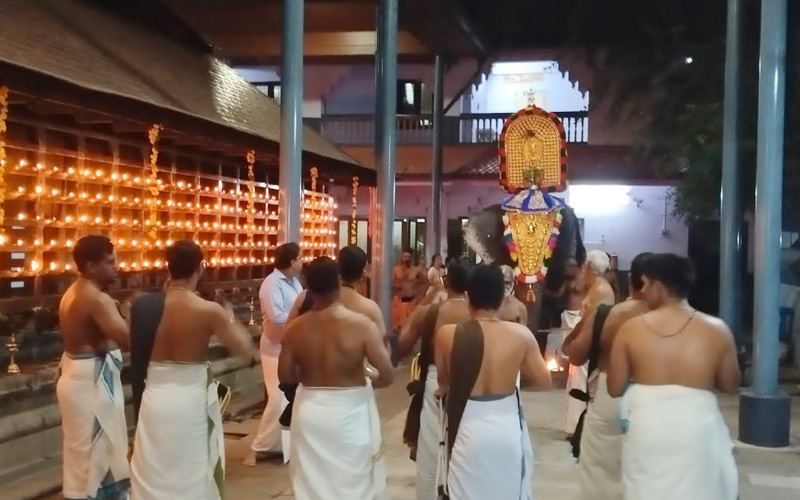
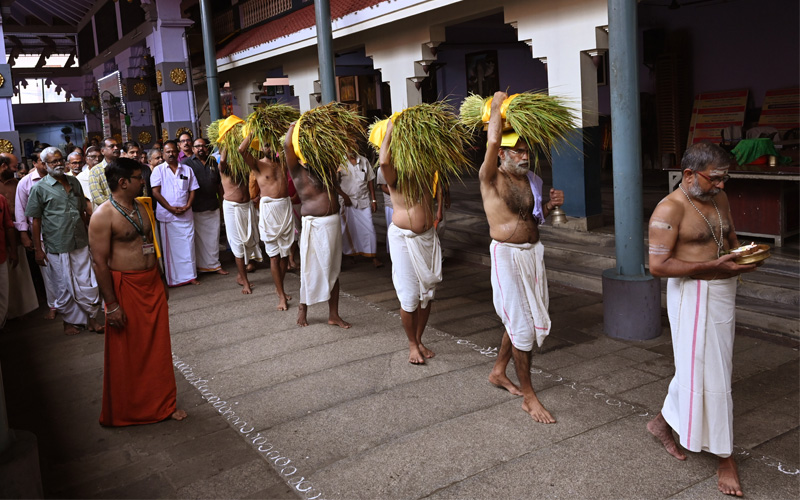
The temple follows a structured schedule of rituals throughout the day. Nirmalyam—the removal of offerings from the previous day's worship—occurs between 04:30 and 05:30 in the early morning. The dawn ritual, Usha Pooja, takes place from 07:00 to 08:00, accompanied by an aarti at 07:00. In the evening, Deeparadhana (the lighting of lamps) begins at 18:30, followed by Athazha Pooja from 20:00 to 21:00, with an aarti at 20:00. These evening rituals involve the ceremonial waving of lights before the deity and tend to draw larger congregations than the quieter morning hours.
Visitors wishing to participate in or witness these rituals should plan their arrival accordingly. The early morning hours offer a more serene atmosphere for personal devotion, while the evening aartis provide a more vibrant darshan experience with greater numbers of worshippers present.
Thrissur Pooram and Festival Observance
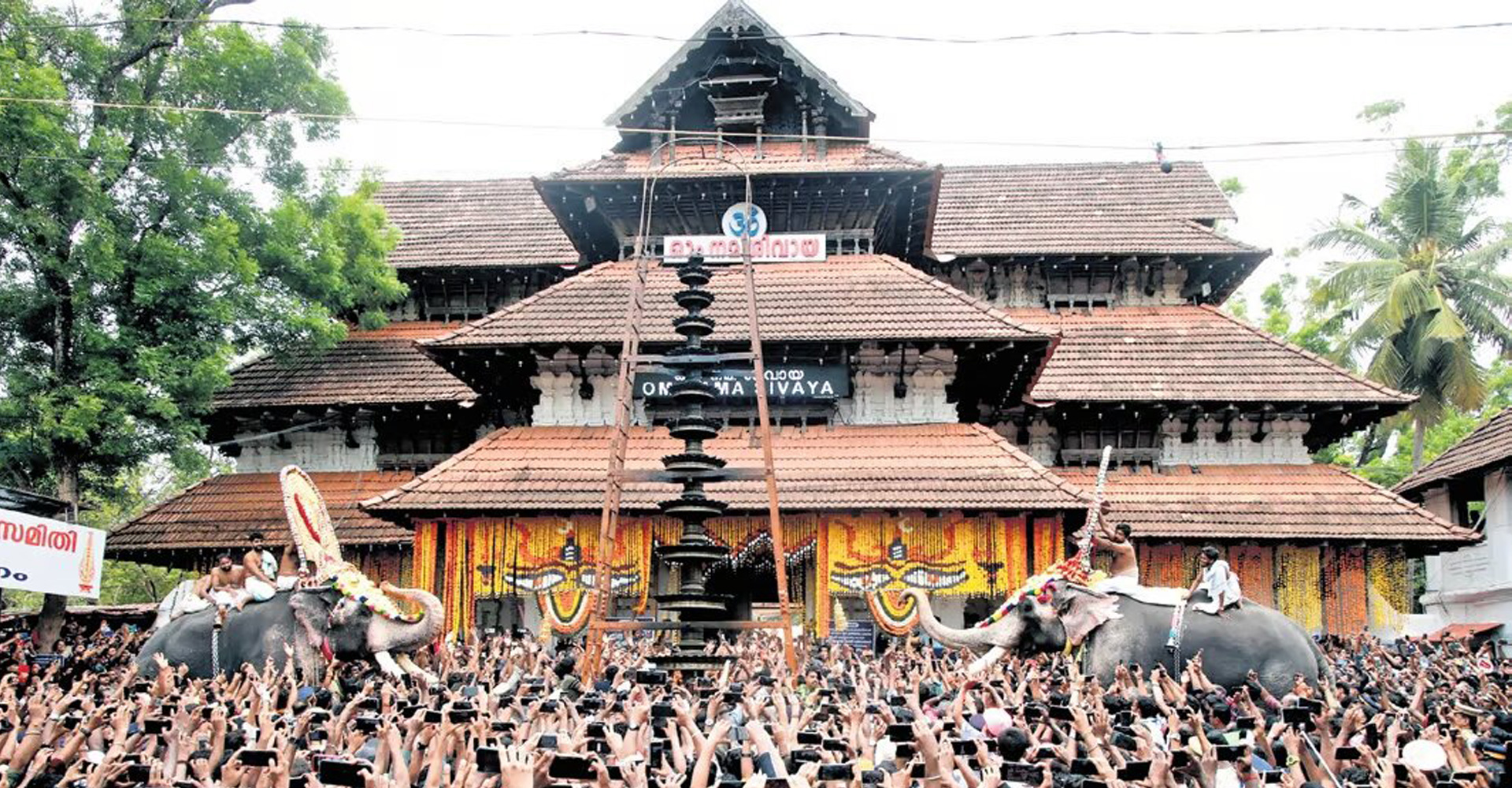
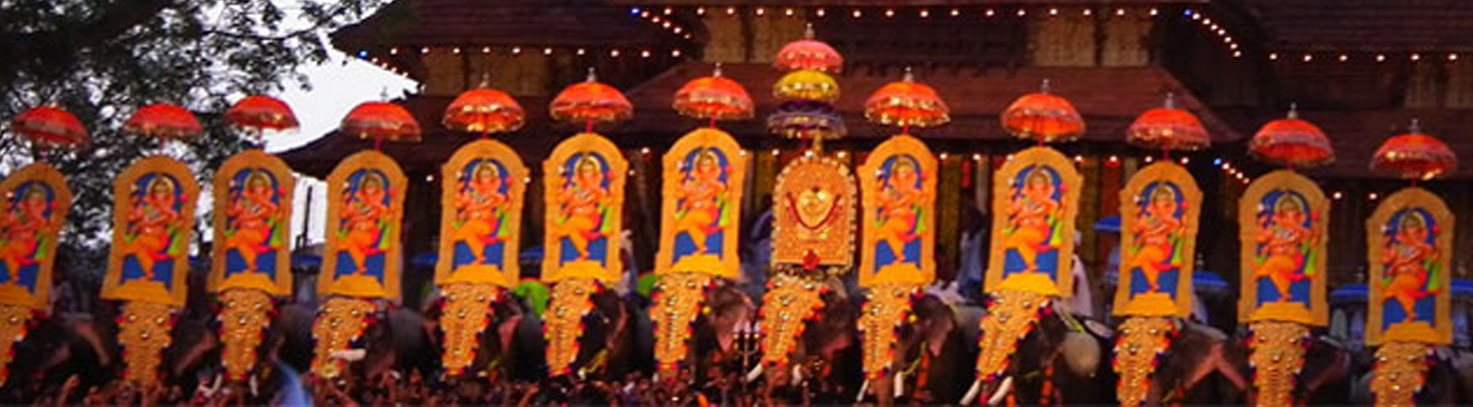
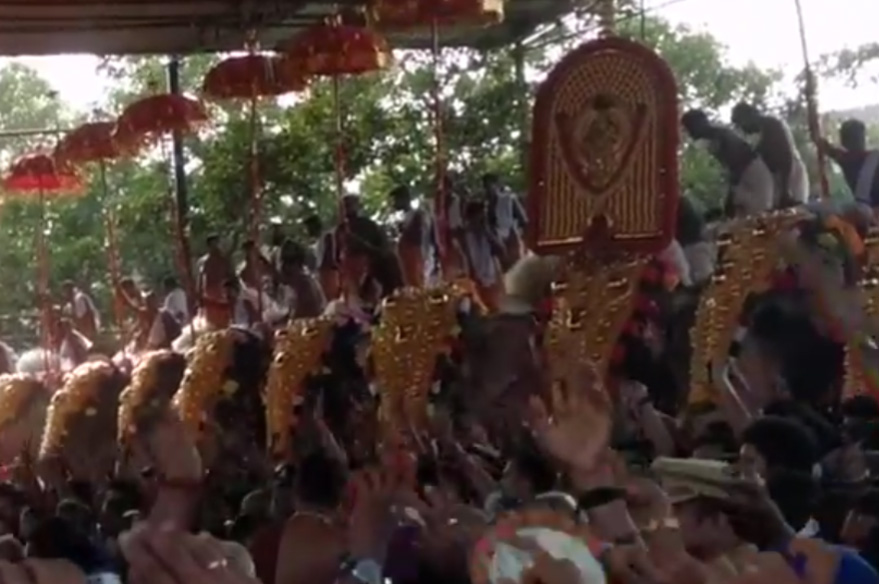
Thiruvambadi Temple holds a central place in Thrissur Pooram, the annual festival that transforms the city into a major pilgrimage destination. The temple is one of two principal groups that participate in this grand celebration, which features processions of elaborately decorated elephants, traditional percussion ensembles including Panchavadyam and Pandimelom, and elaborate fireworks displays. The festival season, marked by illuminations, festoons, and decorative arches throughout Thrissur, represents the best time to experience the temple's cultural and spiritual significance. The Pooram festival draws devotees and visitors from across Kerala and beyond, making it an essential occasion for those seeking to understand the temple's role in the region's religious life.
Practical Information for Visitors
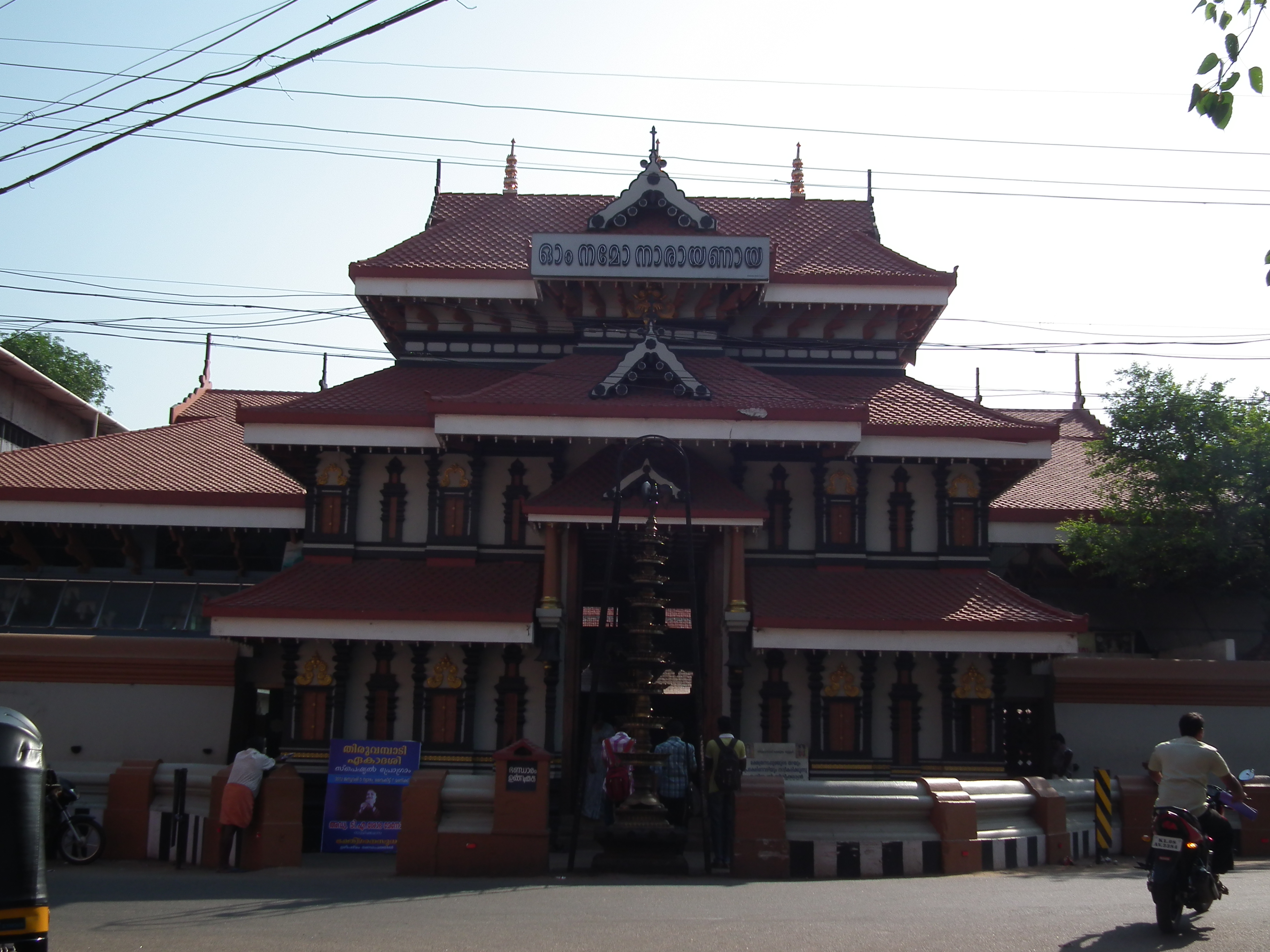
The temple is located at Shornur Road, Thrissur 680022, Kerala (coordinates: 10.53333333, 76.21138889). It can be reached by road, and the temple office may be contacted at +91 487 2334354 for inquiries.
Visitors should dress modestly, following the conventions of Hindu temple etiquette. Footwear is typically removed before entering the inner sanctum. The temple complex includes facilities such as a convention centre with an air-conditioned auditorium capable of accommodating 800 people, available for events and gatherings, as well as marriage halls for hire. Worship offerings (vazhipadu) can be arranged through online booking systems, and the temple accepts donations for its maintenance and charitable activities.
Note that timings may vary on festival days; it is advisable to confirm with the temple before travelling during special occasions.
Community and Educational Engagement
Beyond its role as a place of worship, the temple maintains broader community involvement through educational initiatives. Sandeepani Vidya Niketan, an educational institution managed by the temple, reflects its commitment to spiritual and intellectual development within the local community.
How to reach
You may also visit
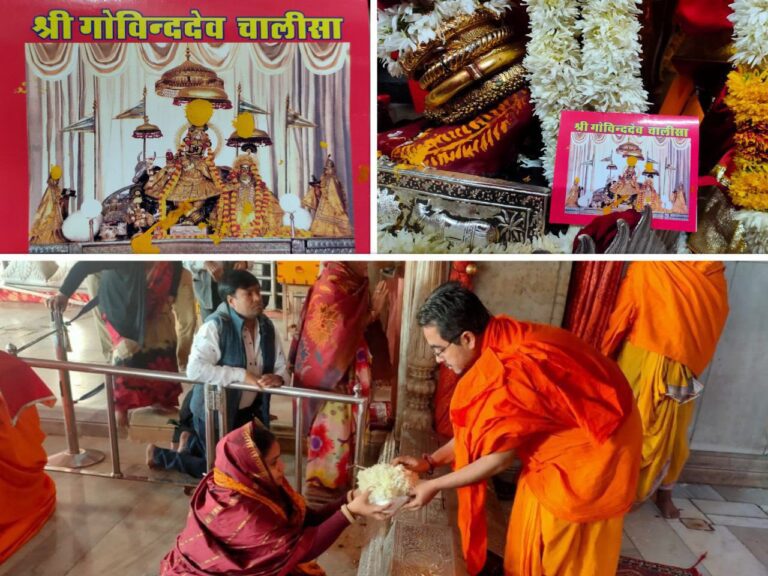
Kalyanji Temple
Kalyanji Temple in Jaipur's Chandpol Bazaar is approximately two centuries old and renowned for displaying the twenty-four avatars of Krishna, visible only twice yearly during Akha Teej and Patottsav festival.
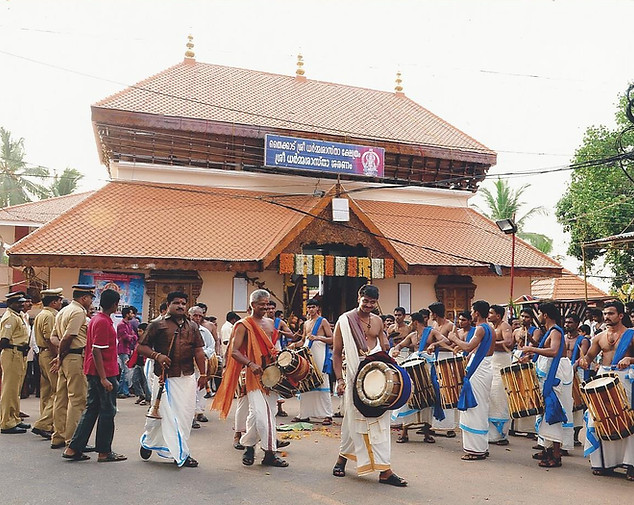
Sastha (Ayyappan) Temple
Sree Dharma Sastha Temple in Thycaud, Thiruvananthapuram, is a centuries-old shrine where the deity manifests as Dhanwanthari, the divine healer, holding the sacred blue lotus.
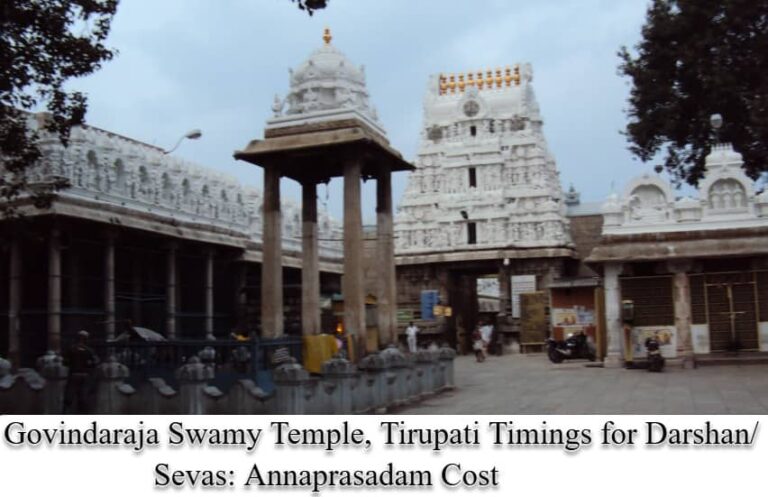
Govindarajaswamy Temple
Sri Govindarajaswamy Temple in Tirupati is an ancient Vaishnavaite shrine consecrated in 1130 AD by Saint Ramanuja, where the presiding deity rests in eternal Yoga Nidra on the serpent Adisesha.