Prasat Khao Lon
About Prasat Khao Lon
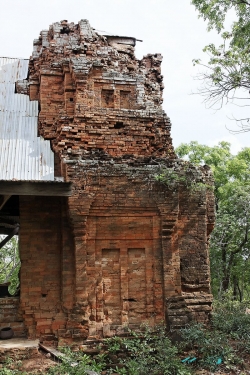
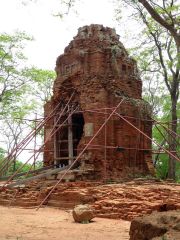
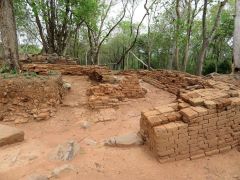
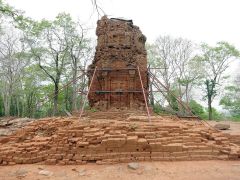
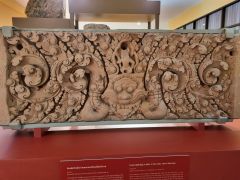
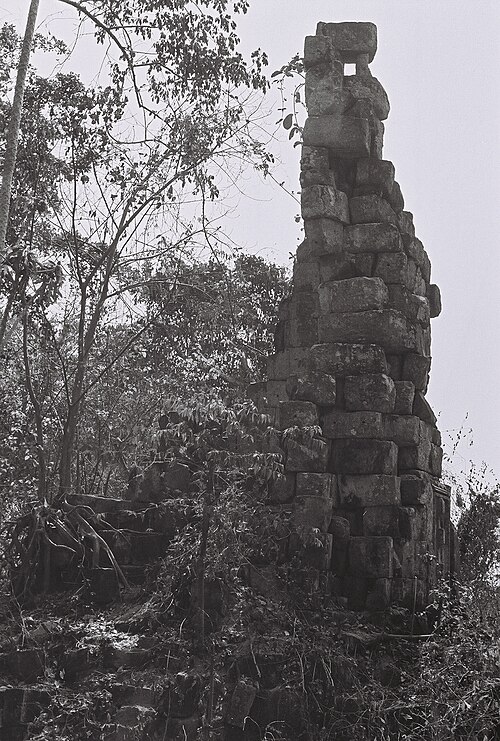
The temple's most visible feature is a solitary brick tower rising from a low hill, oriented toward the east. Archaeological work has revealed that this standing shrine was originally the southernmost of three towers arranged on a wide brick platform. A brick pathway once connected these structures, leading east from what would have been the central tower. The site contained more than just the towers: excavations uncovered evidence of a library building, an enclosing wall, and small cruciform-shaped entrances on the east and west sides. Unusually for temples of this period, a southern entrance also existed. The builders used brick as the primary material, with sandstone employed for decorative and structural elements. Many sandstone fragments remain scattered across the site, including pedestals and architectural pieces. A well-preserved lintel from the temple was removed in earlier decades but was returned to Thailand in 2021 after the government successfully demonstrated it had been stolen; it now resides in the country rather than abroad.
Historical Significance
An inscription dated to 1006, carved into sandstone and still present at the site, records the temple's founding under King Suryavarman I. This inscription, along with the architectural style known as Khleang, places Prasat Khao Lon firmly within the early Angkorian period of Khmer civilization. The temple was dedicated to Shiva, following the Hindu religious tradition that dominated Khmer royal patronage at this time. The site's location on a hill and its careful layout suggest it held religious and possibly administrative importance in the local landscape. Between 2017 and 2022, the temple underwent restoration work that clarified its original plan and revealed structures that had been hidden or damaged over centuries.
Visiting the Temple
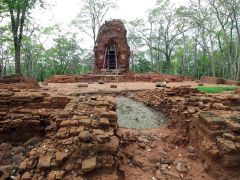
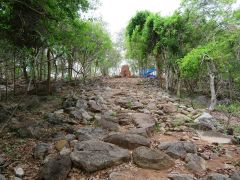
The temple is open daily from 6:00 AM to 5:30 PM. Visitors should wear respectful clothing that covers shoulders and knees, as is customary at Hindu and Buddhist sacred sites in Thailand. The site sits in Ban Kho Khlan village within Thap Rat commune, at coordinates 14.057350, 102.696503. A small pond lies approximately 200 meters east of the hill at its base. The terrain is hilly and wooded, so sturdy footwear is advisable. There are no facilities listed at the temple itself, so visitors should bring water and sun protection. It is worth contacting the temple in advance if planning a visit, as festival days may have different opening hours than the standard schedule.
The Modern Buddha Image
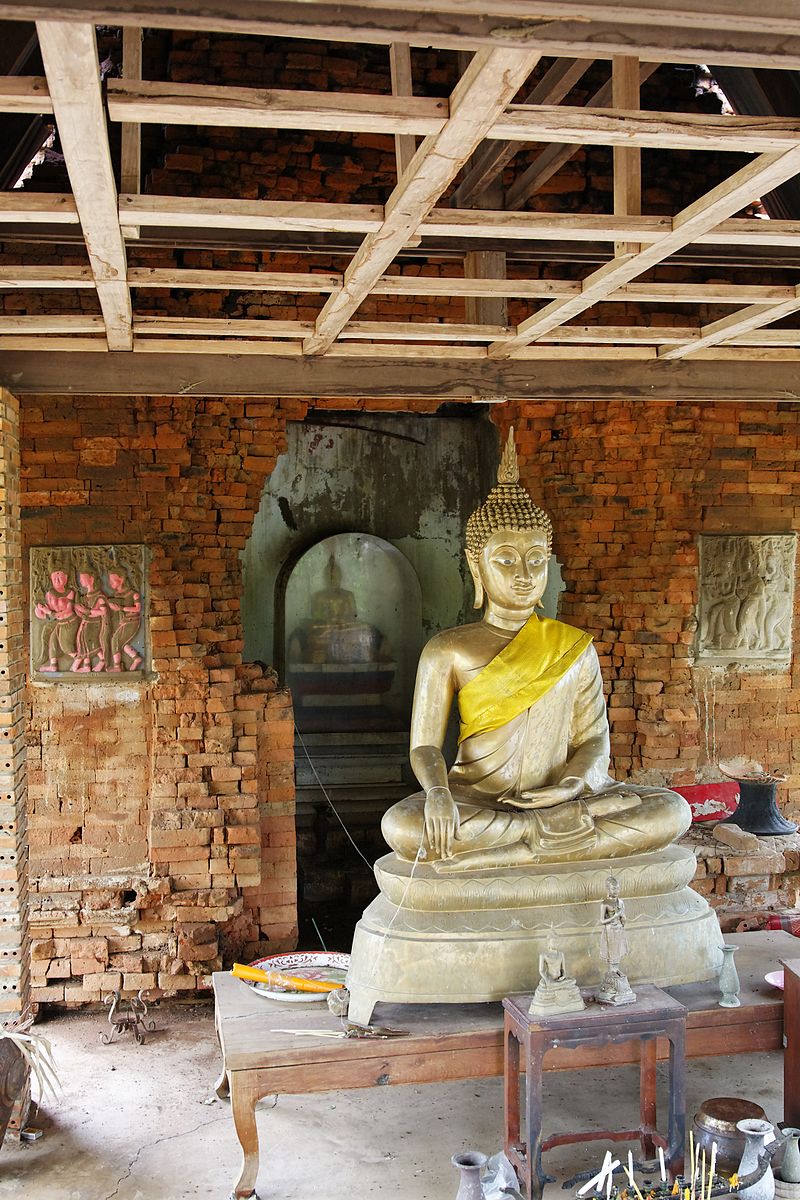
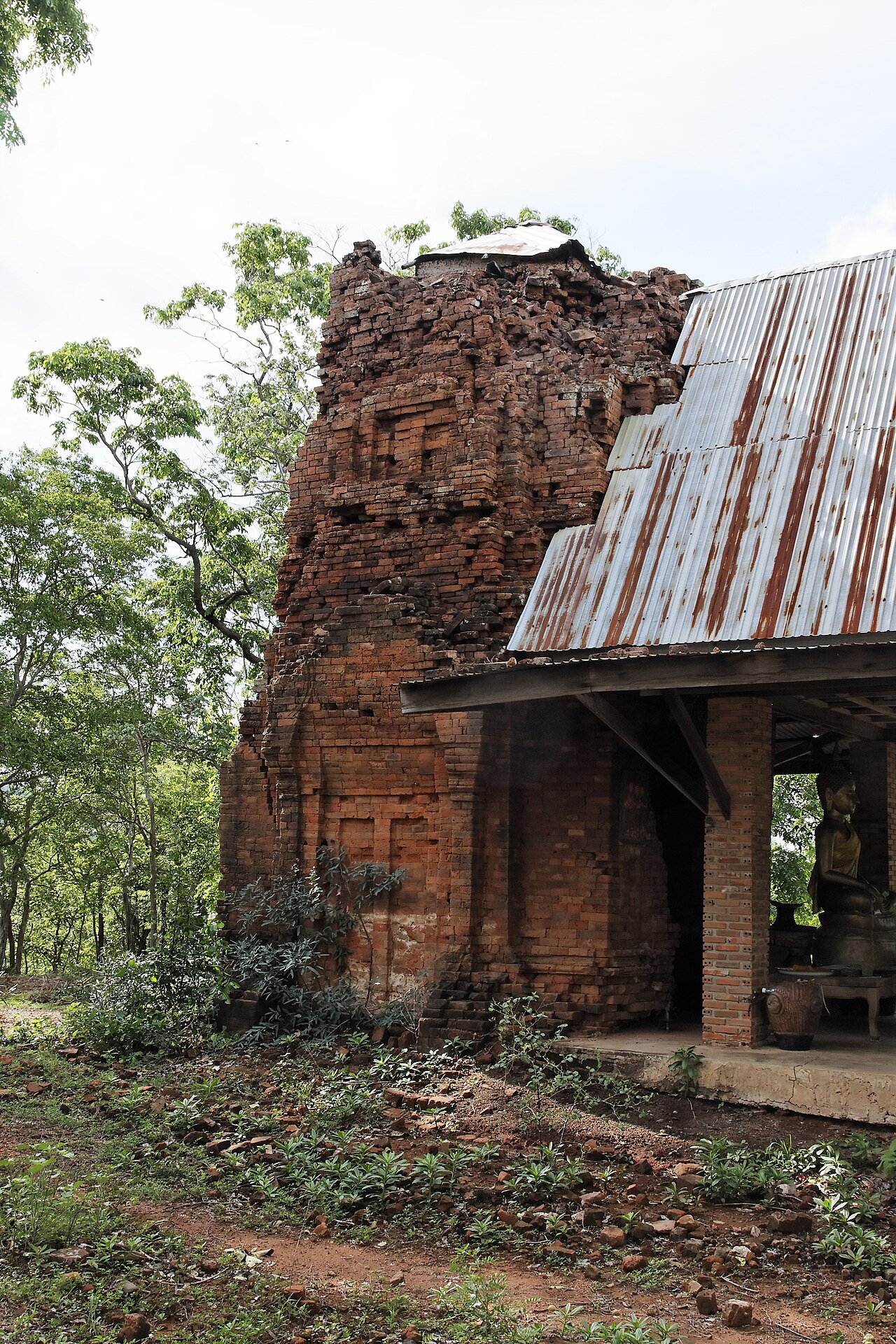
The original east-facing doorway of the brick tower is now blocked by a modern seated Buddha image, which opens onto a roofed shrine. This reflects the layering of religious traditions at the site: while the temple was built as a Hindu sanctuary over a thousand years ago, Buddhism became the dominant religion in Thailand and the region. Rather than demolishing the ancient structure, local practice incorporated Buddhist elements, allowing the site to remain active in spiritual life. This coexistence of Hindu origins and Buddhist adaptation is common at many older temples in mainland Southeast Asia.
Getting There
Prasat Khao Lon is located in Sa Kaeo Province in eastern Thailand, in the Ta Phraya District near the Thai-Cambodian border. The postal address is Thap Rat, Ta Phraya District, Sa Kaeo 27180. The site is most easily reached by private vehicle or arranged transport, as public transportation to this remote location is limited. Visitors traveling from Bangkok or other major Thai cities should plan for several hours of travel. The nearest significant town is Sa Kaeo city. Those planning to visit should check current road conditions and border area regulations, as the location is relatively close to the international frontier.
How to reach

Temples near Prasat Khao Lon
Sdok Kok Thom
Sdok Kok Thom is the largest Khmer temple in eastern Thailand, built around the 11th century during King Udayadityavarman II's reign. It houses one of the most significant inscr…
Prasat Khao Noi
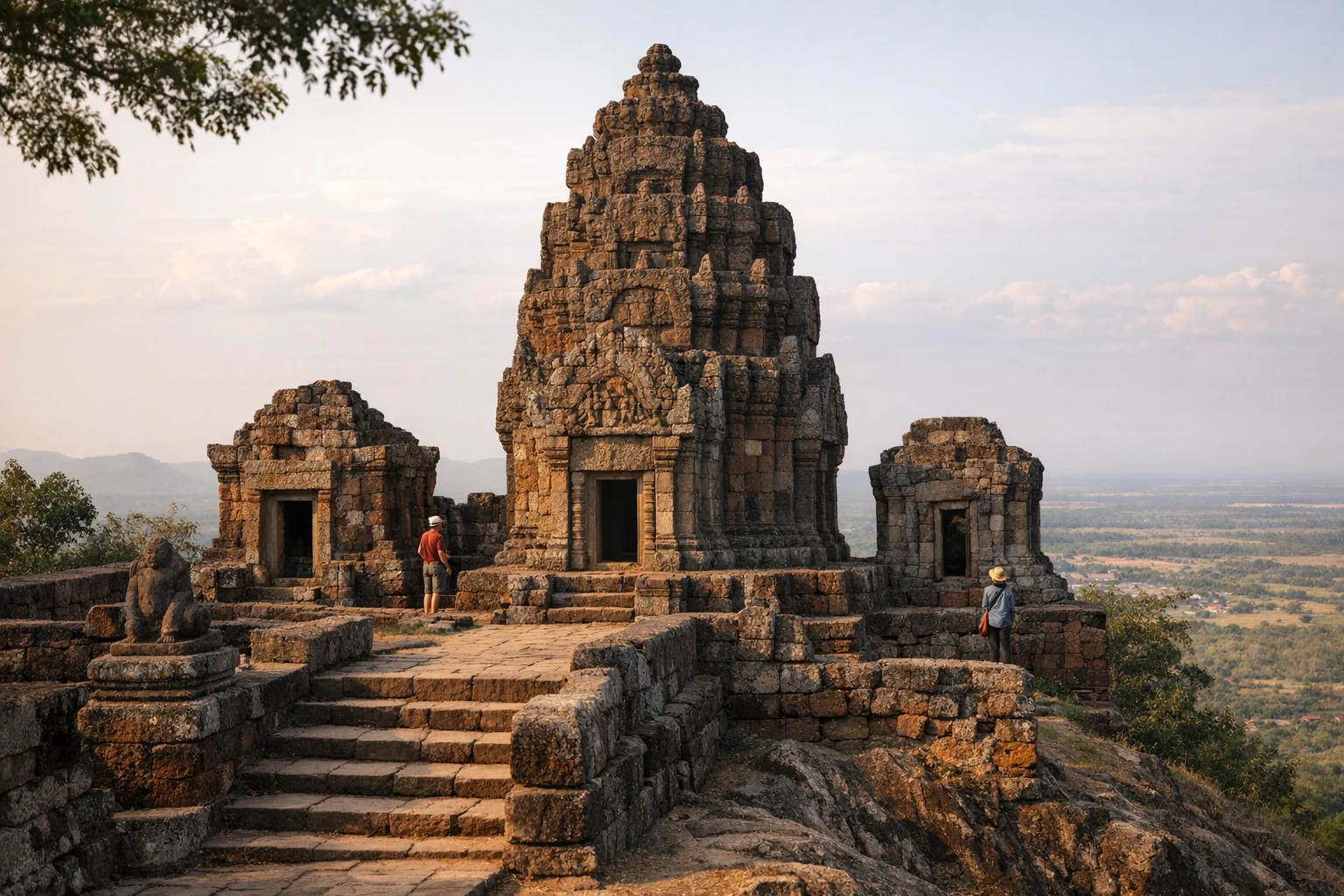
Prasat Khao Noi is an ancient Khmer hilltop sanctuary in Sa Kaeo Province, Thailand, dating to the 10th–11th centuries CE and originally dedicated to Hindu worship, likely Shiva.
Kuti Ruesi - 2
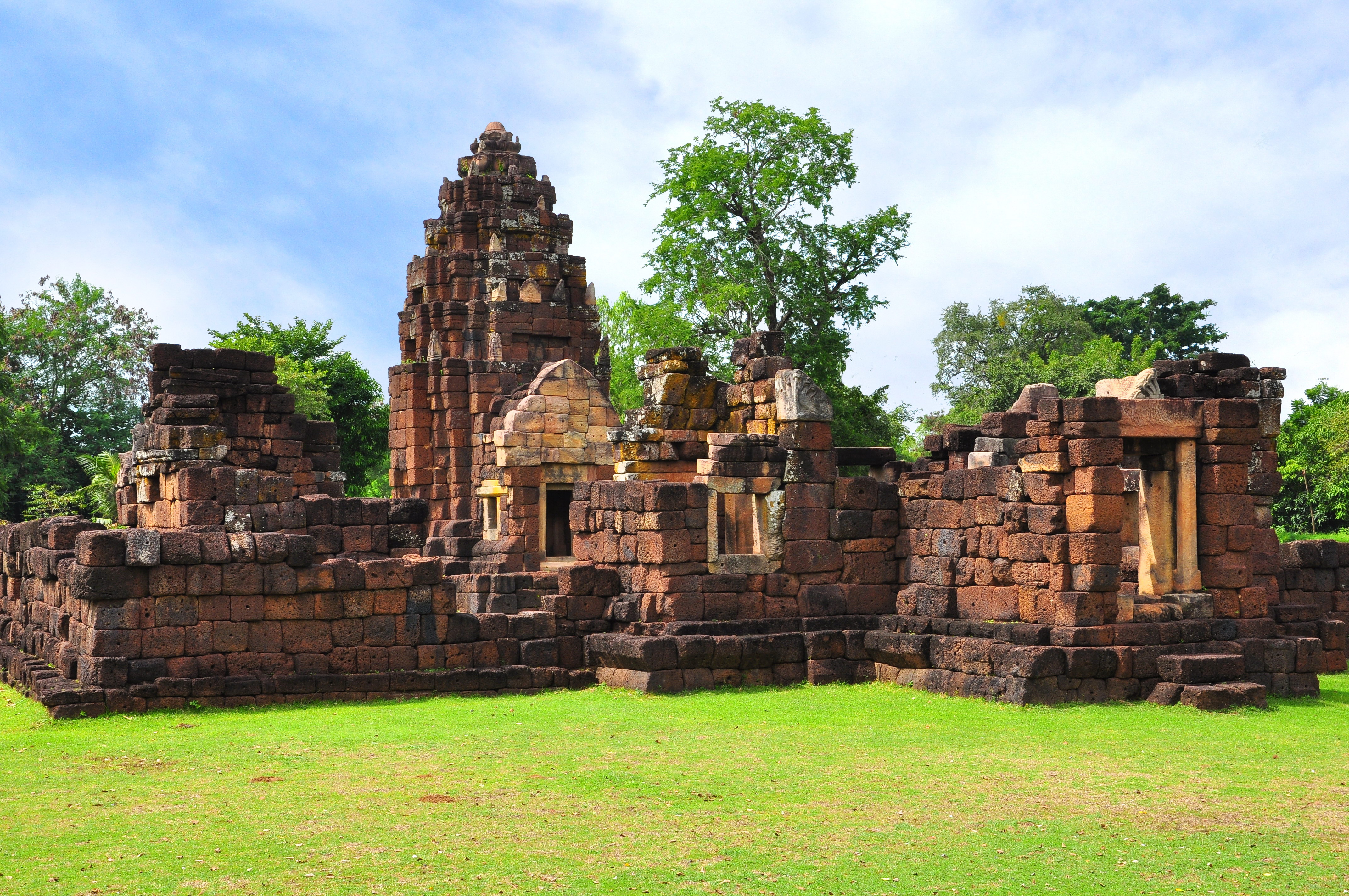
Kuti Ruesi - 2 is a Hindu temple located in Chorakhe Mak, Buri Ram Province, Thailand, serving the local Hindu community with observance of major festivals throughout the year.
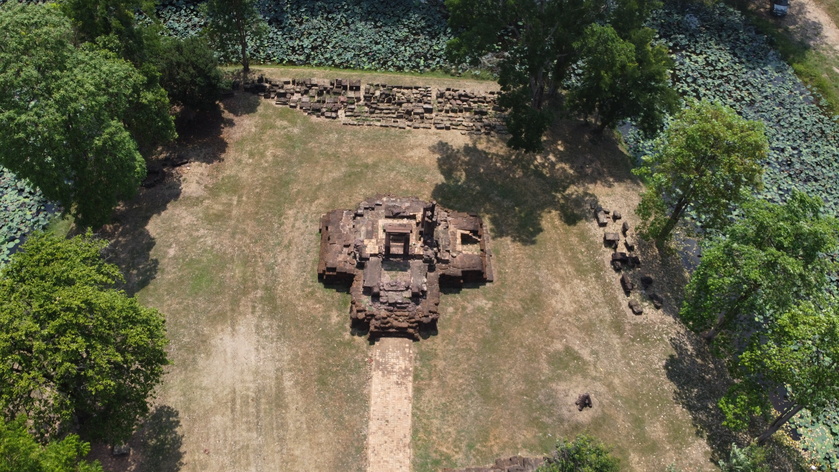
Prang Pha Kho
An 11th-century Khmer-era prang located in rural Chok Chai District, Nakhon Ratchasima, featuring a T-shaped main shrine with carved sandstone elements and library structures en…
Prasat Ban Phluang
Prasat Ban Phluang is a small Khmer-style sanctuary located in Ban Phluang village, Surin Province, northeastern Thailand, featuring a single modest shrine structure oriented to…
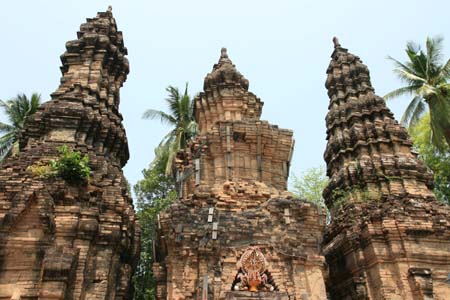
Prasat Ban Prasat
Prasat Ban Prasat is a modest Khmer-era temple ruin in northeastern Thailand, dating to the 11th–13th centuries CE. Located within Wat Prasat Phanaram in Nakhon Ratchasima Provi…