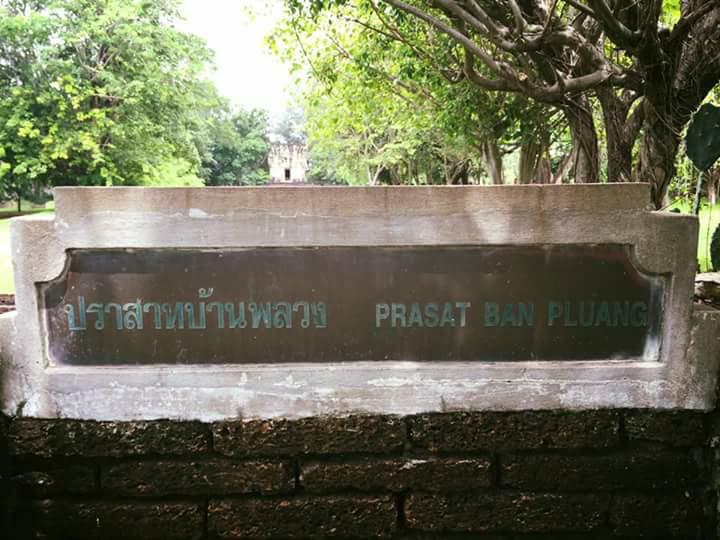
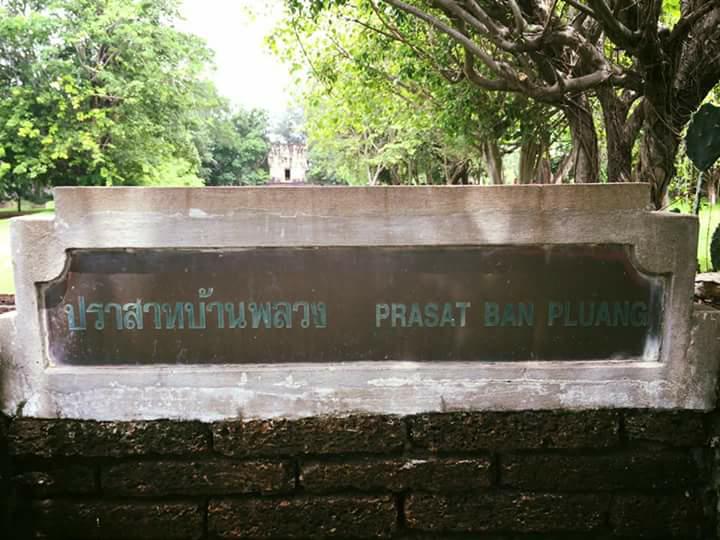
Prasat Ban Phluang
About Prasat Ban Phluang
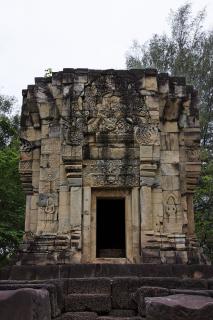
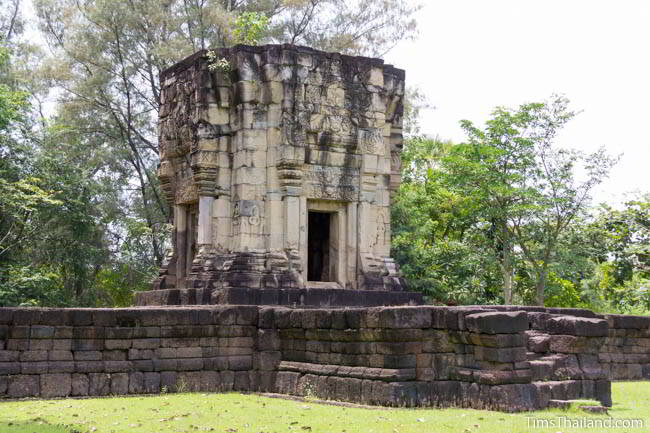
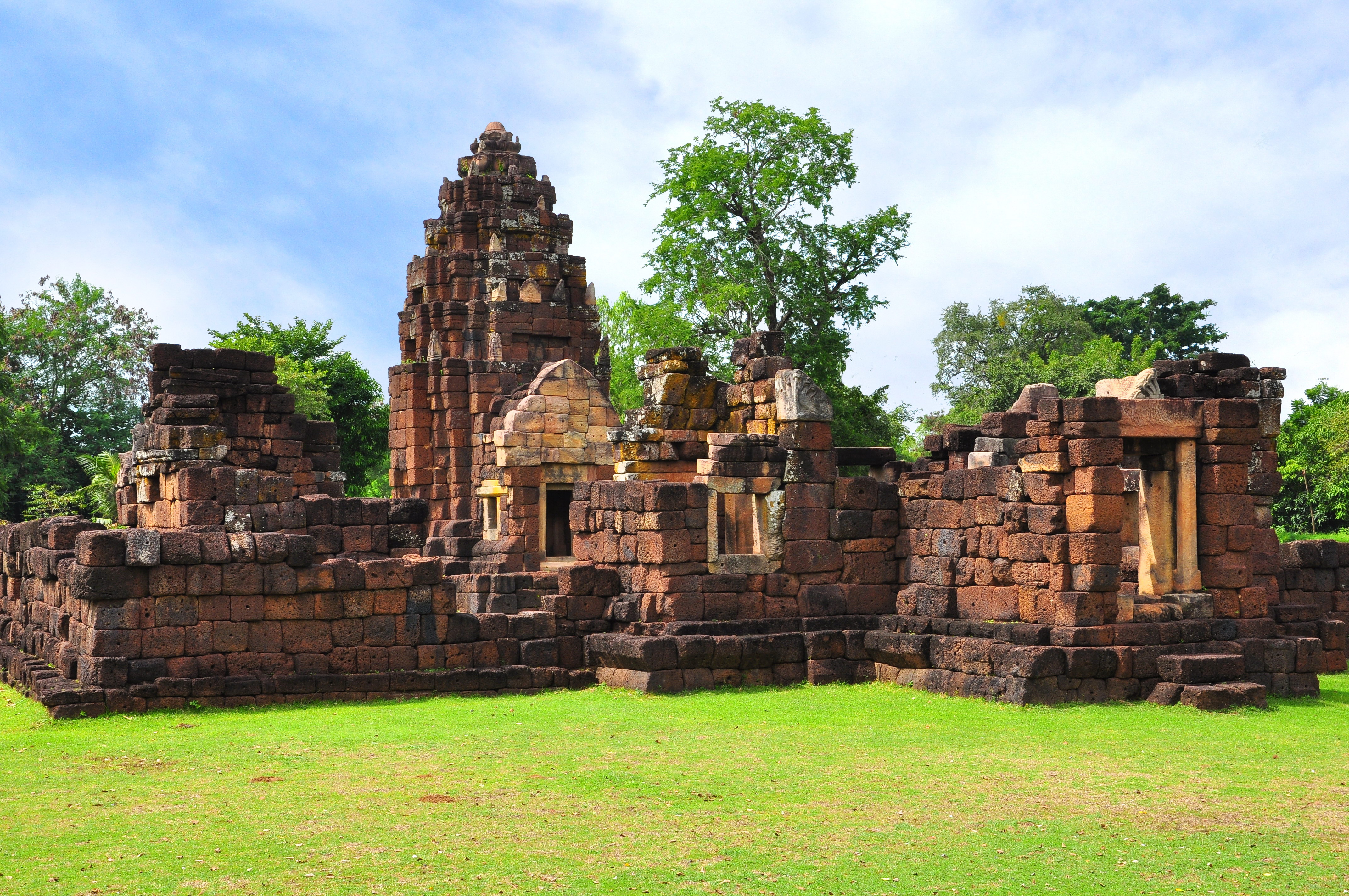
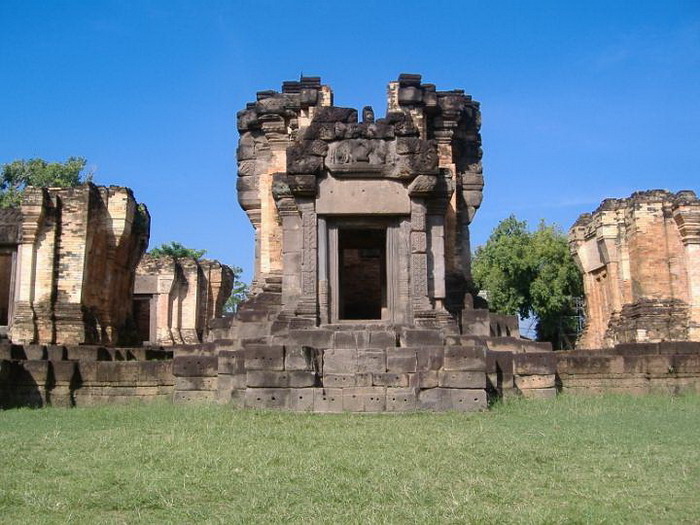
The temple consists of a single white sandstone tower built atop a laterite base, oriented toward the east. It was constructed in the Baphuon style, the architectural idiom favored during the reign of Udayadityavarman II. The most striking feature is that the tower lacks its upper portion, and scholars believe the structure was never completed. A careful restoration undertaken between 1973 and 1975 by American archaeologist Vance Childress found no scattered stones that might suggest collapse or damage; this absence of evidence points toward the temple having been abandoned during construction. Such incompleteness was not uncommon in the Khmer empire when political or dynastic transitions occurred, as new rulers typically prioritized building their own temples over finishing those of their predecessors. The platform itself is substantial enough to suggest that additional towers may have been planned for the sides, and the front projection is unusual in size, hinting that an entrance structure or hall may have been intended but never realized.
Carved Details and Artistic Merit
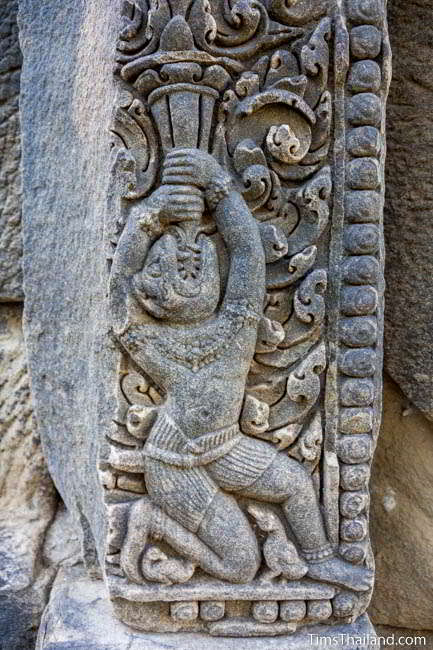
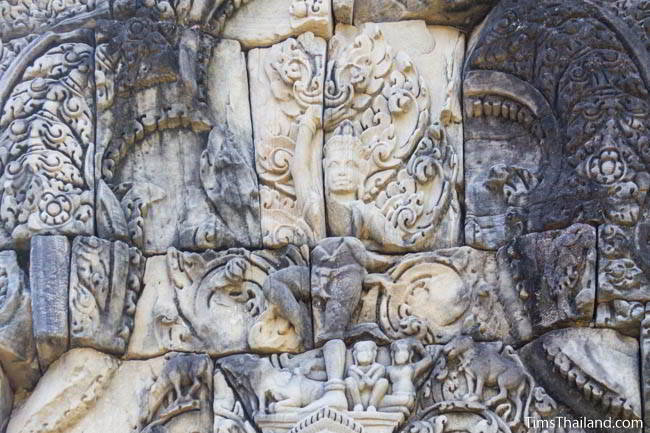
The carvings at Prasat Ban Phluang are executed with exceptional skill and depth, remaining in remarkably good condition. The temple is notable for containing multiple depictions of Indra—at least three, possibly four—an unusual concentration that remains unexplained by scholars. The Krishna carving showing him lifting a mountain is rendered as a response to a storm sent by Indra, illustrating the narrative sophistication of the sculptural program. Many of the pilasters and colonnades remain unfinished, further supporting the theory that construction ceased before completion. Despite this incompleteness, the temple was used for worship, as evidenced by the extraordinary discovery of pottery fragments directly in front of the entrance. Over 4,000 fragments were recovered, representing at least 270 complete vessels and likely around 400 in total—the largest quantity of pottery found at any Khmer temple in Thailand. Some of these vessels were glazed in two colors, a rare technique employed by Khmer potters only during the late 11th century, suggesting they were used in ceremonial offerings.
Setting and Atmosphere
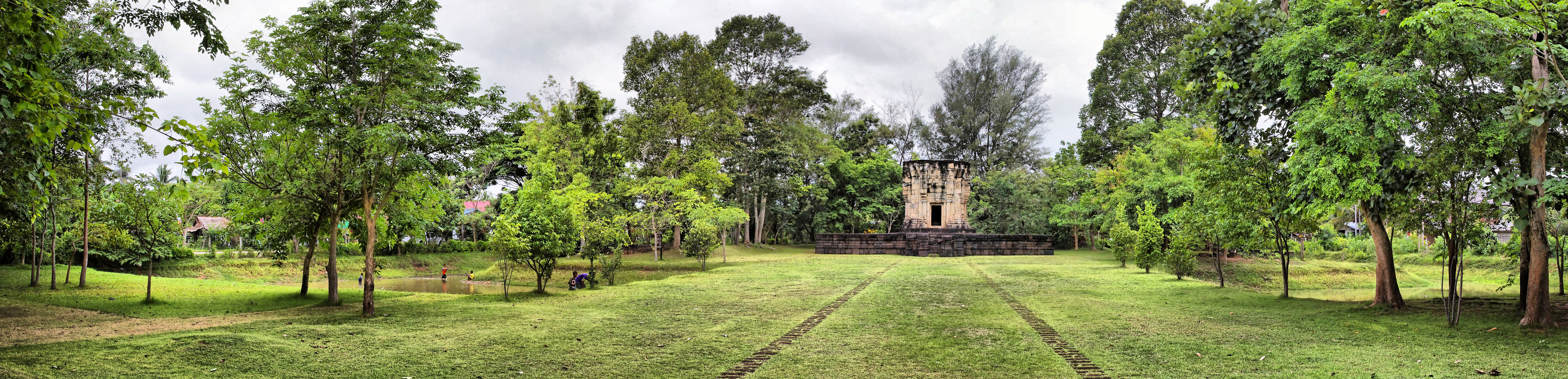
The temple's beauty derives partly from its modest scale and partly from its natural surroundings. Trees grow abundantly around the structure, creating a quiet, contemplative setting that contrasts with the grandeur of larger Khmer complexes. This intimate landscape, combined with the excellent preservation of the carved details, makes the site rewarding for visitors with an interest in ancient art and architectural history. The simplicity of the structure—a single tower rather than an elaborate multi-chambered complex—allows close examination of the stonework and sculptural elements without the visual complexity of larger temples.
Visiting Information
Prasat Ban Phluang is located in Ban Phluang village, Tambon Ban Phluang, Amphoe Prasat district, in Surin Province, northeastern Thailand. The site's coordinates are 14.610267, 103.424359. As this is an archaeological site rather than an active temple with regular worship, visitors should check locally for current access conditions and any seasonal restrictions. The temple is not widely known among international tourists, which means it typically receives fewer visitors than major Khmer sites, allowing for a more solitary experience. Appropriate dress—covering shoulders and knees—is respectful when visiting Hindu and Buddhist archaeological sites in Thailand. Visitors interested in Khmer art and 11th-century architecture will find the carvings and construction details most rewarding; those seeking active ritual worship should be aware that this is primarily a historical monument.
Getting There
The site lies in Surin Province in the Isan region of Thailand. Visitors traveling to the area should arrange local transportation, as the temple is not served by major public transit routes. The nearest significant town is Prasat district center. Those planning a visit should allow time to explore the carved details closely and should consider visiting during cooler months, as the site offers limited shade beyond the surrounding trees.
How to reach
Temples near Prasat Ban Phluang
Kuti Ruesi - 2
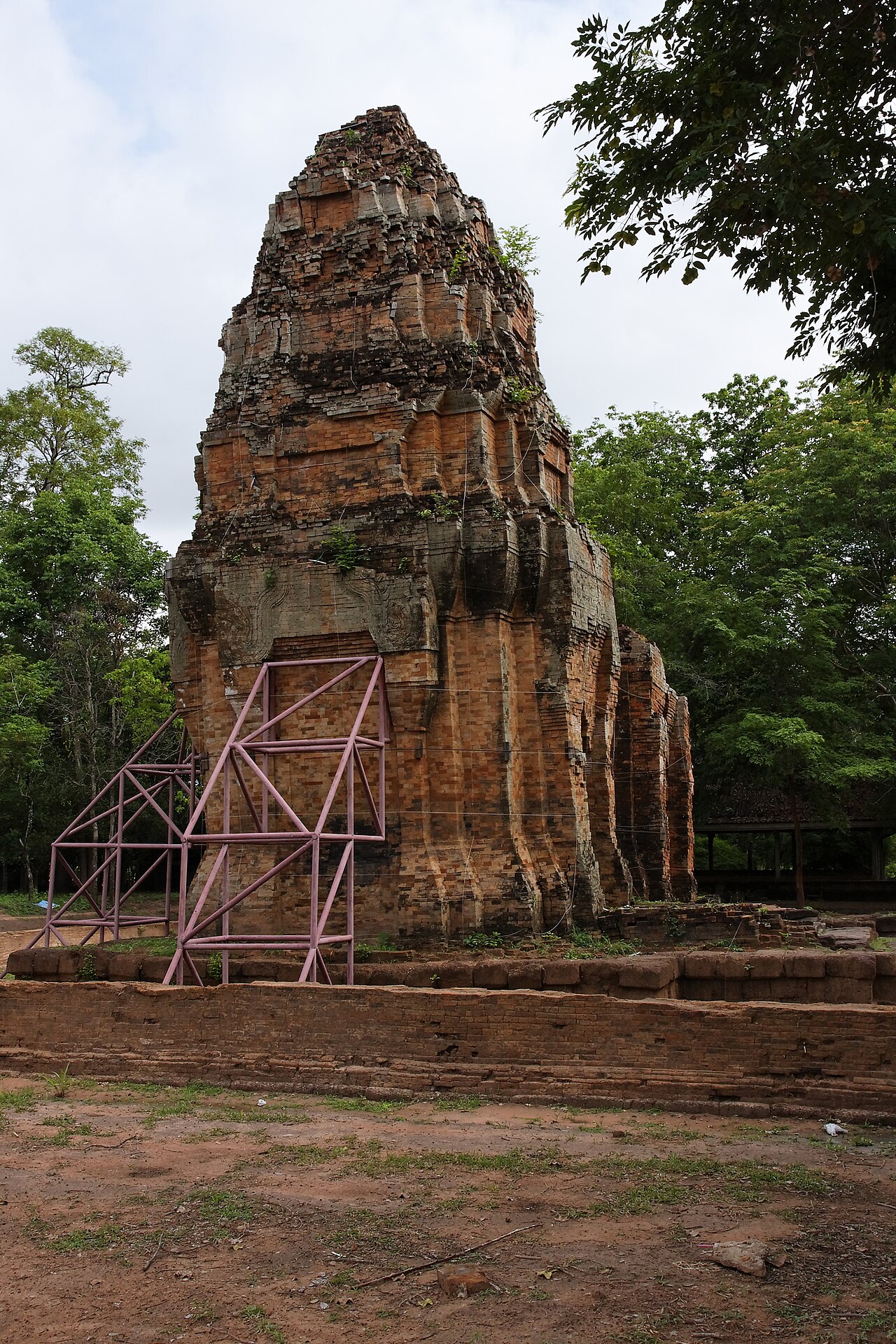
Kuti Ruesi - 2 is a Hindu temple located in Chorakhe Mak, Buri Ram Province, Thailand, serving the local Hindu community with observance of major festivals throughout the year.
Prasat Yai Nga
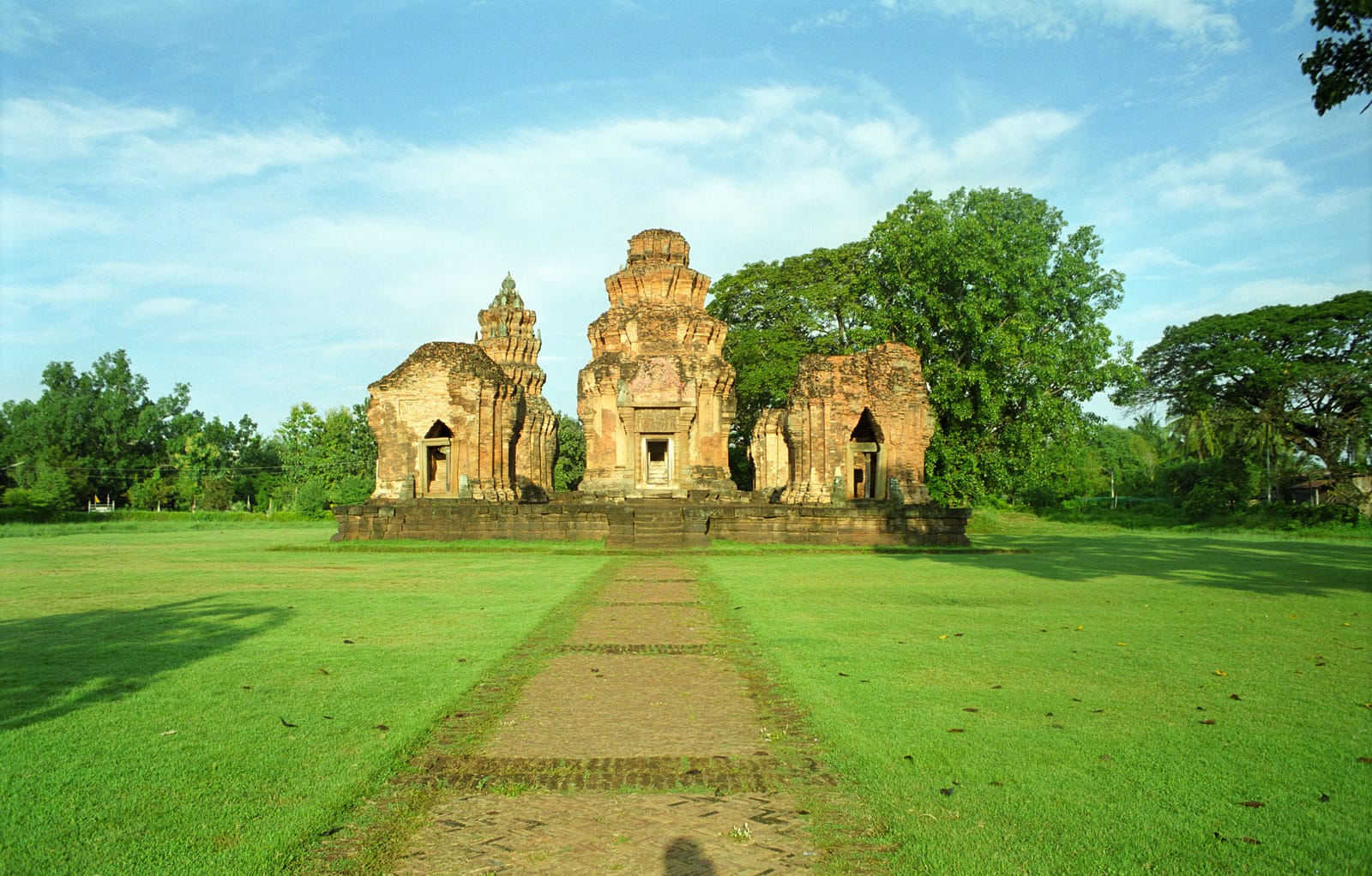
Prasat Yai Nga is a Hindu temple located in Ban Chop, Thailand, recognized as a registered Thai historic site.
Prasat Sikhoraphum
Prasat Sikhoraphum is a twelfth-century Khmer Hindu temple in Surin featuring five brick towers on a shared laterite base, renowned for its finely carved Shiva Nataraja lintel a…
Prasat Ta Leng
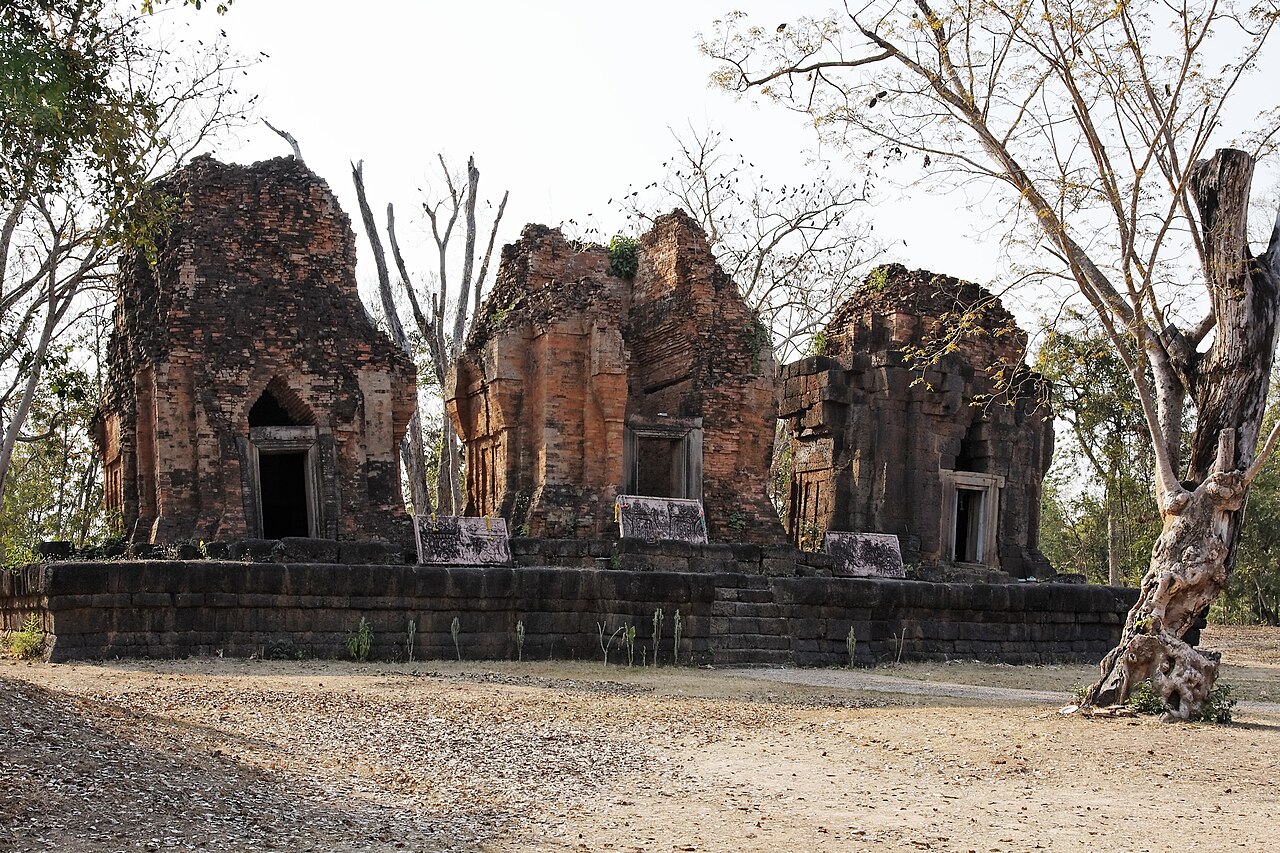
Prasat Ta Leng is a single-tower Khmer sanctuary located in Sri Sa Ket Province, northeastern Thailand, featuring a square base with twelve corner posts.
Prasat Prang Ku
Prasat Prang Ku is a 12th-century Khmer hospital chapel built by King Jayavarman VII, one of 102 identical sanctuaries constructed along royal roads to serve travelers and pilgr…
Prasat Kamphaeng Yai
Prasat Sa Kamphaeng Yai is the largest and best-preserved Khmer sanctuary in Sisaket Province, featuring brick prangs on a shared laterite base with thirteen surviving carved sa…