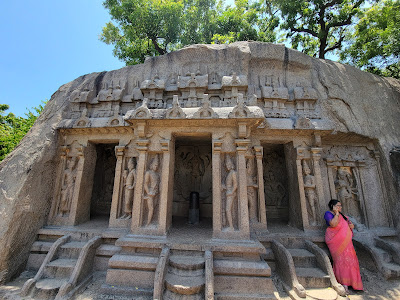
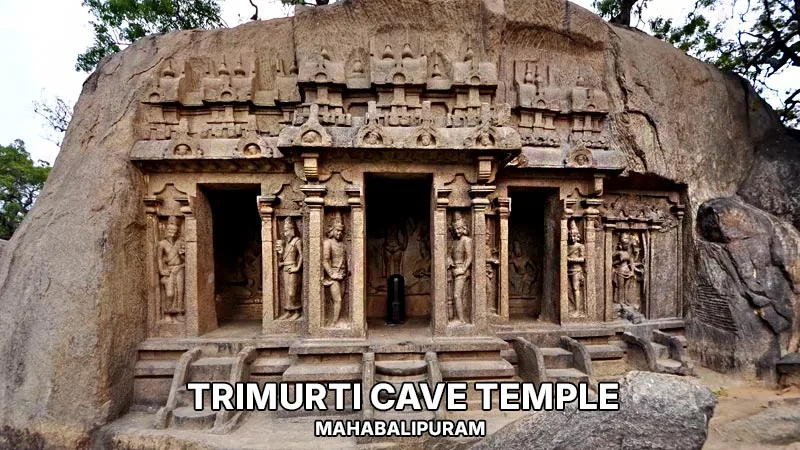
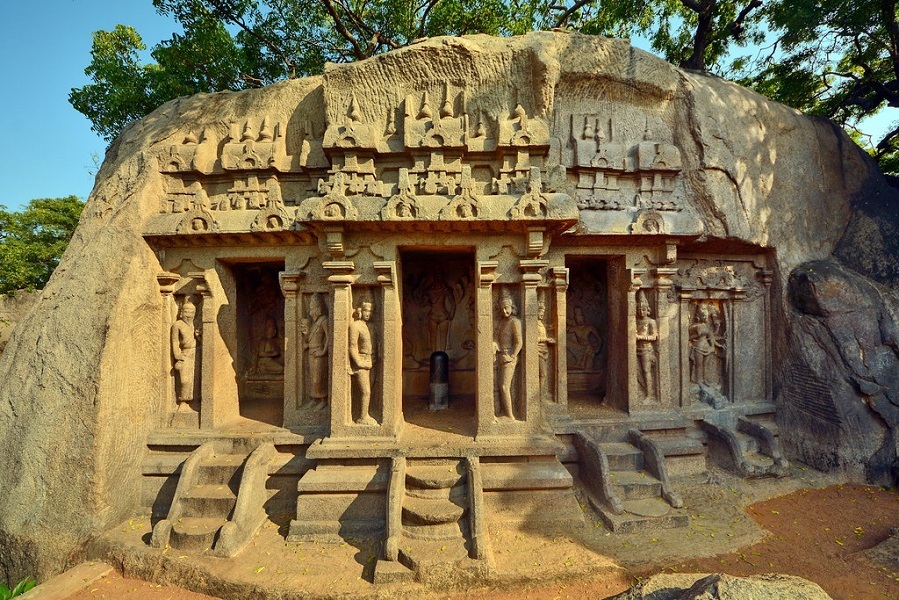
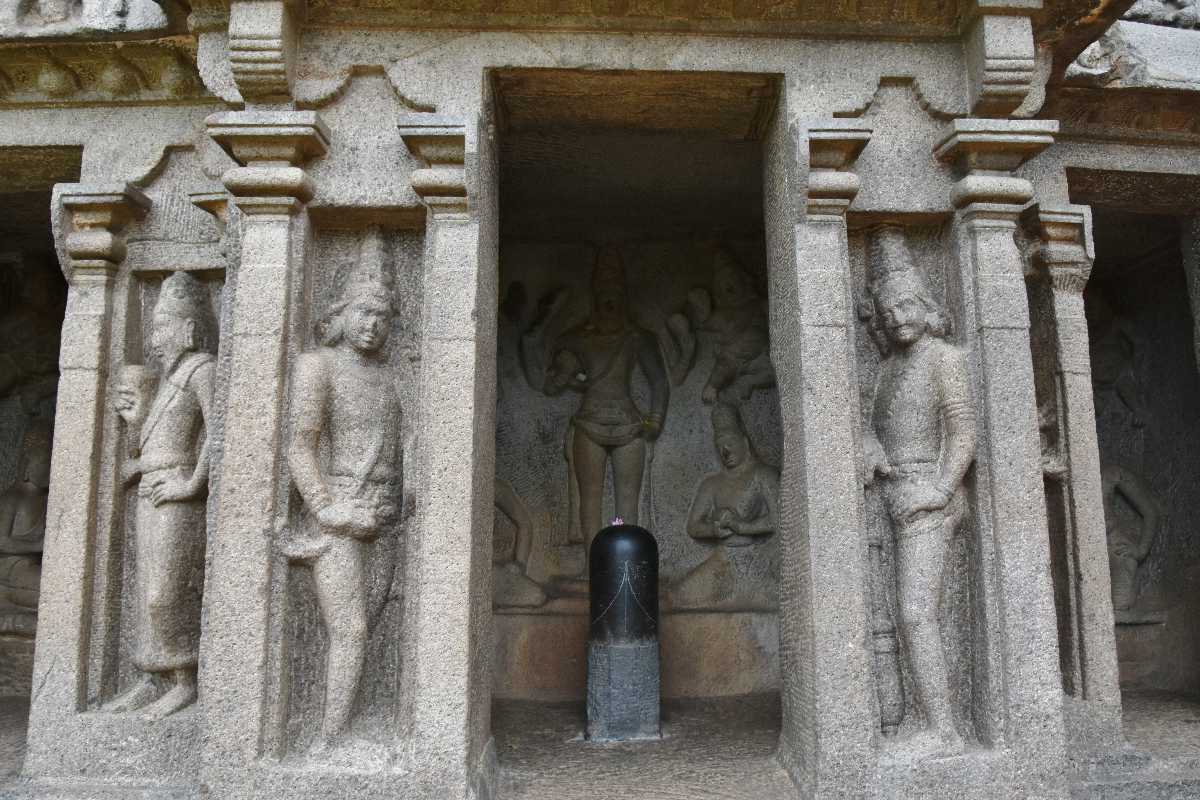
Trimurti cave temple
About Trimurti cave temple
The temple opens daily from 06:00 to 18:00, allowing visitors to plan their darshan according to personal preference and comfort. The cooler hours of early morning and late afternoon offer the most pleasant conditions for exploration, as the Tamil Nadu sun can be intense during midday. The winter months from November through February provide the most comfortable climate for a visit, with moderate temperatures and lower humidity.
Visitors should anticipate minimal waiting times, typically under thirty minutes, which allows for a relatively unhurried experience of the sacred space. The moderate walk required to reach the temple, while involving uneven terrain, rewards effort with both spiritual atmosphere and scenic surroundings. Those with mobility concerns may find the journey challenging, though assistance is often available on-site.
Practical Information for Visitors
Comfortable footwear is essential, as the pathways are ancient and uneven. Carrying water and sun protection—hat, sunscreen, or umbrella—will make the visit more comfortable under the warm climate. The terrain is mostly even but follows natural contours, so sturdy shoes with good grip are advisable.
Photography policies and specific puja schedules should be confirmed upon arrival. Visitors should approach the sacred chambers with the reverence appropriate to an active place of worship, maintaining quiet and respectful behavior within the temple spaces. Modest dress is customary at Hindu temples; covering shoulders and knees is considered respectful practice.
The Larger Mahabalipuram Context
The Trimurti Cave Temple does not stand in isolation but forms part of Mahabalipuram's remarkable concentration of 7th-century monuments. A visit to this temple naturally connects with exploration of nearby structures, creating an immersive experience of Pallava artistic and spiritual achievement. The town itself, recognized for its UNESCO heritage significance, offers multiple layers of historical and religious interest within walking distance.
This setting transforms a visit into something more than a single temple darshan—it becomes a pilgrimage through an entire era of Indian cultural expression. The effort to reach the Trimurti Cave Temple, combined with the opportunity to encounter other monuments, makes Mahabalipuram a destination for those seeking to understand both the devotional and artistic dimensions of 7th-century Hindu civilization.
Reaching the Temple
The Trimurti Cave Temple is located at Mahabalipuram, Chengalpattu district, Tamil Nadu 603104. The coordinates are 12.619821116816, 80.192724919599. Visitors traveling to Mahabalipuram can use these details for navigation. The temple sits within the larger archaeological complex of the town, accessible by foot from central Mahabalipuram, though the walk involves navigating the uneven terrain characteristic of the site.
How to reach
You may also visit
Kalyanji Temple
Kalyanji Temple in Jaipur's Chandpol Bazaar is approximately two centuries old and renowned for displaying the twenty-four avatars of Krishna, visible only twice yearly during Akha Teej and Patottsav festival.
Sastha (Ayyappan) Temple
Sree Dharma Sastha Temple in Thycaud, Thiruvananthapuram, is a centuries-old shrine where the deity manifests as Dhanwanthari, the divine healer, holding the sacred blue lotus.

Govindarajaswamy Temple
Sri Govindarajaswamy Temple in Tirupati is an ancient Vaishnavaite shrine consecrated in 1130 AD by Saint Ramanuja, where the presiding deity rests in eternal Yoga Nidra on the serpent Adisesha.