Rishabhdeo
About Rishabhdeo
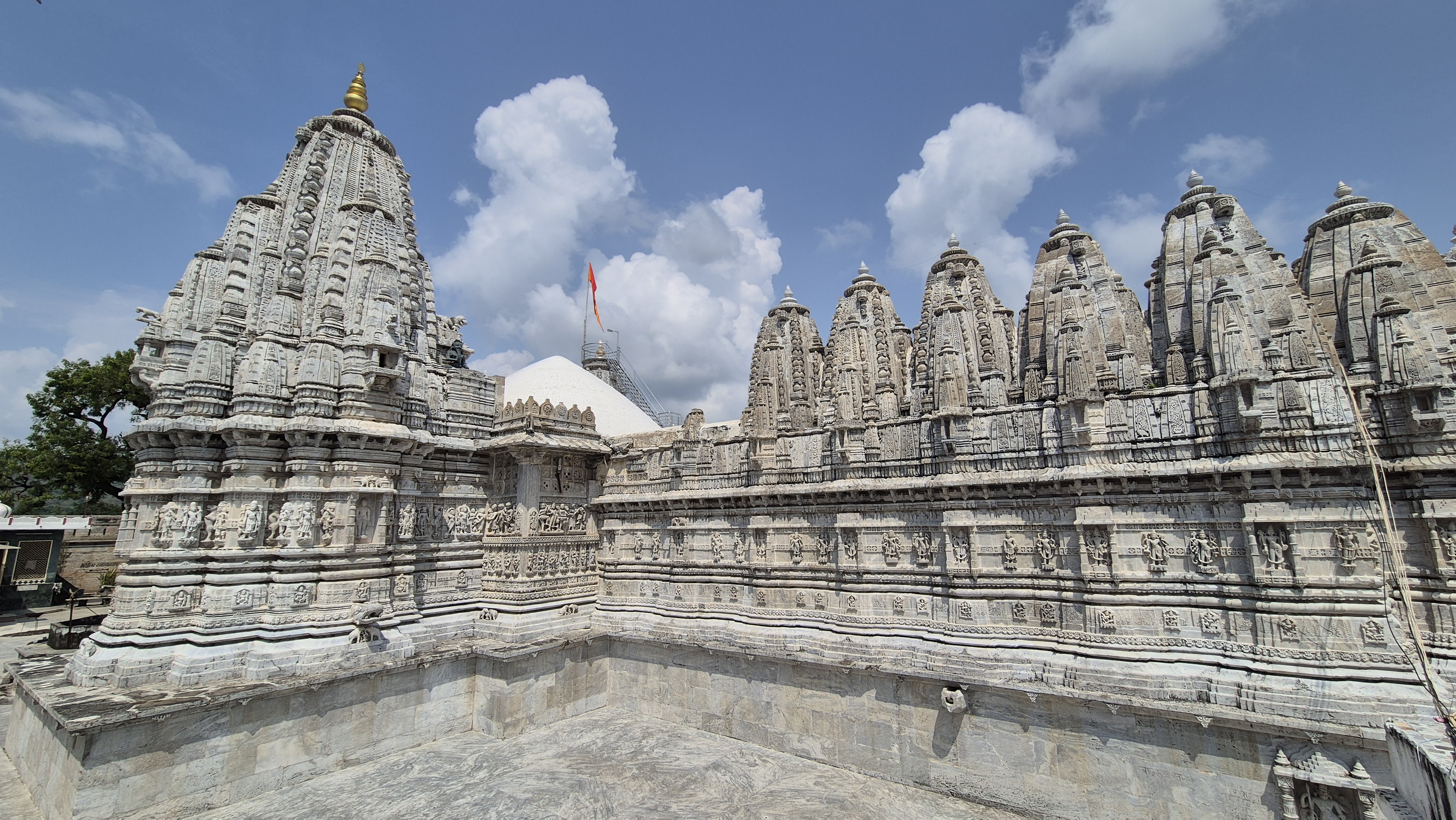
Local tradition records that the earliest shrine at this site was constructed in mud-brick form during the 2nd century CE, establishing Rishabhdev as an ancient Digambar Jain pilgrimage destination. The structure underwent significant reconstruction in the 8th century CE, when it was rebuilt using parewa stone—portions of this stonework survive in the temple today. A dated inscription from Vikram Samvat 1431 (1374 CE) documents renovation work on the garbhagriha shikhara and Khela Mandap under the direction of Digambar Jain Bhattaraka Shri Dharmakirti, with the work carried out by Shah Hardas and his sons.
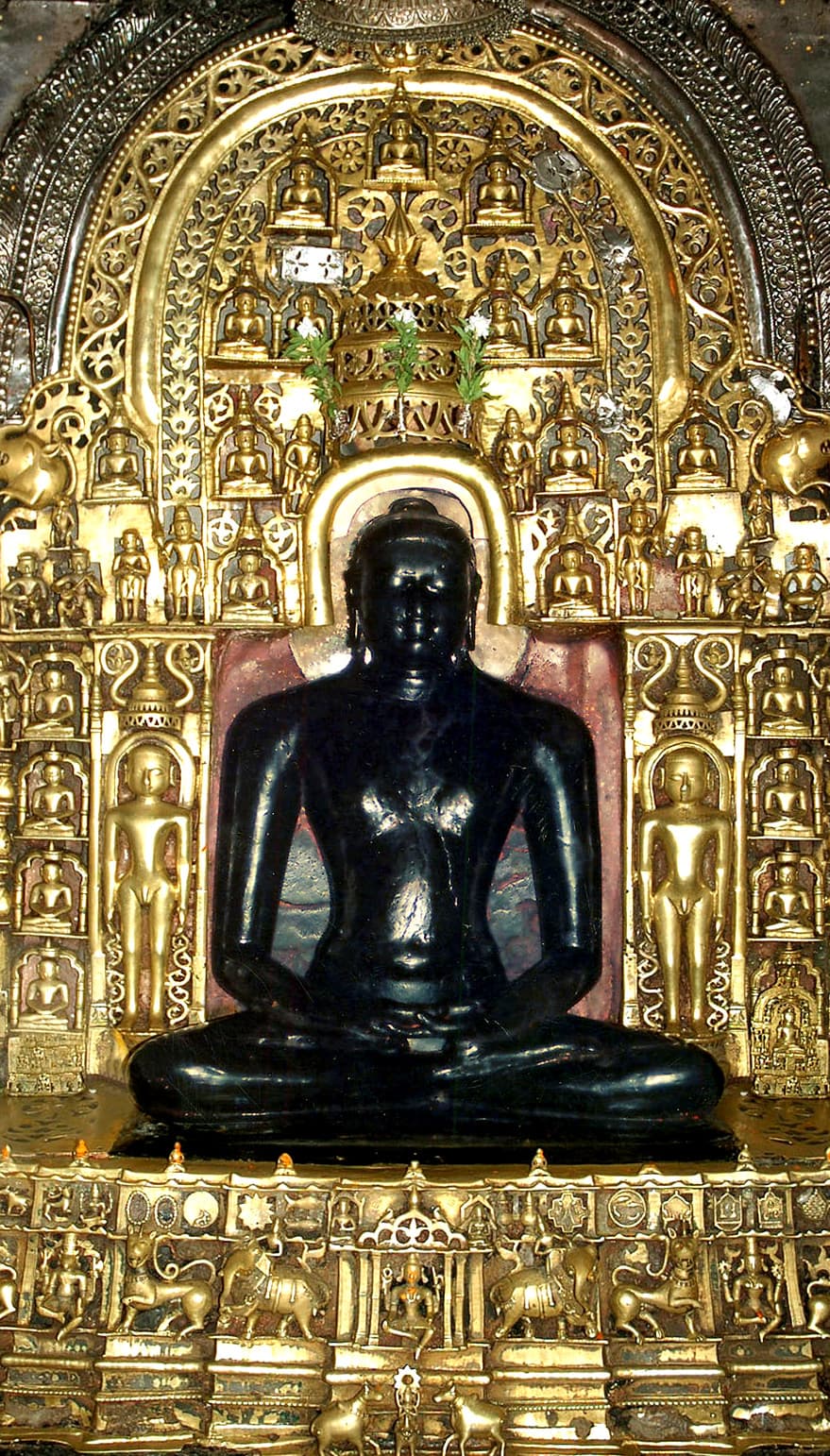
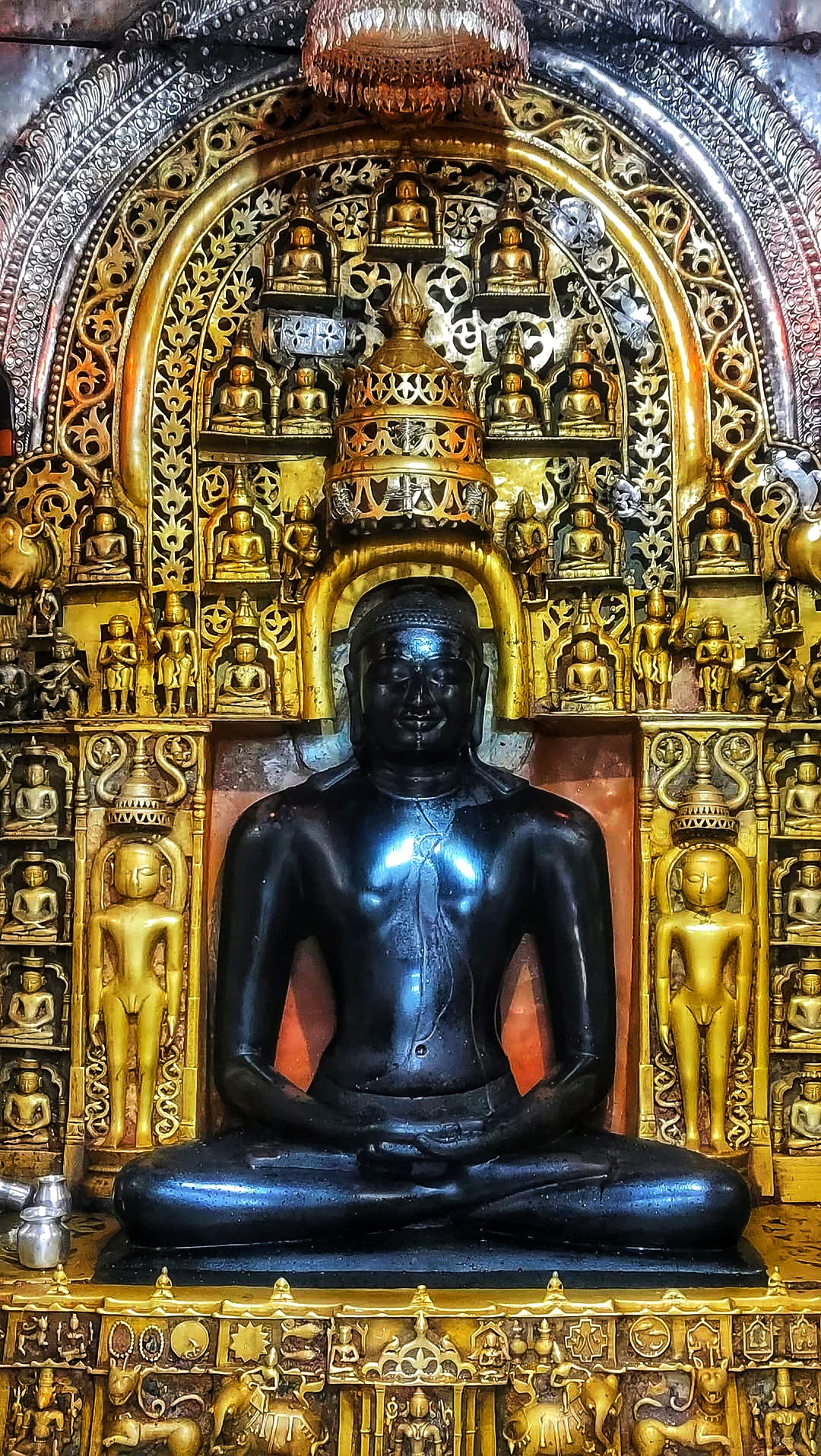
The temple complex reflects distinctive Digambar Jain architectural traditions. A Sahasrakuta Jinalaya houses 1,008 idols, a feature particular to Digambar practice. The walls and pillars display exclusively Digambar khadgasana reliefs, and the complex includes 52 jinalayas inspired by the mythological Nandishwar Dvips. The rear panel of the main idol depicts Marudevi's sixteen dreams according to Digambar tradition, completing the iconographic representation of all 24 Tirthankaras with 21 ancillary seated figures.
Daily Rituals and Darshan
The temple observes a distinctive schedule centered on the Abhishek ritual, which is performed twice daily—once in the morning and once in the afternoon. These abhishek ceremonies are the primary occasions when devotees may view the Digambar form of the principal deity. The exact timings vary seasonally between summer and winter schedules.
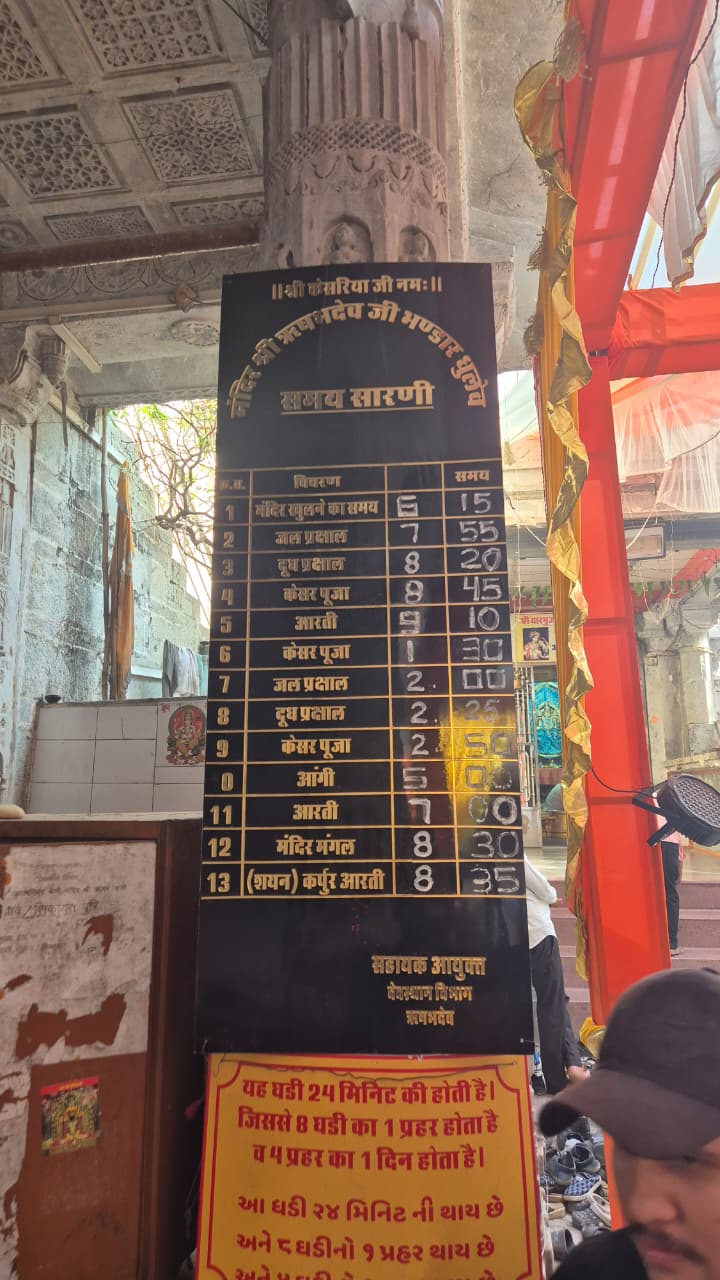
The temple employs a traditional Jal Ghadi, or water clock, to determine the precise timing of aarti, abhishek, and other rituals rather than relying on modern timekeeping devices. This ancient system reflects the temple's commitment to traditional practices. Visitors should note that darshan of the main idol is available only during these scheduled abhishek periods, making advance knowledge of timings essential for planning a visit.
The Temple Complex and Its Features
Beyond the main sanctum, the temple encompasses several structures of religious and architectural significance. The Khela Mandap, with its inscribed north wall documenting historical renovations, serves as an important ritual space. The extensive collection of 1,008 idols in the Sahasrakuta Jinalaya and the 52 jinalayas represent substantial devotional and artistic undertakings within the Digambar tradition.
The temple complex is situated within the natural landscape of the Aravalli hills, surrounded by the Kunwarika River. This setting provides both spiritual atmosphere and scenic context for pilgrimage. The site is currently managed by the Rajasthan Devasthan Vibhag (Devasthan Department of the Government of Rajasthan).
Visiting Information and Access
The temple is located at Rishabhdeo, Udaipur, Rajasthan, approximately 65 to 69 kilometers south of Udaipur city on National Highway 48. The coordinates are 24.1°N, 73.4°E. Visitors can contact the temple administration at +91 2907230023 or ac.rishbdev.dev@rajasthan.gov.in for specific information regarding darshan timings, which adjust seasonally.
As a Digambar Jain temple, visitors should observe appropriate conduct and dress respectfully. The temple welcomes devotees from various traditions, though visitors should be mindful of the sacred nature of the space and the specific ritual schedules that govern access to the main deity. Photography policies and other visitor guidelines should be confirmed upon arrival or through prior contact with the temple administration.
How to reach
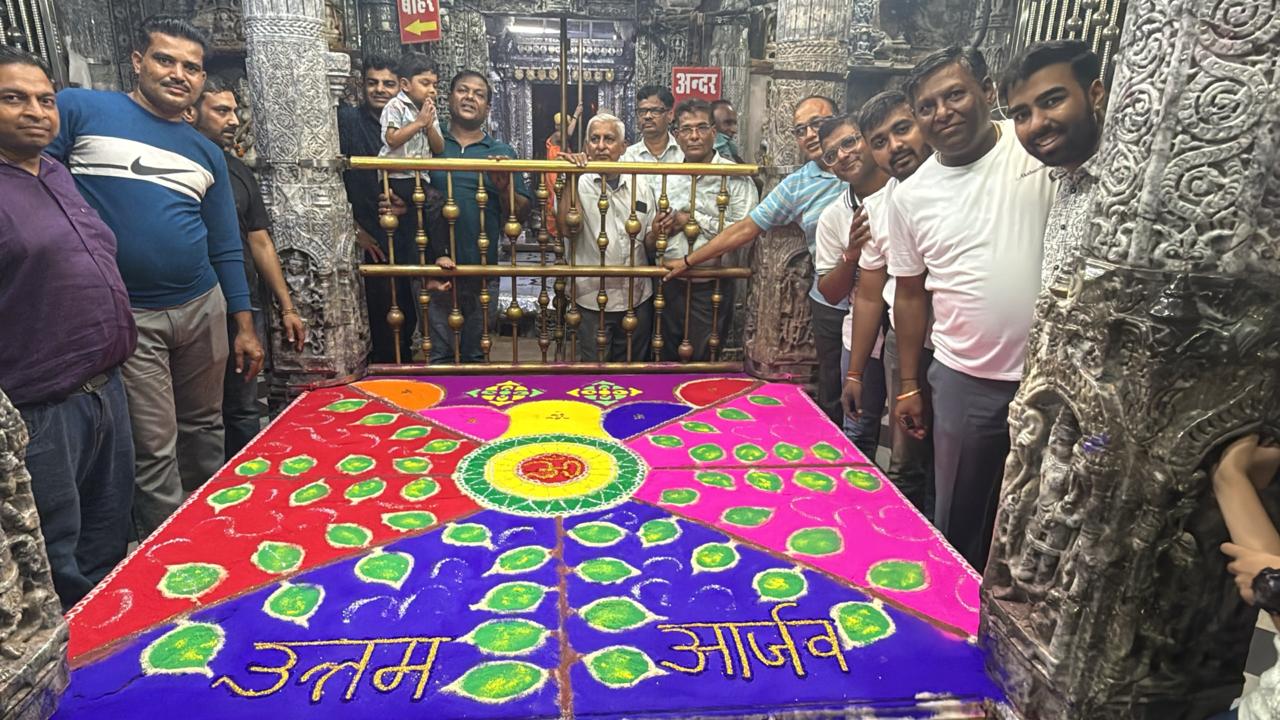
Temples near Rishabhdeo
Shiva-Shakti temple, Abhapur
The Shiva-Shakti Temple in Abhapur, nestled within Polo Forest in Gujarat's Sabarkantha district, is an ancient shrine dedicated to Lord Shiva with secondary sanctums for Surya…

Sharaneshwar Temple, Abhapur
Sharaneshwar Temple in Abhapur, Polo Forest, Gujarat is an ancient shrine dedicated to Lord Shiva, situated between river streams with sacred caves and a mystical yantra forming…
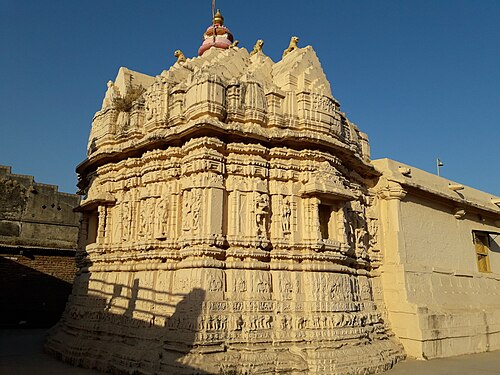
Brahma Temple, Khedbrahma
Brahma Temple in Khedbrahma is one of India's rare shrines dedicated to Brahma, the creator god, constructed in the late 11th century and representing an extraordinary pilgrimag…
Bhavnath Temple, Mau
Bhavnath Temple is an ancient shrine dedicated to Shiva in Mau village, Aravalli district, Gujarat, estimated to be approximately 1300 years old. The temple remains open 24 hour…
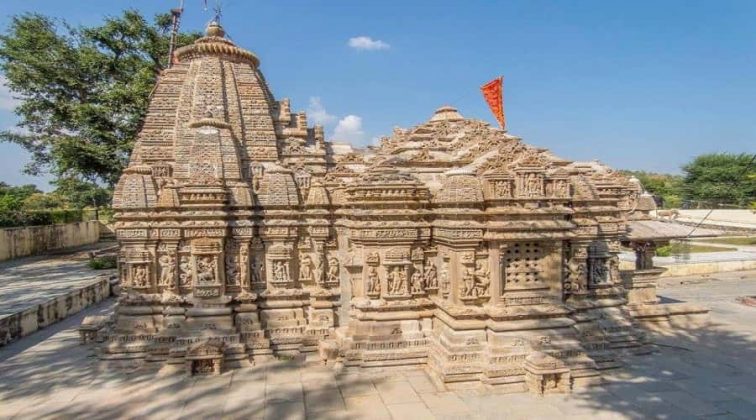
Ambika Mata Temple
Ambika Mata Mandir in Jagat village, Rajasthan, is a 10th-century rock-cut temple dedicated to Ambika Devi, a form of Goddess Durga, renowned for its pentagonal architecture and…
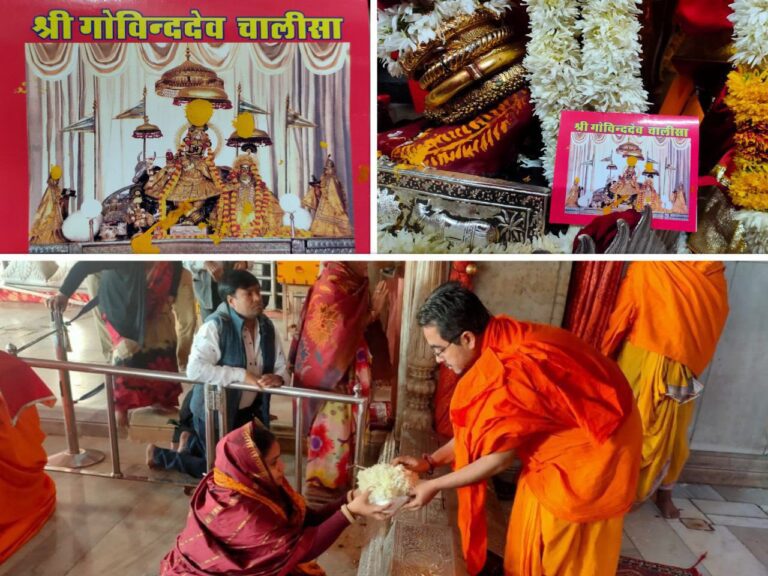
Sanchareswar Mahadev Temple
Sanchareswar Mahadev Temple is a Shiva shrine located in Umarda village, Udaipur, Rajasthan, drawing devotees for worship and festival celebrations throughout the year.