Tanah Lot
About Tanah Lot
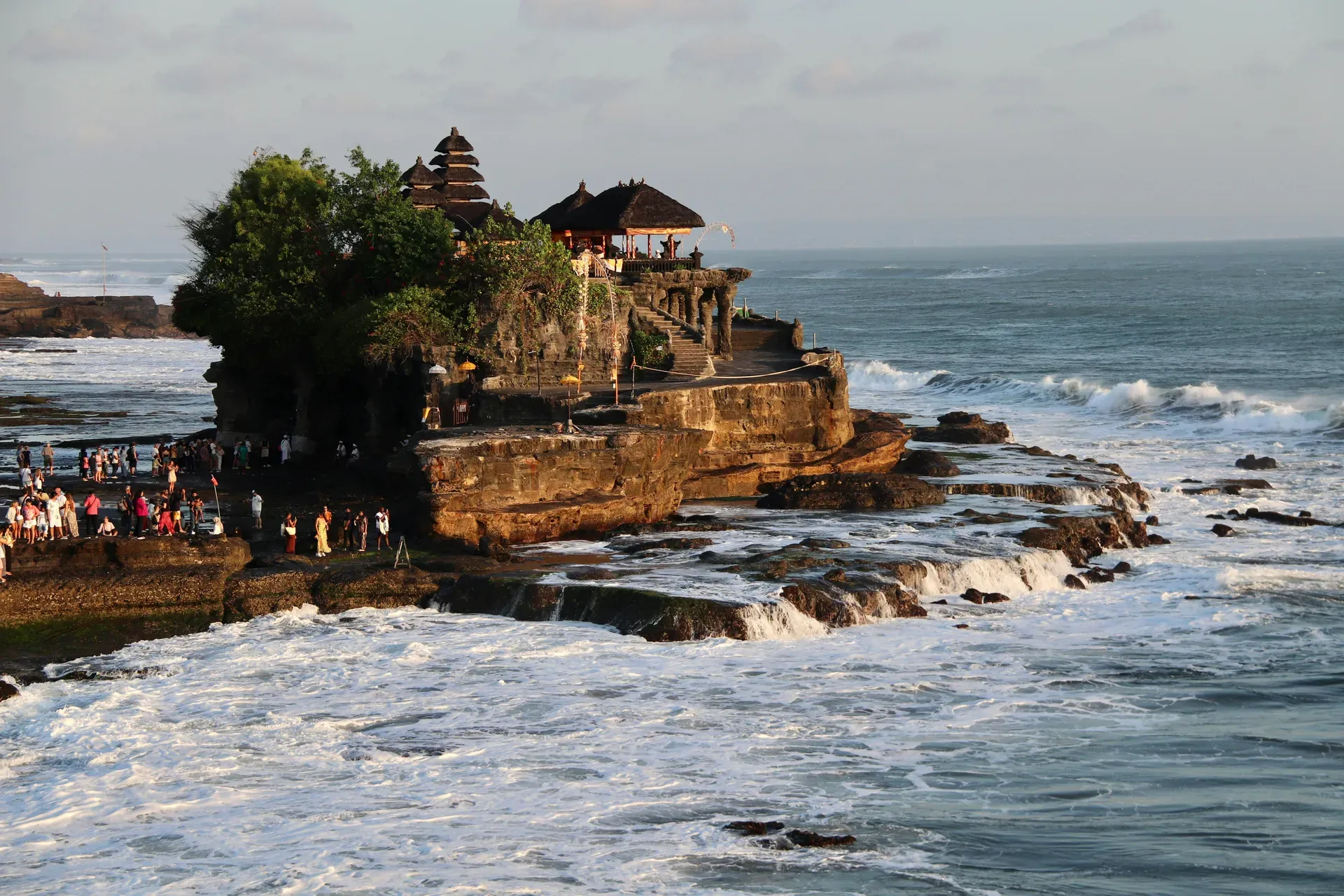
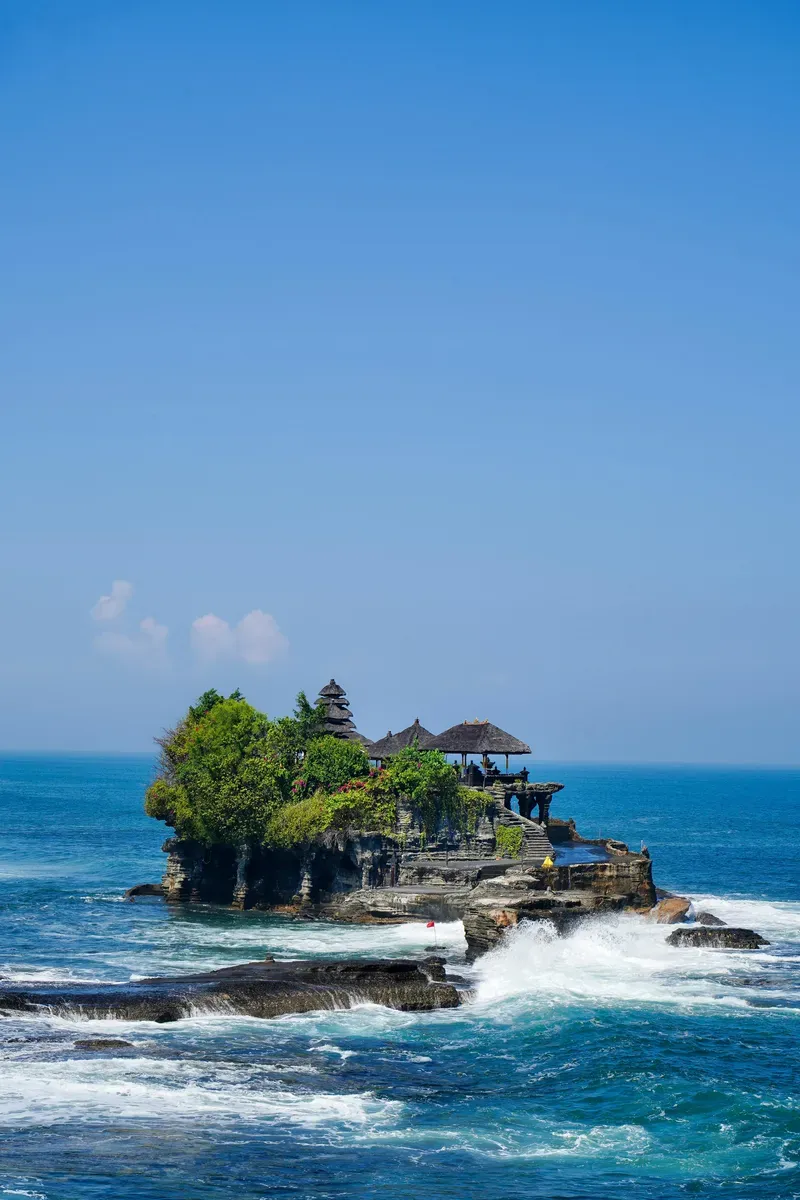
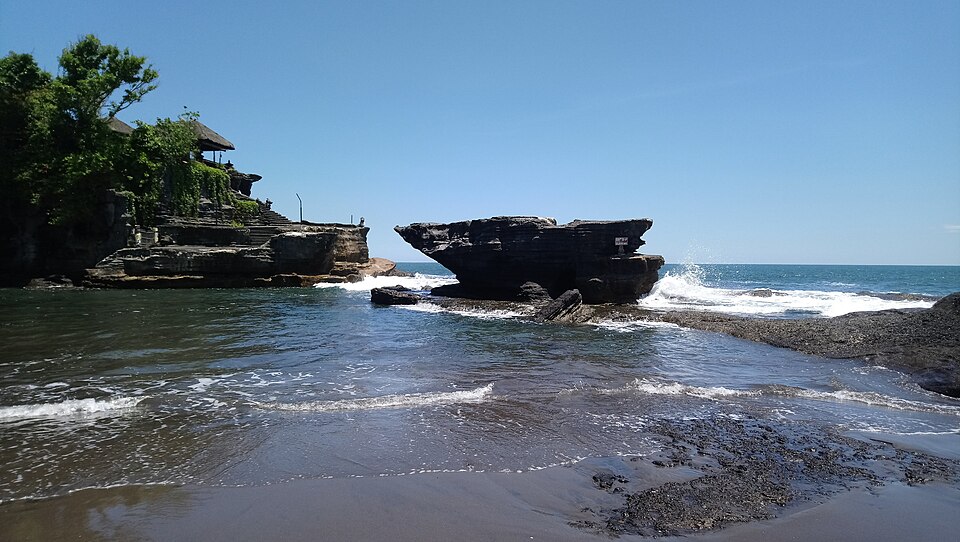
High priest Dang Hyang Nirartha established Tanah Lot during the sixteenth century, drawn to the site's natural beauty and spiritual potential. For centuries the temple consisted of the natural coral rock formation itself, exposed continuously to the ocean's force. By the 1980s, significant erosion threatened the structure's survival. A major restoration project, funded through a substantial loan from the Japanese government, reinforced the rock's foundation to prevent further deterioration. This intervention means that approximately one-third of the rock formation visible today consists of artificial reinforcement, though the site retains its essential character as a sea temple anchored to its original location.
Visiting at Low Tide and Sunset
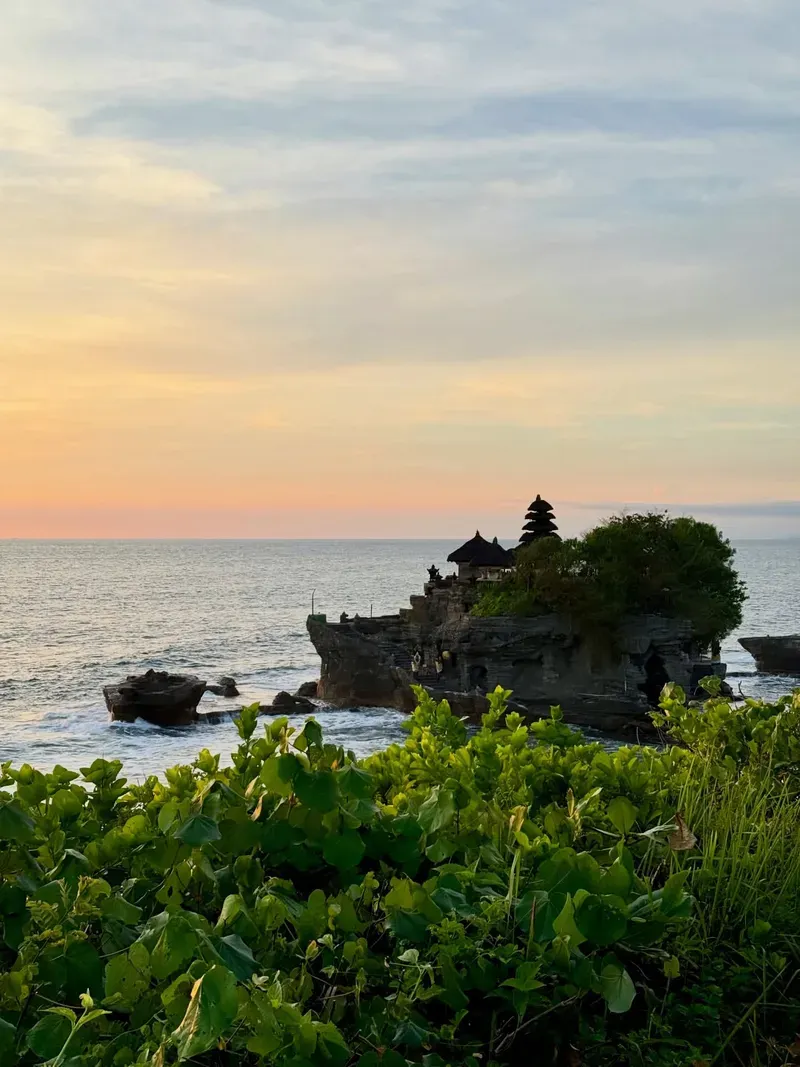
The temple opens at 07:00 and remains accessible until sunset. The most rewarding visit combines two experiences: arrival by 16:00 to secure a viewing position for the sunset period between 18:00 and 18:45, and a visit during low tide to access the rock's base. When the tide recedes, the exposed sand allows visitors to walk approximately twenty metres across to reach the temple foundation. At the base, a natural freshwater spring called Tirta Pabersihan flows beneath the rock formation—a phenomenon that provides drinking water despite the surrounding saltwater environment. Temple priests administer blessings using water from this spring, a practice known as melukat or purification. The dry season from April to October offers the clearest atmospheric conditions for viewing and photography.
Daily Worship and Sacred Elements
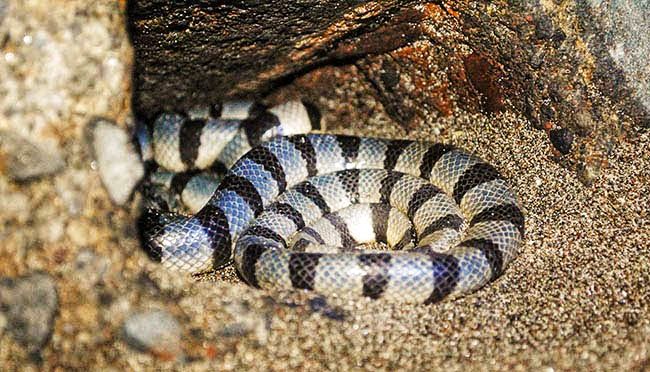
Canang sari—small daily offerings of flowers and incense—maintain the devotional rhythm at Tanah Lot, as is customary across Balinese Hindu temples. The site houses a small cave at the rock's base where banded sea kraits, venomous marine reptiles, are kept and revered as sacred guardians of the temple. Local keepers maintain these snakes in a docile state, permitting visitors to observe them safely while exploring the lower coral formations. The temple's spiritual life centres on sea-temple worship and the melukat blessing practice, through which pilgrims seek purification and good fortune.
Festivals and the Balinese Calendar
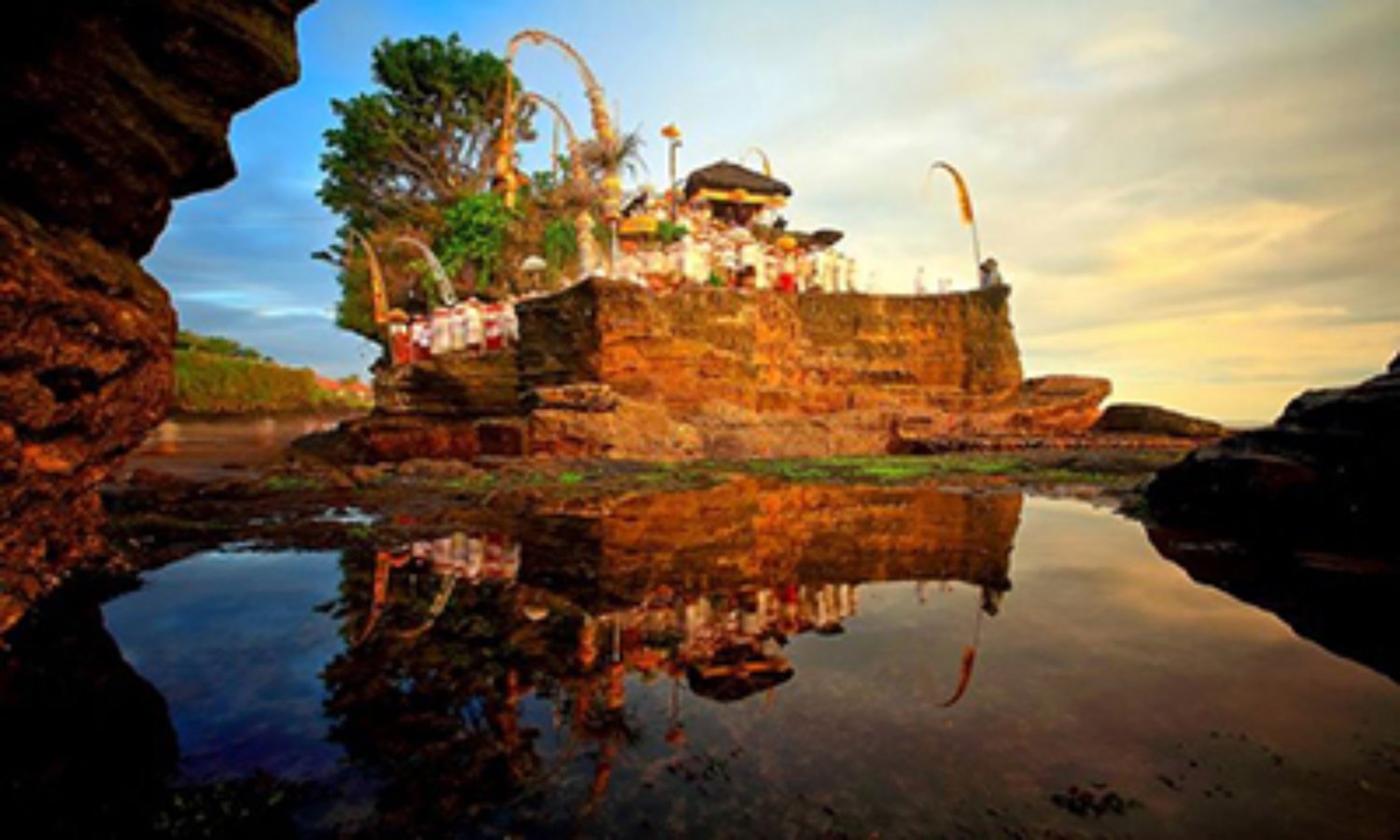
Tanah Lot observes celebrations according to the Pawukon calendar, the traditional Balinese Hindu cycle. The temple's anniversary, known as Odalan or Piodalan, occurs every 210 days and draws devotees in ceremonial dress bearing towering offerings, accompanied by gamelan music and prayer. Galungan and Kuningan, major Balinese Hindu festivals marking dharma's triumph, are observed across the island including at Tanah Lot, with penjor poles erected and family offerings made. Kuningan, occurring ten days after Galungan, honours ancestral spirits before their departure, and the sea temple receives special offerings during this period. Exact dates vary yearly according to the Pawukon system.
Practical Information for Visitors
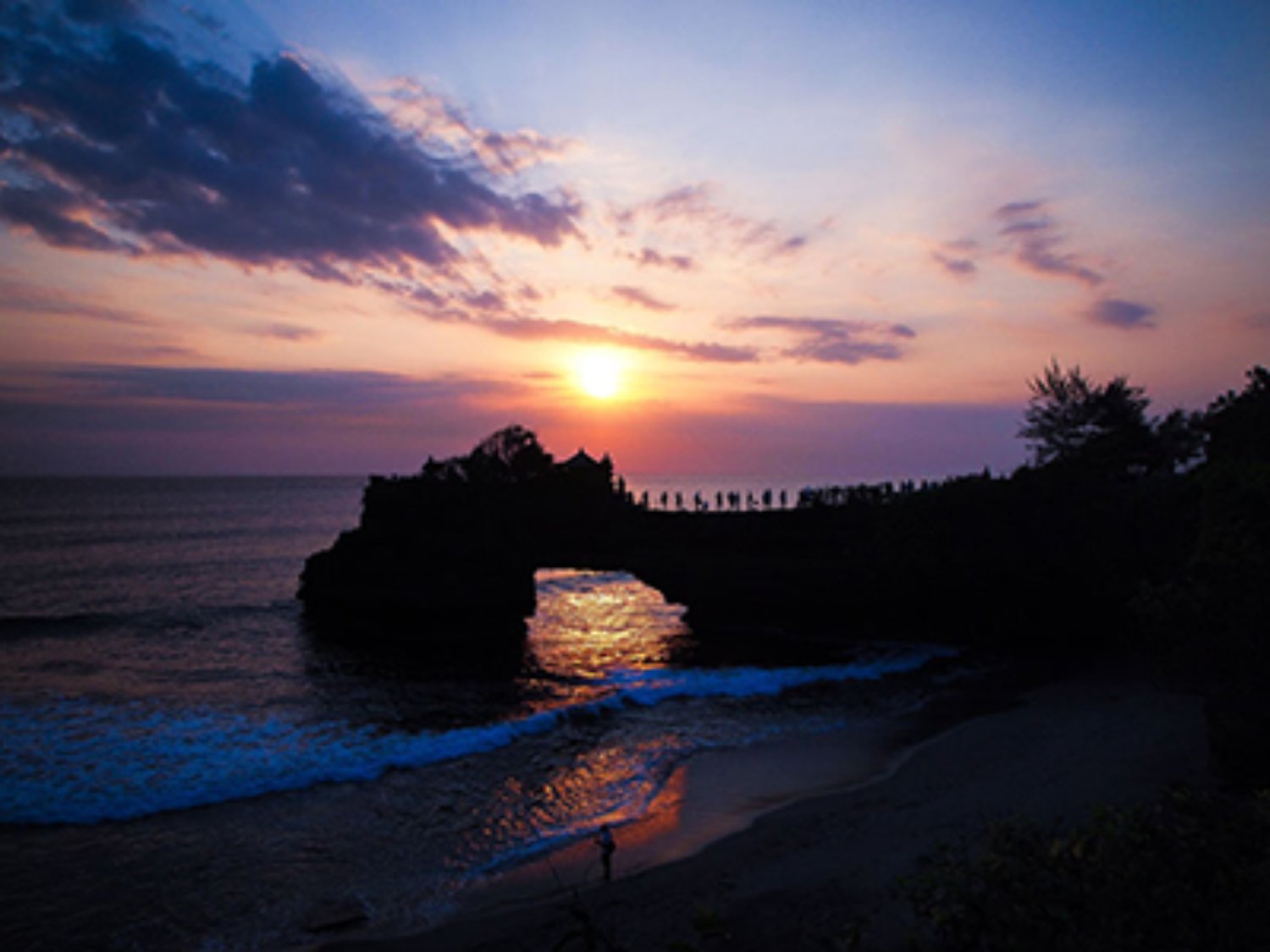
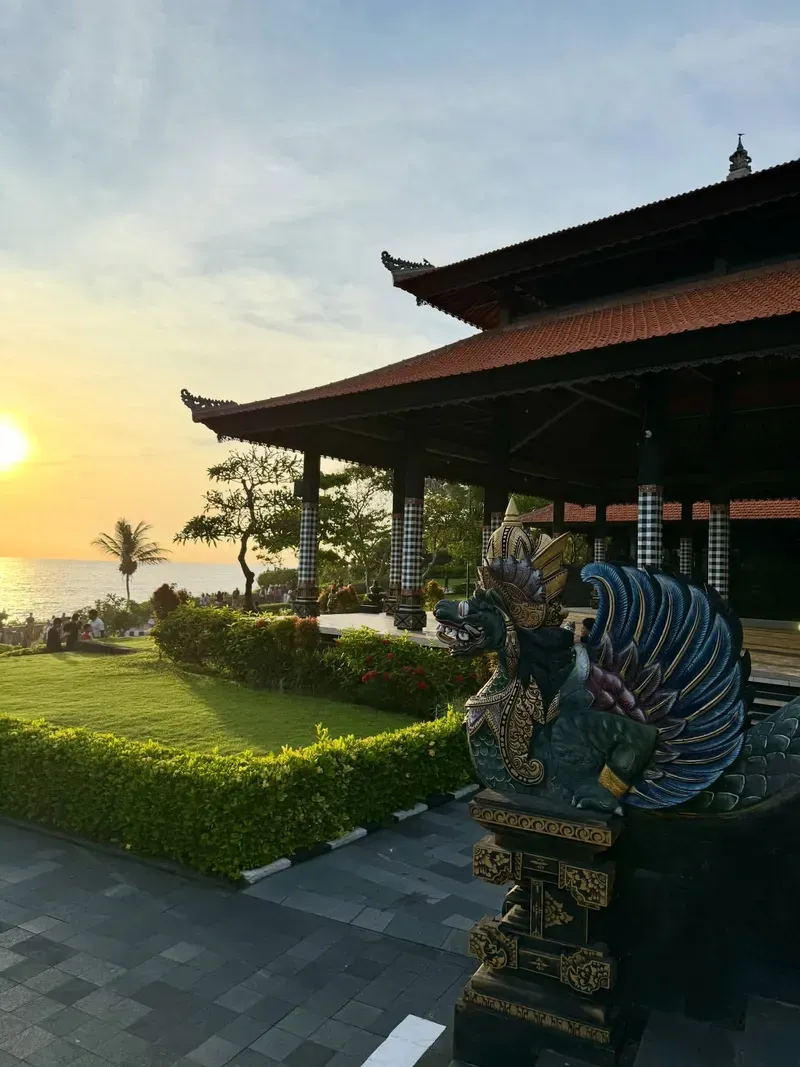
The temple is located in Beraban village within Tabanan Regency, Bali. The nearest airport is Ngurah Rai International Airport in Denpasar. Visitors should plan to arrive by 16:00 to secure good positions for sunset viewing, either on the Sunset Terrace or the southern cliffs. The clearest photographic conditions occur between April and August. Modest dress is appropriate when visiting an active Hindu temple; temples of this tradition typically request that visitors cover shoulders and knees. Visitors wishing to descend to the rock base for the melukat blessing should time their visit for low tide. A nearby sister temple, Batu Bolong, located a five-minute walk from the main site, features a natural rock archway and hosts a daily Kecak Fire Dance performance beginning at 18:00, offering an alternative vantage point for sunset viewing.
How to reach

Temples near Tanah Lot
Pura Petitenget
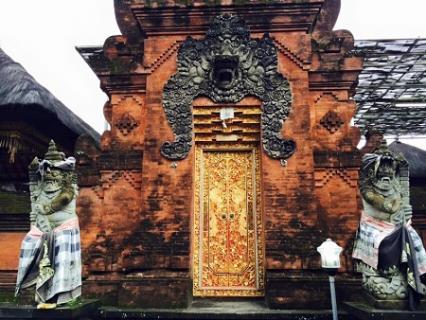
Pura Petitenget is an ancient sea temple in Seminyak, Bali, established by Hindu priest Dang Hyang Nirartha to ward off dark spirits. Built with red brick and sandstone, it over…

Puser Tasik Temple
Puser Tasik Temple is a Hindu temple located in Delod Peken, Bali, Indonesia, serving the local Hindu community with observance of major festivals throughout the year.
Tambang Badung temple
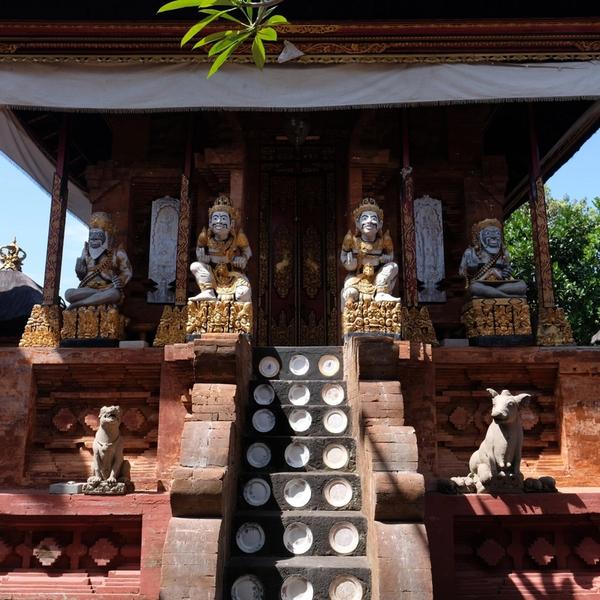
Tambang Badung temple is a Hindu mandir located in Pemecutan, Bali, dedicated to the worship of Hindu deities according to Balinese traditions.
Pura Agung Jagatnatha Kota Denpasar
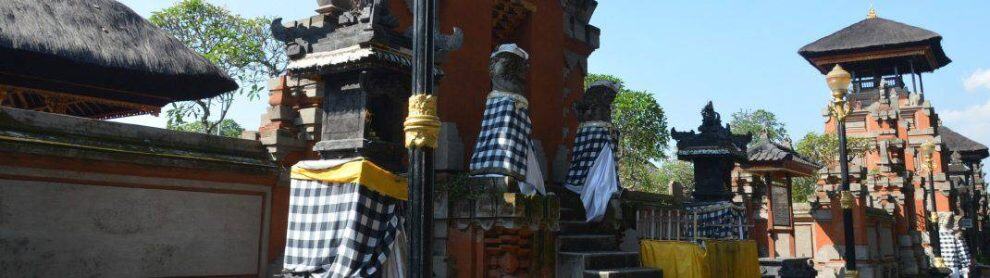
Pura Agung Jagatnatha is Denpasar's largest and most important Hindu temple, dedicated to Sang Hyang Widhi Wasa, the supreme god in Balinese Hinduism. Built as a unifying place…
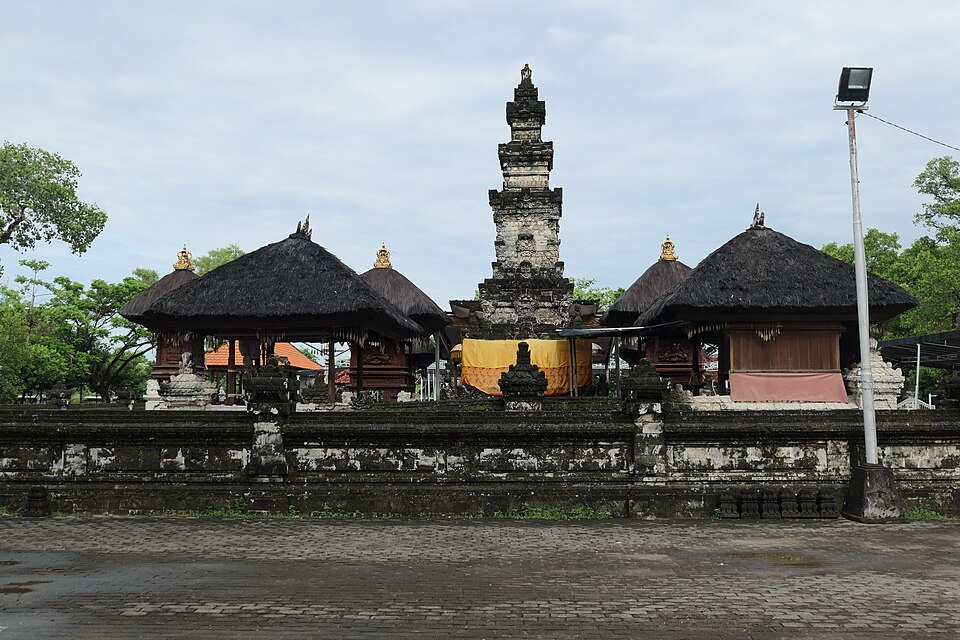
Pura Dalem Sakenan
Pura Dalem Sakenan is a significant Balinese Hindu sea temple located on Serangan Island, dedicated to multiple deities and serving as a major pilgrimage site during the 210-day…
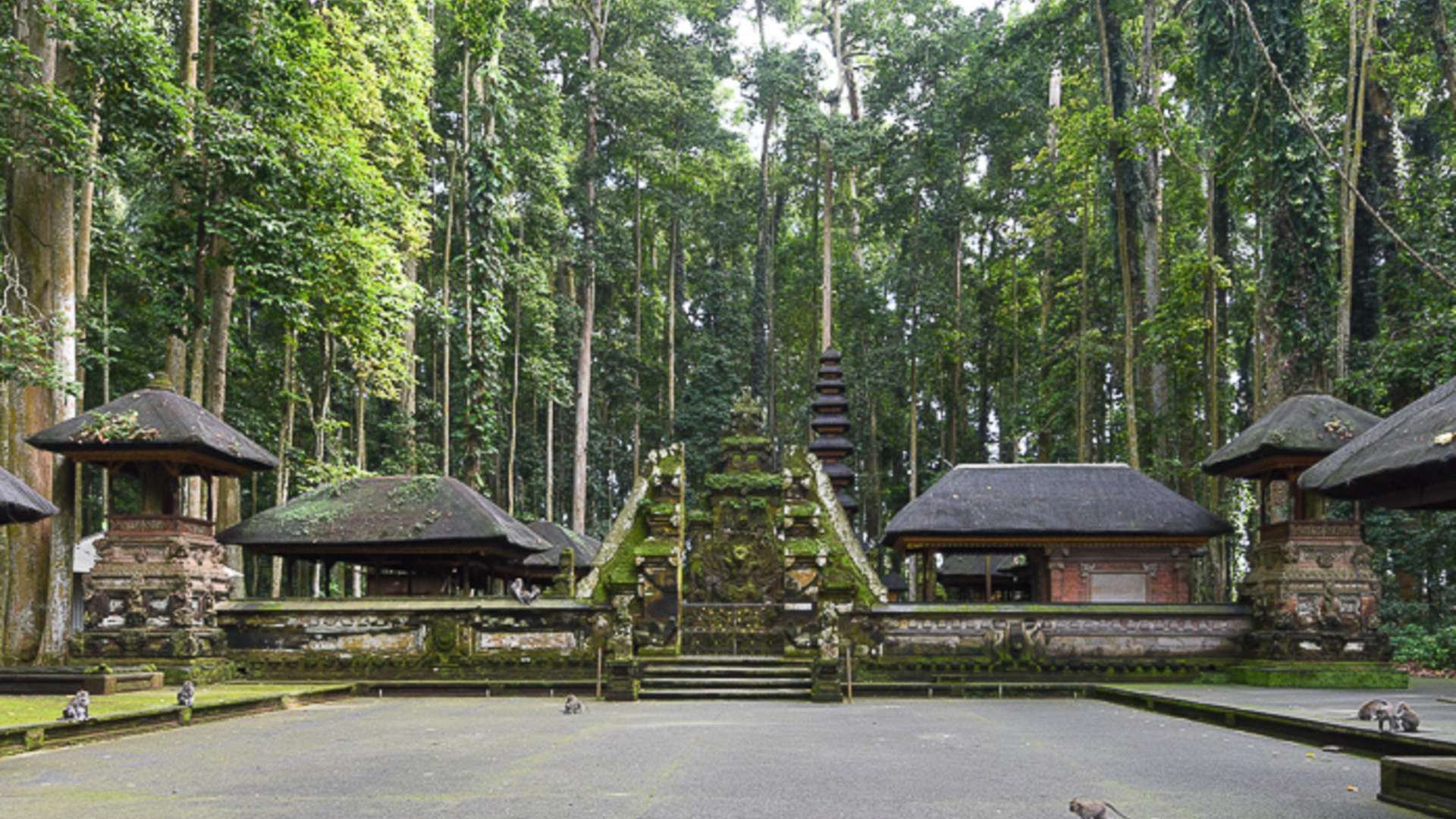
Pura Pucak Bukit Sari
Pura Pucak Bukit Sari is an ancient temple located within the sacred Sangeh forest in Badung, Bali, known for its integration with a natural sanctuary of monkeys and towering nu…