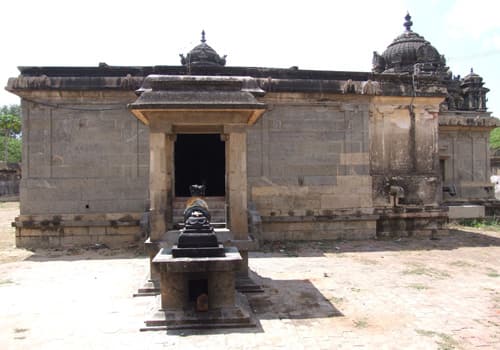
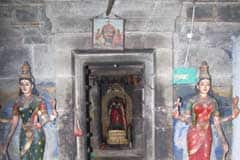
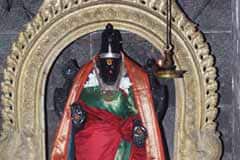
Venni Karumbeswarar Temple
About Venni Karumbeswarar Temple
The temple's origins are woven into local legend. Two sages who visited the region, sensing the presence of Shiva, debated which tree should be designated as sacred to the place. One argued for sugarcane; the other for the Nandhiavartham. According to tradition, a divine voice resolved the dispute by declaring both could hold sacred status. This dual sanctity is reflected in the temple's dual nomenclature: Karumbeswarar in Tamil and Rasapureeswarar in Sanskrit, *rasa* referring to the essence or juice extracted from sugarcane.
The temple's historical significance extends into the political realm. It is believed to be the birthplace of Vennikuyathiar, a noted Tamil scholar of the Sangam Age. Her compositions in the *Purananooru* record the military victories of the Chola king Karikal, particularly the battle known as Vennippor—the war of Venni—in which he defeated the Pandya and Chera chieftains at the age of eighteen. Both Karikal Chola and the emperor Musukunda are credited with extensive renovations to the temple, undertaken to celebrate their victories.
Festivals and Observances
The temple observes a full calendar of festivals throughout the year. Navrathri, celebrated over nine days in September and October, draws devotees for extended worship. Panguni Uthiram in March-April holds particular significance: on the 2nd, 3rd, and 4th days of this month, the rays of the sun fall directly upon the presiding deity—a phenomenon that marks these days as especially auspicious for darshan.
Additional festivals include Chitra Poornima (April-May), Vaikasi Visakam (May-June), Aani Tirumanjanam (June-July), Tirukarthikai (November-December), Tiruvadhirai (December-January), Thai Poosam (January-February), and Masi Magam (February-March). Devotees who have had their prayers answered traditionally offer *sarkarai pongal*—a sweet rice pudding—as an offering of thanksgiving to the deity.
Layout and Shrines
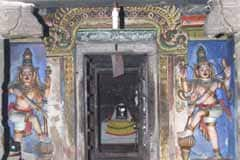
The temple faces east. Within its precincts stand multiple shrines and sacred features. A Nandi (the bull vehicle of Shiva) and a *palipeedam* (raised platform) are positioned near the entrance. Shrines to Murugan, Vinayagar (Ganesha), Gajalakshmi, and Bairavar occupy the temple grounds, along with a Navagraha shrine dedicated to the nine celestial bodies. Additional *koshta moortis* (wall sculptures) depict Narthana Vinayagar, Dakshinamurti, Lingothbavar, and Durga. The Surya Theertham (sacred water associated with the sun deity) and Chandra Theertham (lunar waters) serve as ritual water sources within the temple.
Visiting Information
The temple opens at 8:00 a.m. and closes at noon, reopening at 5:00 p.m. until 8:00 p.m. Visitors should dress modestly, covering shoulders and knees, and remove footwear before entering. Photography policies vary; it is advisable to ask permission before taking images inside the sanctum. The best times to visit are during the major festivals—particularly Panguni (March-April) for the sun phenomenon, Navrathri (September-October), and Masi Magam (February-March). Festival days and auspicious timings can be confirmed using a Tamil panchangam (calendar).
The temple is located at Sri Venni Karumbeswarar Temple, Koil Venni Post 614403, Needamangalam Taluk, Tiruvarur District, Tamil Nadu. For inquiries, the temple can be reached at +91-98422 94416. Nearby towns such as Kumbakonam serve as bases for pilgrims visiting multiple temples in the region.
How to reach
You may also visit
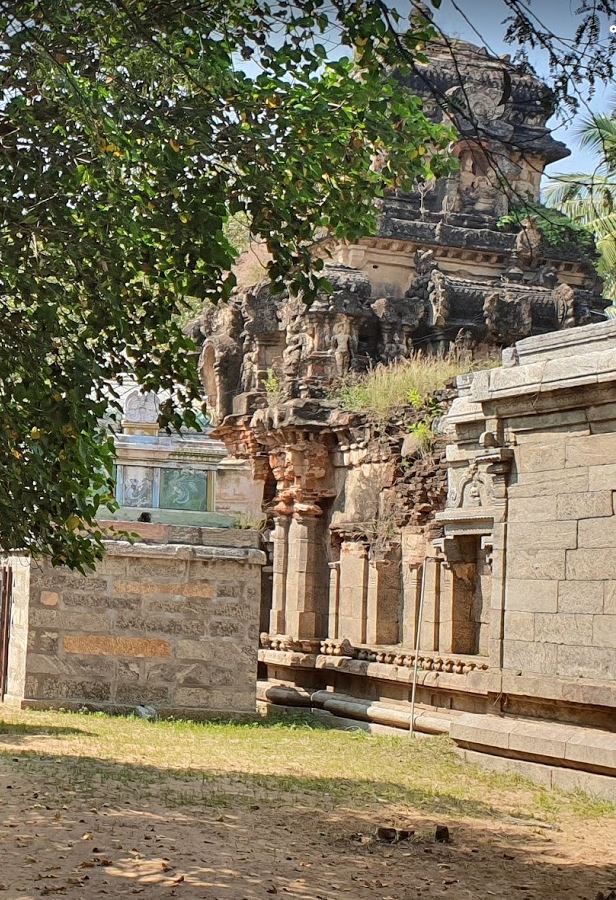
Agatheeswarar Temple, Karur
Agatheeswarar Temple in Thirumukkudalur, Karur district, is an ancient Hindu shrine dedicated to Shiva, situated at the sacred confluence of three rivers and believed to be over 1000 years old.
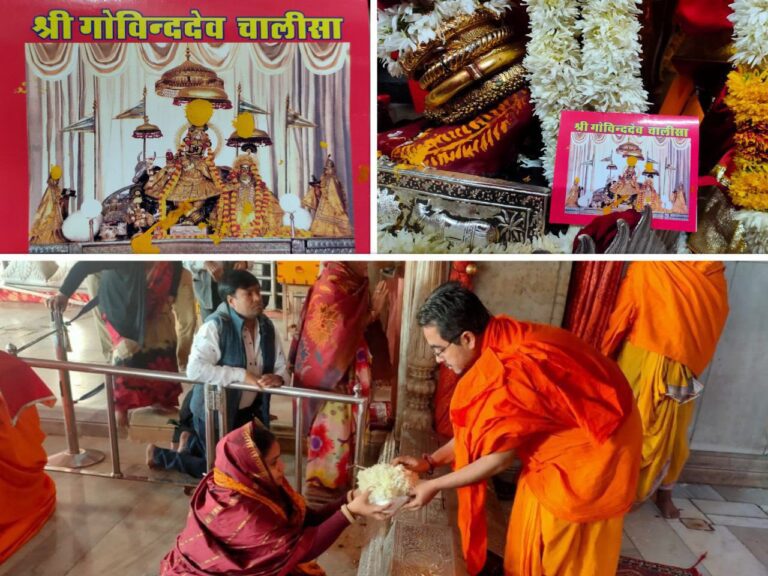
Kalyanji Temple
Kalyanji Temple in Jaipur's Chandpol Bazaar is an ancient Krishna shrine established in the 1820s, renowned for its seven daily aartis and special avatar darshan ceremonies during Akha Teej and Patottsav festivals.
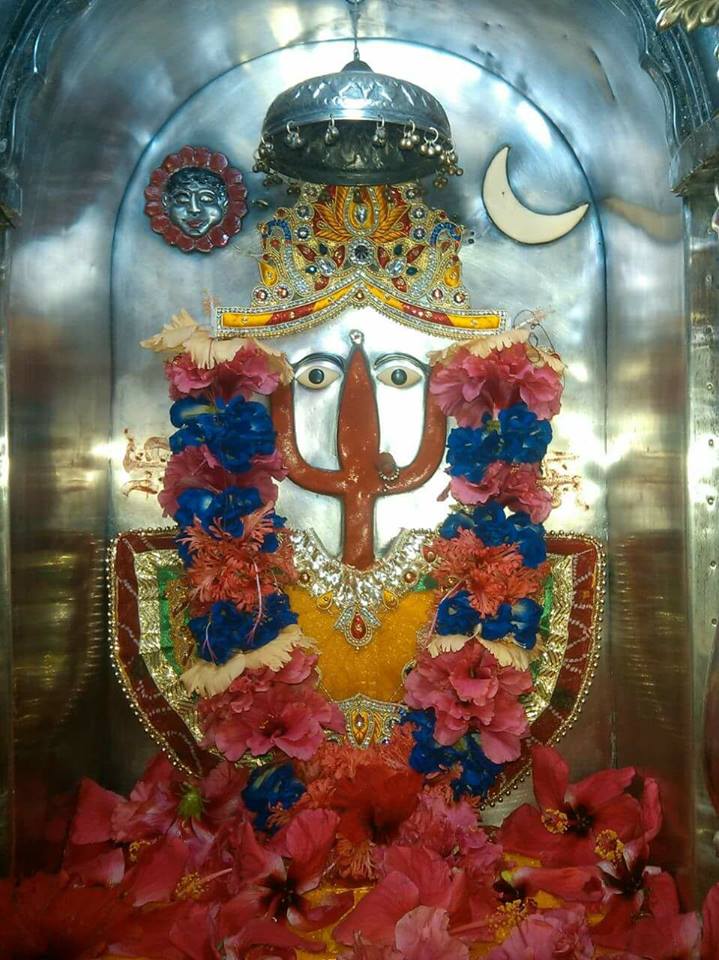
Rani Sati Mandir Mahuda
Rani Sati Mandir in Mahuda, Dhanbad District, is a Hindu temple established in 1992 that serves as a spiritual center for the local community and attracts devotees seeking blessings.