Uluwatu Temple
About Uluwatu Temple
Archaeological evidence indicates continuous occupation of this clifftop location since at least the 10th century. The temple underwent substantial expansion during the 11th century under the guidance of Empu Kuturan, a Javanese sage who shaped traditional Balinese temple architecture. His influence is visible in the split gateways (Candi Bentar) and the three-tiered Meru towers that characterize the complex today. In the 16th century, the priest Dang Hyang Nirartha added padmasana shrines to the site. Local tradition holds that Nirartha attained moksha at this exact location, lending the temple additional spiritual weight within Balinese religious practice.
Architecture and Layout
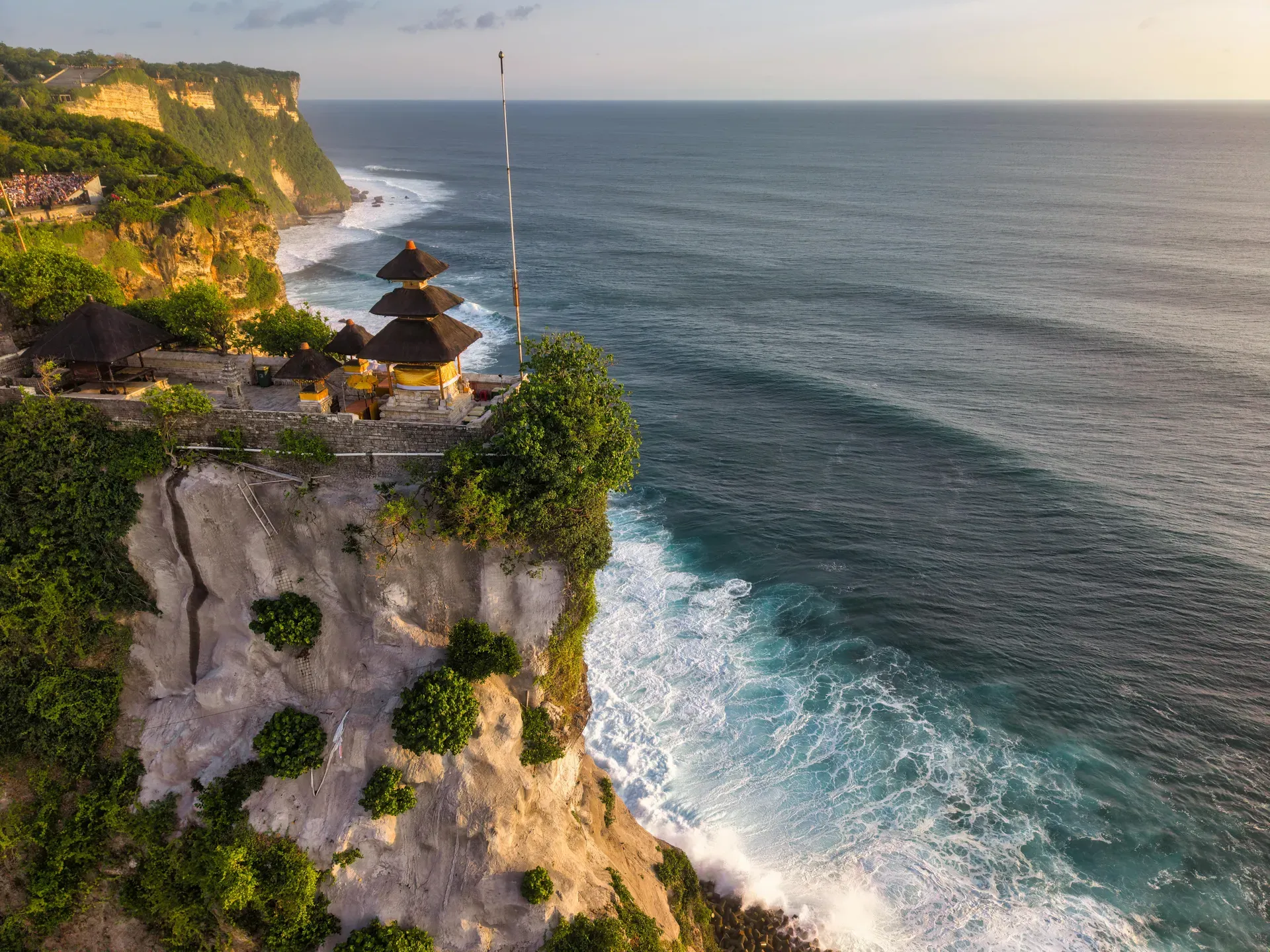
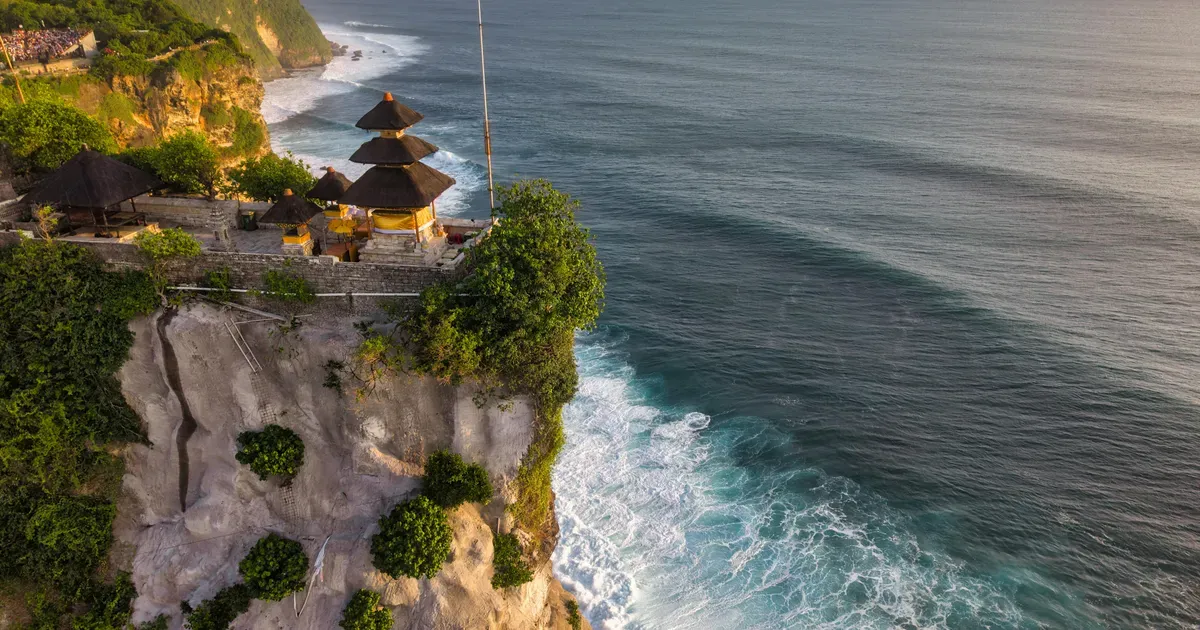
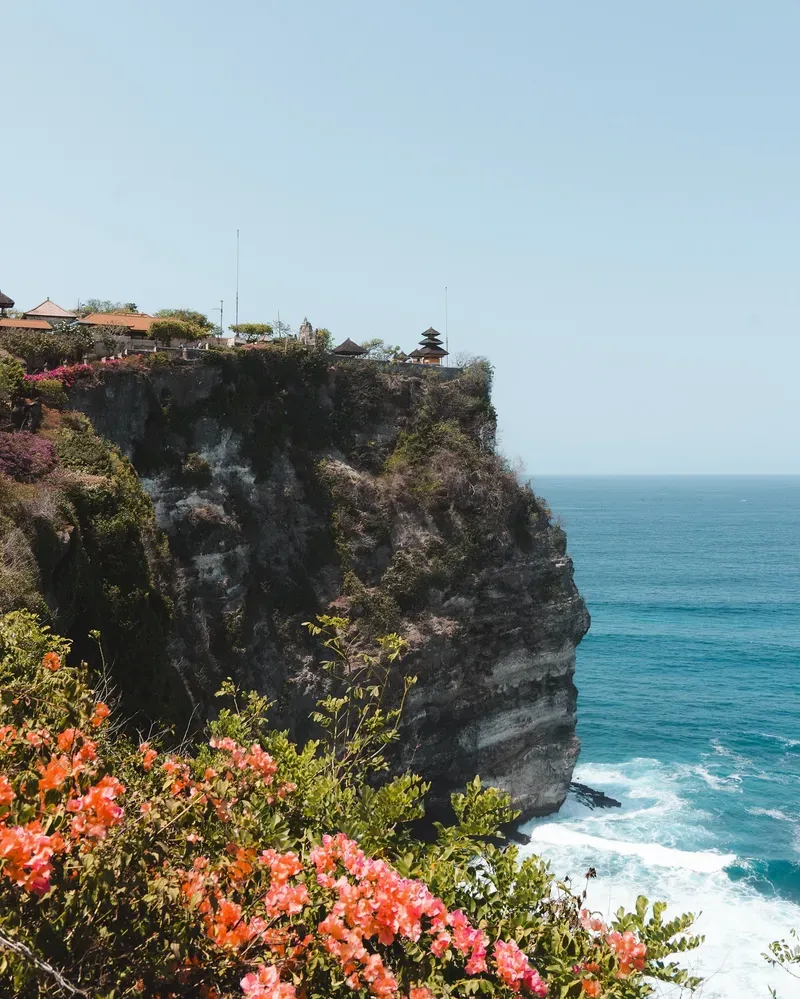
The temple complex reflects centuries of accumulated religious architecture. Visitors encounter split gateways and tiered towers typical of Balinese Hindu design, though the inner sanctum remains closed to non-Hindu worshippers. A paved pathway traces the cliff edge, allowing visitors to walk along the 70-meter drop while viewing the temple's silhouette against the ocean. The site includes a 1,200-seat open-air amphitheater built into the landscape, used primarily for evening performances. A small forest surrounding the complex provides habitat for approximately 650 long-tailed macaques, which local belief identifies as spiritual guardians of the temple.
The Kecak Fire Dance Performance
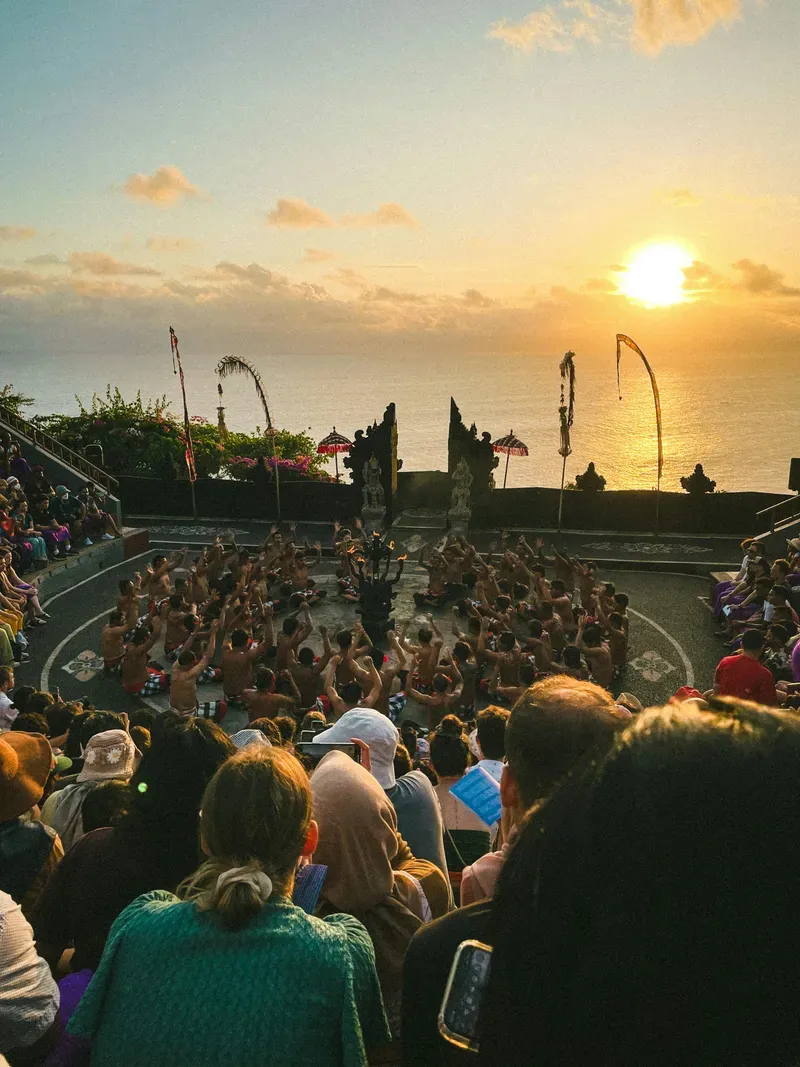
The temple's most visible cultural offering is the nightly Kecak Fire Dance, performed daily at 18:00. The 60-minute performance takes place in the amphitheater and features a chorus of 50 to 100 men who chant rhythmically while enacting scenes from the Ramayana epic. The performance requires a separate ticket (150,000 IDR according to available sources) beyond temple entry. The timing coincides with sunset, positioning the performers against the darkening sky and ocean. This performance has become the primary draw for most of the temple's annual visitors.
Visiting Practicalities
Temple access is available during daylight hours, with the Kecak Dance performance beginning at 18:00. The clearest atmospheric conditions occur between April and October, making this the optimal season for viewing both the temple and the ocean vista. Visitors should wear respectful clothing; Balinese Hindu temples typically require covered shoulders and knees. The clifftop location offers no shade along the walkway, so sun protection is advisable. The resident macaque population, while regarded as sacred, are known to take items from visitors—handlers sometimes trade fruit for retrieved belongings. Visitors should secure valuables and avoid direct feeding of the animals.
Wildlife and Natural Setting
The forest surrounding the temple complex supports a population of long-tailed macaques that inhabit the clifftop environment. These animals hold spiritual significance within the temple's religious framework. Their presence adds a naturalistic dimension to the visit, though their behavior toward tourists—particularly their tendency to appropriate unattended items—requires awareness. The dramatic cliff setting itself, dropping directly into the Indian Ocean, creates the temple's most striking visual feature and contributes substantially to its appeal as both a religious and scenic destination.
How to reach
You may also visit
Agatheeswarar Temple, Karur
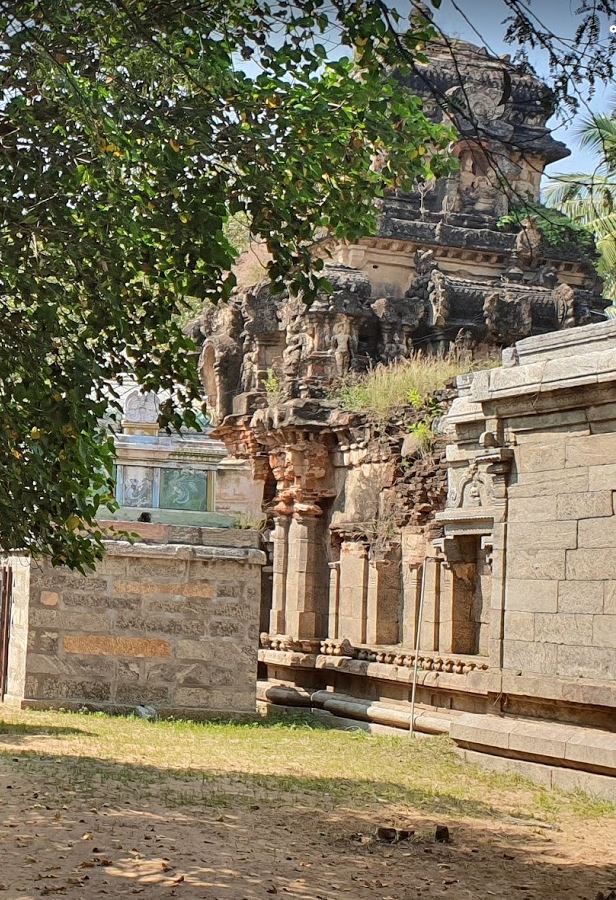
Agatheeswarar Temple in Thirumukkudalur, Karur district, is an ancient Hindu shrine dedicated to Shiva, situated at the sacred confluence of three rivers and believed to be over 1000 years old.
Kalyanji Temple
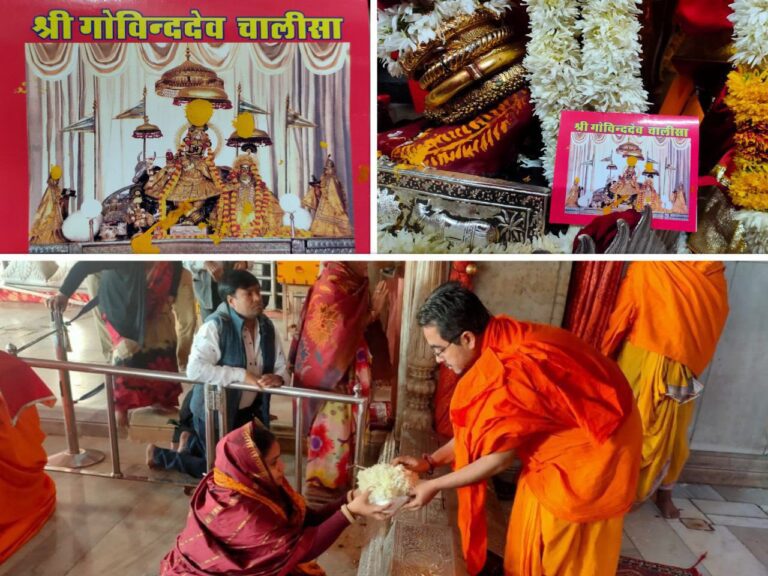
Kalyanji Temple in Jaipur's Chandpol Bazaar is an ancient Krishna shrine established in the 1820s, renowned for its seven daily aartis and special avatar darshan ceremonies during Akha Teej and Patottsav festivals.
Rani Sati Mandir Mahuda
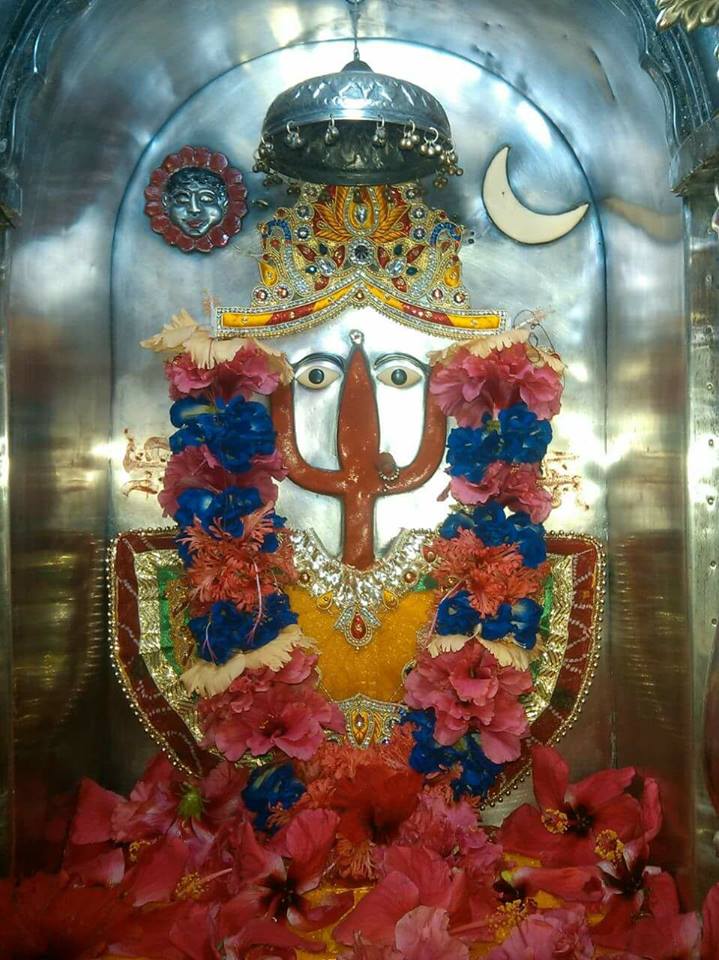
Rani Sati Mandir in Mahuda, Dhanbad District, is a Hindu temple established in 1992 that serves as a spiritual center for the local community and attracts devotees seeking blessings.