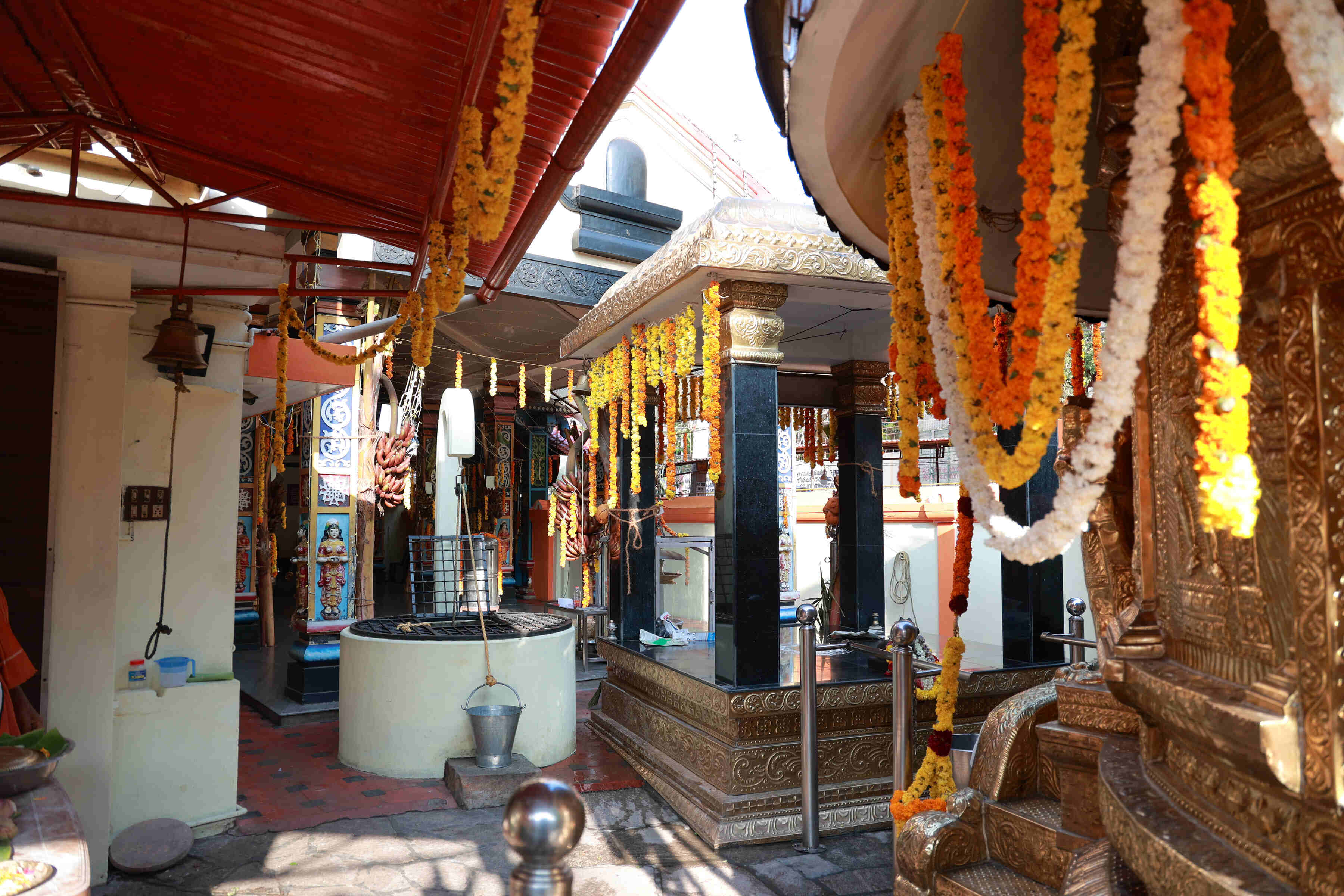
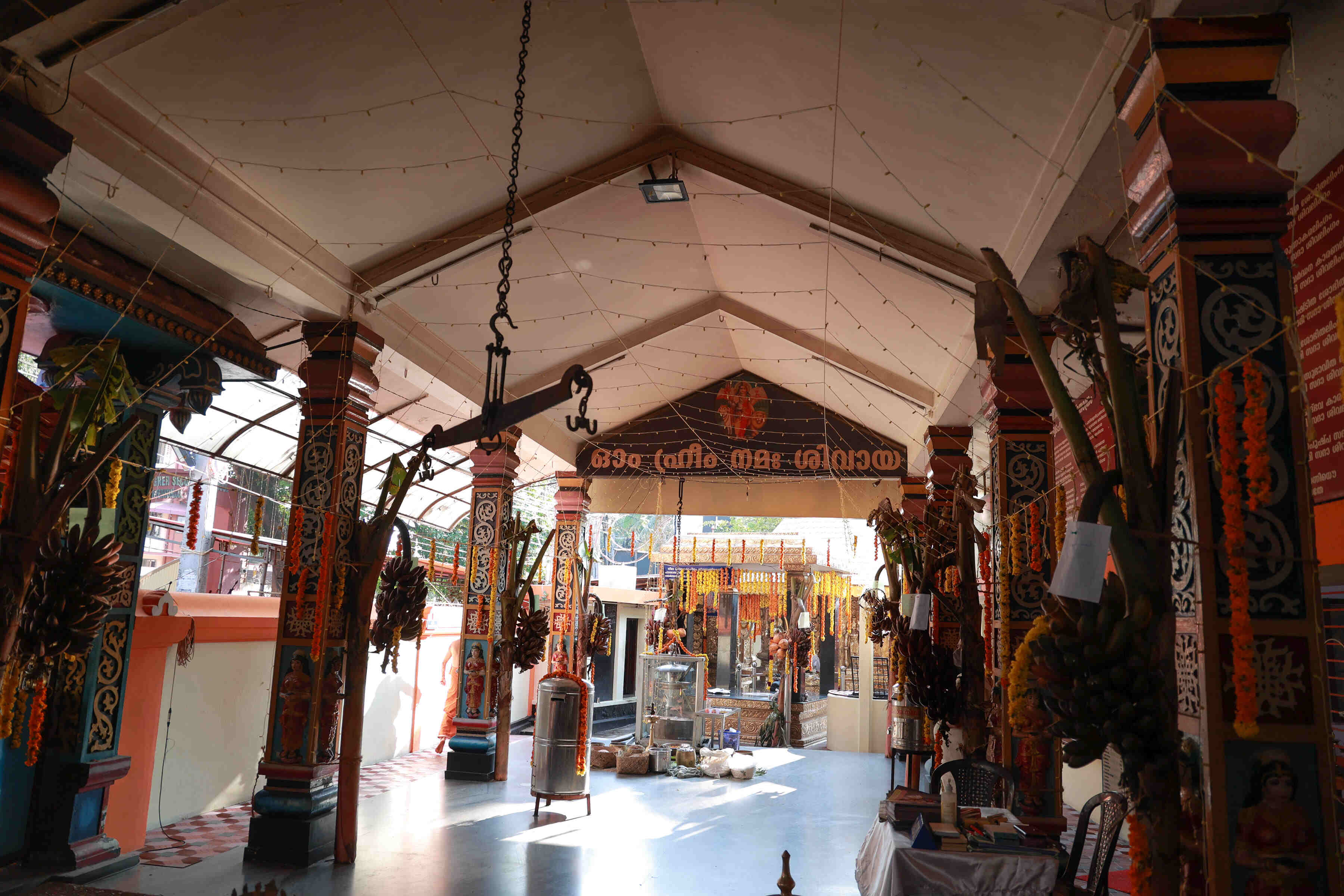

Sasthamangalam Mahadevar Temple
About Sasthamangalam Mahadevar Temple
Local tradition holds that the temple's origins lie in a remarkable discovery. A woman sharpening her knife on a rock in the area found the stone to be a bleeding Shiva Lingam. Recognizing the sacred nature of this sign, the local community consecrated the site and established the temple at that location. Within the southern prakara (outer courtyard) of the temple, two pairs of footprints are preserved on rock. The larger impressions are attributed to Kiradha Murthi, a fierce manifestation of Shiva, while smaller prints are believed to belong to Lord Krishna. Local belief connects these sacred markings to agricultural prosperity in the surrounding region, viewing them as tangible evidence of divine presence.
Worship and Daily Darshan
The temple opens at 5:00 a.m. and closes at 11:00 a.m. in the morning; evening hours run from 5:00 p.m. to 8:00 p.m. These timings allow devotees to visit during both early morning and evening periods, when worship is traditionally performed in Hindu temples. The temple maintains a distinctive practice regarding circumambulation around the sanctum: devotees are permitted to perform a full pradakshinam (complete circuit) around the inner sanctum, differing from the customary three-quarters circumambulation found in many other Shiva temples. This tradition has been upheld since the temple's establishment and has been confirmed through astrological consultation, making it a notable feature of worship here.
Festivals and Ritual Observances
The temple observes three major festivals throughout the year. Maha Shivrathri, celebrated in February or March, is the principal festival honoring Shiva, during which special rituals including ghee abhishek (ritual anointing with clarified butter) are performed with heightened ceremony. Margazhi Tiruvadhirai, observed in December or January, marks another significant celebration in the Hindu calendar. Additionally, a 41-day Mandalapuja is conducted in October, representing an extended period of continuous worship and ritual observance. These festivals draw devotees seeking blessings for longevity, health, prosperity, and the fulfillment of specific prayers, and they provide occasions for community gathering and spiritual renewal.
Planning Your Visit
Visitors should arrive during the posted opening hours: 5:00 a.m. to 11:00 a.m. or 5:00 p.m. to 8:00 p.m. The best times to visit are during the major festivals—Maha Shivrathri in February or March, and Margazhi Tiruvadhirai in December or January—when the temple is particularly active and special rituals are performed. As with most Hindu temples, visitors should dress modestly and respectfully. The hilltop location means the temple is somewhat removed from the city centre, so plan your journey accordingly. Specific information about facilities, accommodation, or parking should be confirmed directly with the temple or the Travancore Devaswom Board before your visit.
Reaching the Temple
The temple is located in Sasthamangalam ward, Thiruvananthapuram Municipal Corporation, at coordinates 8.5185345086947, 76.973882610505. The postal address is Sasthamangalam, Thiruvananthapuram, Kerala 695010. Visitors arriving in Thiruvananthapuram can use this address with local transport services or navigation applications to reach the hilltop shrine. The temple's position away from the city centre is intentional, designed to maintain the tranquility essential to its spiritual purpose.
How to reach
You may also visit
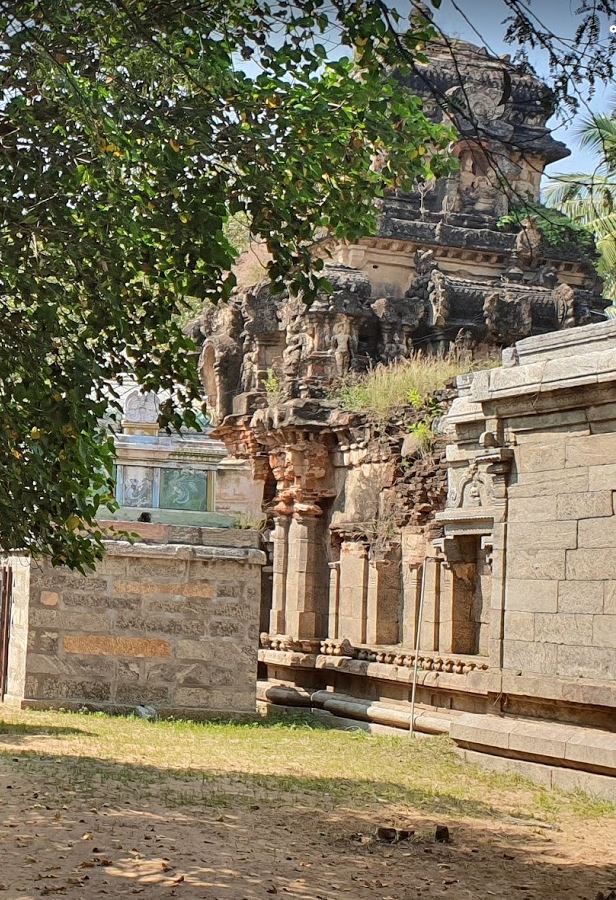
Agatheeswarar Temple, Karur
Agatheeswarar Temple in Thirumukkudalur, Karur district, is an ancient Hindu shrine dedicated to Shiva, situated at the sacred confluence of three rivers and believed to be over 1000 years old.
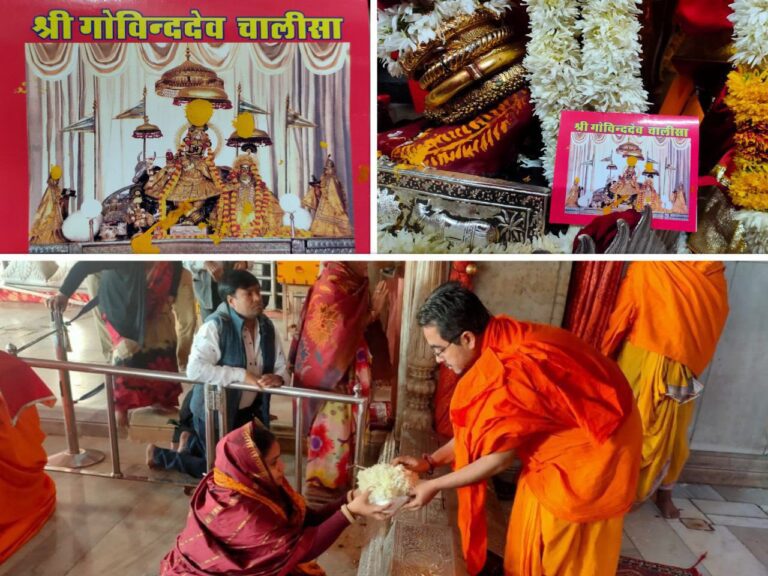
Kalyanji Temple
Kalyanji Temple in Jaipur's Chandpol Bazaar is an ancient Krishna shrine established in the 1820s, renowned for its seven daily aartis and special avatar darshan ceremonies during Akha Teej and Patottsav festivals.
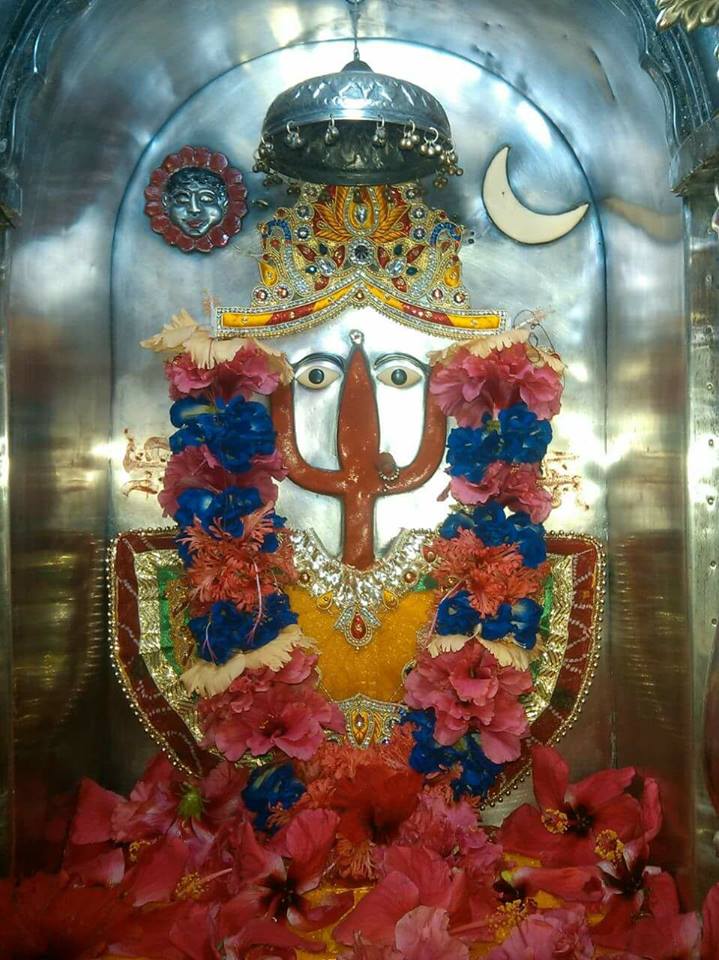
Rani Sati Mandir Mahuda
Rani Sati Mandir in Mahuda, Dhanbad District, is a Hindu temple established in 1992 that serves as a spiritual center for the local community and attracts devotees seeking blessings.