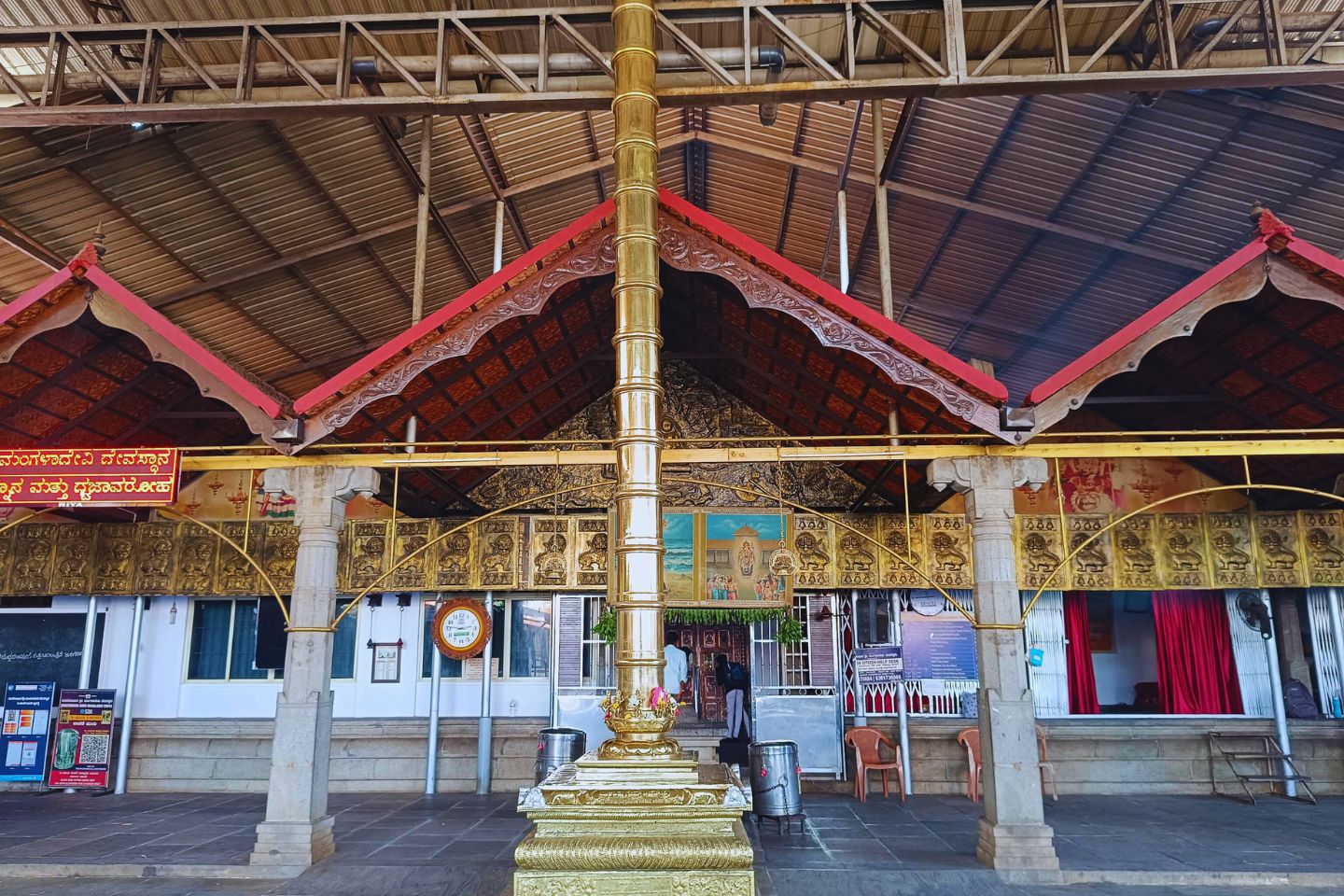
Mangla Devi Temple
About Mangla Devi Temple
The temple is believed to date to the 9th century. According to one account, it was built during this period by Kundavarman, a notable king of the Alupa dynasty, under the patronage of Matsyendranath. An alternative tradition attributes the temple's original construction to Parashurama, one of the ten avatars of Vishnu, with later expansion undertaken by Kundavarman. The temple thus carries the weight of over a thousand years of continuous worship and devotion, making it a site of considerable antiquity within the region.
Daily Worship and Rituals
The temple maintains a structured daily schedule of worship. Morning puja begins at 6:00 am, followed by an afternoon puja at 1:00 pm and an evening aarti at 8:30 pm. The temple is open Monday through Thursday from 6:00 am to 1:00 pm and again from 4:00 pm to 8:30 pm. On Fridays, the evening hours extend to 9:00 pm, while Saturday and Sunday follow the weekday evening schedule. These regular rituals form the rhythm of devotional life at the shrine.
Beyond daily worship, the temple observes special observances. On the first Friday of each month, a public Satyanarayana puja takes place at noon. Every Friday also features annadhana—a food offering—from 12:45 pm to 2:30 pm, through which the temple extends hospitality to visiting devotees and the community.
Festivals and Auspicious Times
The annual Jathra festival represents the most significant celebration in the temple's calendar, drawing substantial numbers of devotees and forming the centrepiece of the temple's festive year. Navaratri, the nine-day festival honouring the goddess in her various forms, is an especially auspicious period for worship at Shakta temples. During these nine days, the temple experiences heightened devotional activity, and this festival period is considered an ideal time for a visit, as the spiritual atmosphere becomes particularly concentrated.
Temple Layout and Facilities
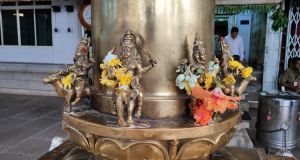
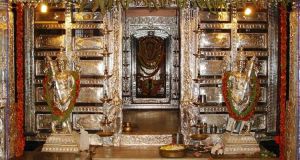
The temple complex contains multiple shrines serving different aspects of worship. The main Mangaladevi Sannidhi houses the primary deity. Additional sanctums are dedicated to Mahaganapathi, Swayamvara Parvathi, and Naga deities, providing spaces for the worship of other divine forms. The temple management has undertaken development initiatives to better serve visiting devotees. Plans are underway for a multi-utility dining and programme hall, designed to accommodate those attending ceremonies, weddings, and cultural events at the shrine.
Location and Access
The temple is situated on Mangaladevi Road in the Bolar area of Mangalore, approximately three kilometres southwest of the city centre. This location places it within reasonable reach of the city while maintaining its distinct sacred character. The specific coordinates are 27.093888888889, 76.290555555556, which may assist those using navigation tools to locate the shrine.
Visiting Practicalities
Visitors should note the temple's operating hours, which vary slightly by day of the week. The temple follows the conventions typical of Hindu shrines: devotees should dress modestly and remove footwear before entering the sanctum. As this is an active place of worship, visitors are expected to maintain respectful behaviour and follow any guidance offered by temple staff. Those wishing to participate in special pujas or attend ceremonies should inquire at the temple office regarding procedures and any associated offerings or donations.
How to reach
Temples near Mangla Devi Temple
Hanuman Temple
Shree Hanuman Mandir on Picket Road in Mumbai is dedicated to Lord Hanuman in his south-facing form, welcoming devotees with daily aartis and oil offerings.
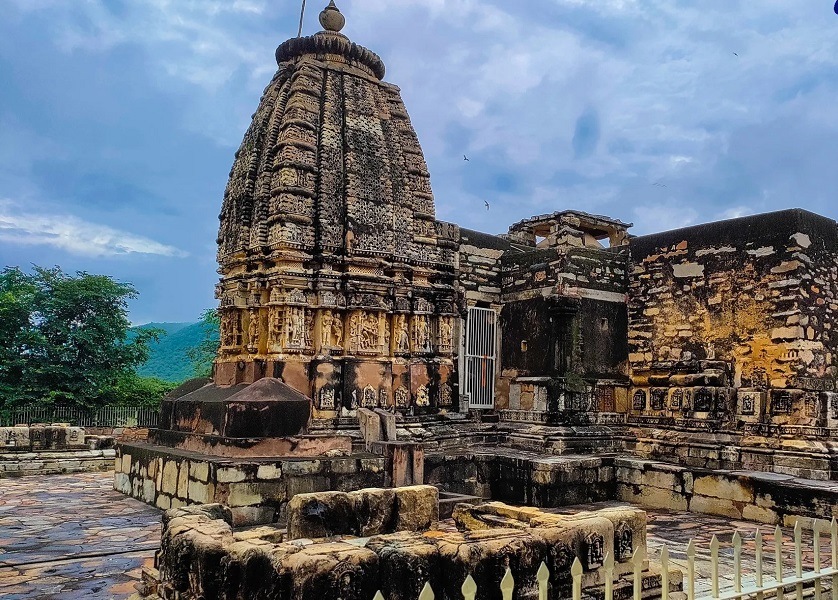
Neelkanth temple, Alwar district
Neelkanth Mahadev Temple is an ancient Shiva shrine perched on an isolated hilltop within Sariska Tiger Reserve, built during the Gurjara-Pratihara era and surrounded by ruins o…
Galtaji
Galtaji Temple, known as the Monkey Temple, is a sacred pilgrimage complex nestled in the Aravalli hills near Jaipur, featuring multiple shrines, natural spring-fed kunds, and a…

Harshat Mata Temple
Harshat Mata Temple in Abhaneri village, Rajasthan, is an 8th-century Hindu shrine dedicated to the Goddess of Joy, featuring intricate medieval carvings and Panchayatan archite…
Arya College Mandir
Arya College Mandir in Jaipur is an Arya Samaj temple established in 1727, located near an educational institution in the Kuaks area. The temple emphasizes Vedic worship princip…
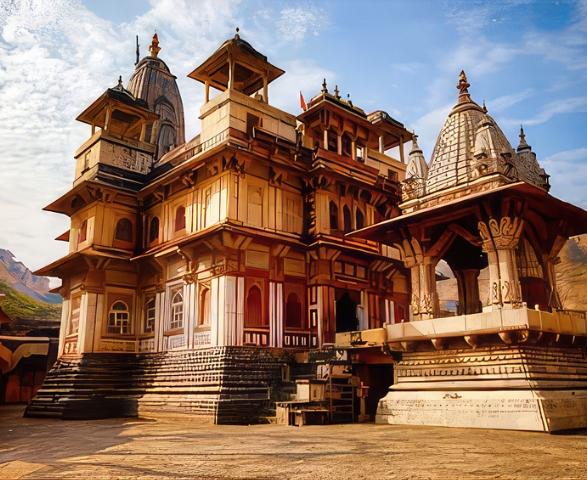
Jagat Shiromani Temple, Amer
Jagat Shiromani Temple is a 17th-century shrine in Amer dedicated to Lord Krishna, Vishnu, and the poet-saint Meera Bai, built by Queen Kanakawati in memory of her son Jagat Singh.