Karaikal Ammaiyar Temple
About Karaikal Ammaiyar Temple
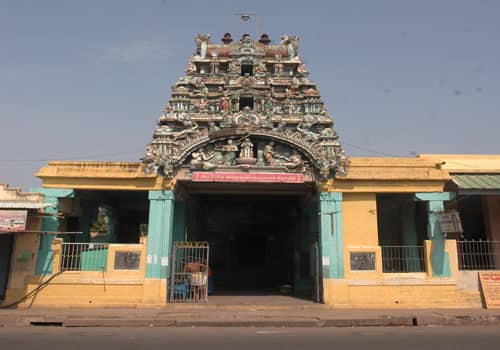
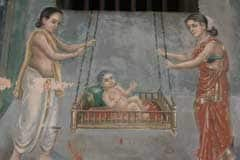
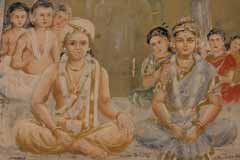
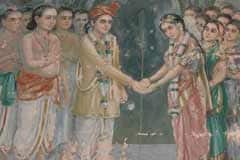
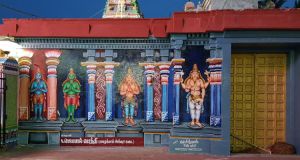
The temple was established in 1929 at the site where Karaikal Ammaiyar is believed to have lived. The structure features a three-tiered gopuram and maintains two distinct entrances, one serving the shrine of Karaikal Ammaiyar and the other the shrine of Lord Shiva. The temple complex includes a Dhwaja Stambham (flag tower), Bali Peetam (altar), and Nandi Mandapam facing the main shrine. Beyond the primary sanctums, the temple houses sub-shrines dedicated to Ganesha, Nataraj with Shivakami, Gaja Lakshmi, Surya, and Chandra, among others. The walls of Karaikal Ammaiyar's shrine bear painted depictions of episodes from her life, while the main shrine displays carved images of Ganesha, Dakshinamurti, and Lingodbhava.
The Legend of the Mangoes
Karaikal Ammaiyar's story centres on an act of spontaneous charity that revealed her divine nature. According to temple tradition, her husband Paramadutta received two mangoes from a Shiva devotee. When a wandering ascetic—Lord Shiva in disguise—came seeking alms, Punithavathi offered one mango without hesitation. She later served the remaining mango to her husband, who found it exceptionally sweet and asked for the second. Rather than disappoint him, Punithavathi prayed to Lord Shiva, and a mango miraculously appeared in her hands. When Paramadutta tasted this second mango and found it even sweeter, she revealed the truth. Recognizing her divine nature, Paramadutta chose to leave her. Punithavathi then prayed to Lord Shiva to strip away her beauty and youth, a request he granted. She subsequently undertook a pilgrimage to Mount Kailash, where Lord Shiva received her with the honorific "Ammaiye"—mother—acknowledging her spiritual stature.
Worship and Offerings
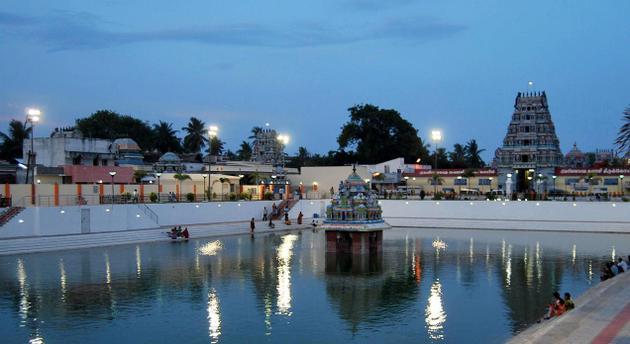
Devotees visiting this temple participate in worship practices rooted in Shaivite tradition. A distinctive offering at Karaikal Ammaiyar Temple is mango naivedyam (consecrated fruit), which connects directly to the legend of the mangoes and Punithavathi's act of selfless giving. The temple's setting includes a small park surrounding the shrine, which serves both as a devotional space and as a place for evening walks, reflecting the temple's integration into the daily life of the Karaikal community.
Festivals and Observances
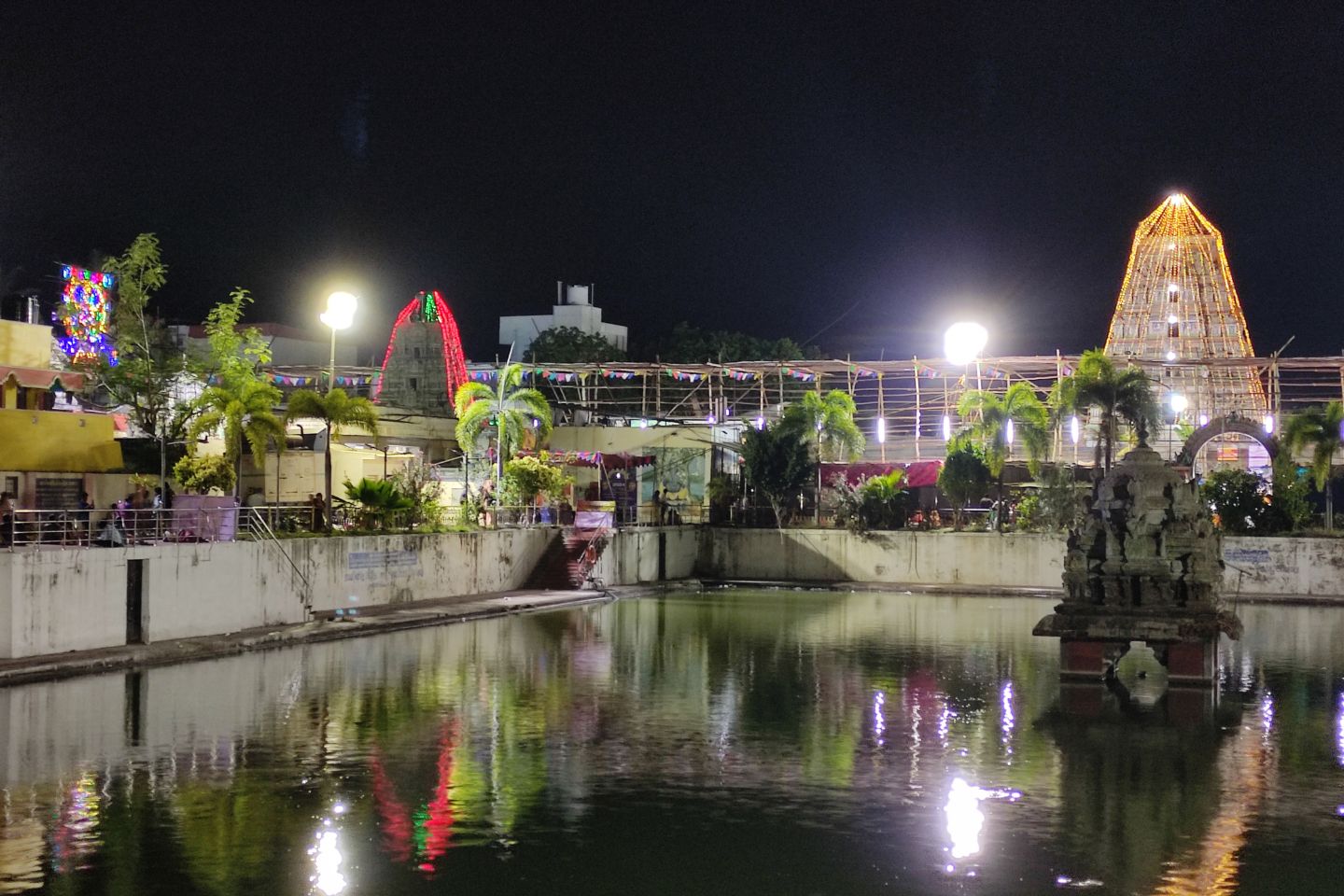
The temple observes two significant celebrations. The Mangani Tirunal festival takes place during the Aani month (June-July), honouring the mango miracle central to Karaikal Ammaiyar's story. The Kailash journey celebration occurs during Panguni (March-April), commemorating her pilgrimage to Mount Kailash and her meeting with Lord Shiva. These festivals draw devotees seeking blessings and connection to the saint's spiritual legacy.
Visiting Information
The temple is open daily from 6:00 AM to 9:00 PM and welcomes visitors without entry fees. It is located on Bharathiar Street in central Karaikal, approximately 1.5 kilometres from Karaikal Railway Station and roughly 130 kilometres from Pondicherry city centre. Visitors can reach the temple by cab or auto-rickshaw from the railway station. As a functioning Hindu temple, standard etiquette applies: remove footwear before entering shrines, maintain respectful behaviour, and dress modestly. The temple's central location makes it accessible for those exploring Karaikal's religious and cultural sites.
How to reach
You may also visit
Agatheeswarar Temple, Karur
Agatheeswarar Temple in Thirumukkudalur, Karur district, is an ancient Hindu shrine dedicated to Shiva, situated at the sacred confluence of three rivers and believed to be over 1000 years old.
Kalyanji Temple
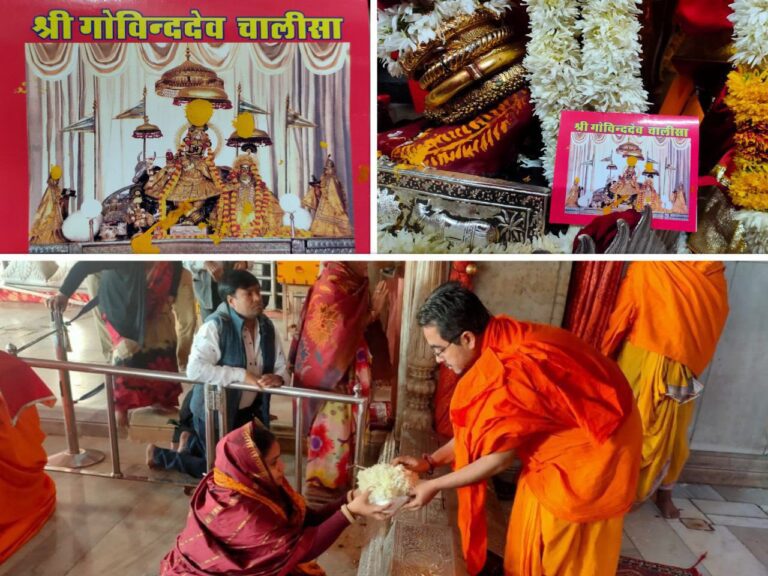
Kalyanji Temple in Jaipur's Chandpol Bazaar is an ancient Krishna shrine established in the 1820s, renowned for its seven daily aartis and special avatar darshan ceremonies during Akha Teej and Patottsav festivals.
Rani Sati Mandir Mahuda
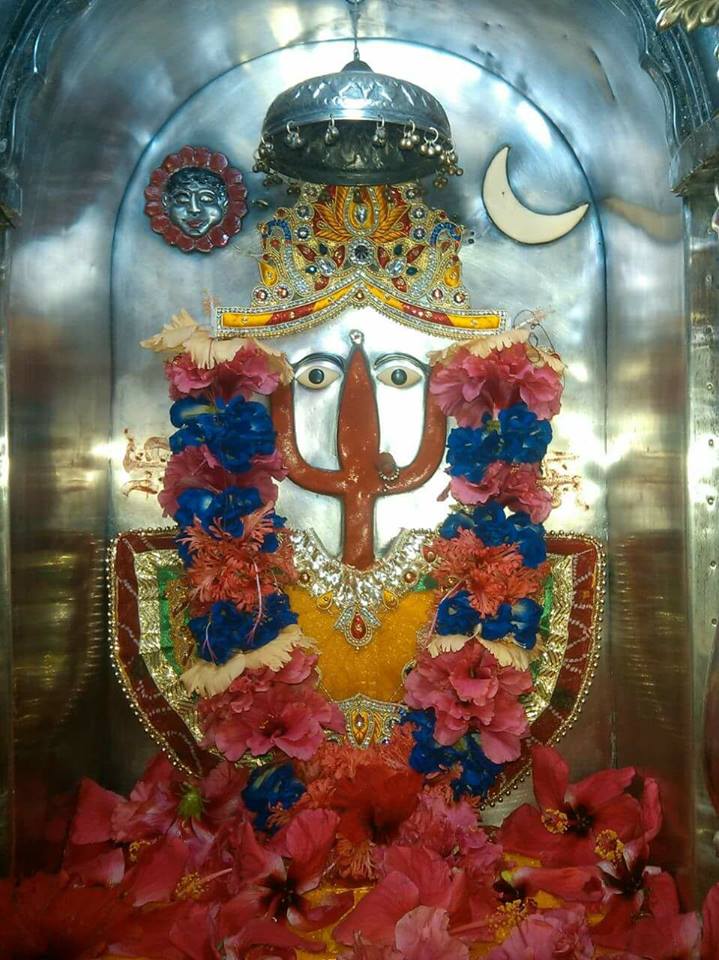
Rani Sati Mandir in Mahuda, Dhanbad District, is a Hindu temple established in 1992 that serves as a spiritual center for the local community and attracts devotees seeking blessings.