Erawan Shrine
About Erawan Shrine
The Erawan Shrine was established in the 1950s. Beyond this founding period, the sources do not provide detailed historical accounts of its construction or the circumstances that led to its establishment in this particular Bangkok location. What is clear is that it has become one of Thailand's most revered shrines, drawing worshippers throughout the year and serving as a focal point for merit-making and prayer across multiple faith communities in Bangkok.
Daily Worship and Offerings
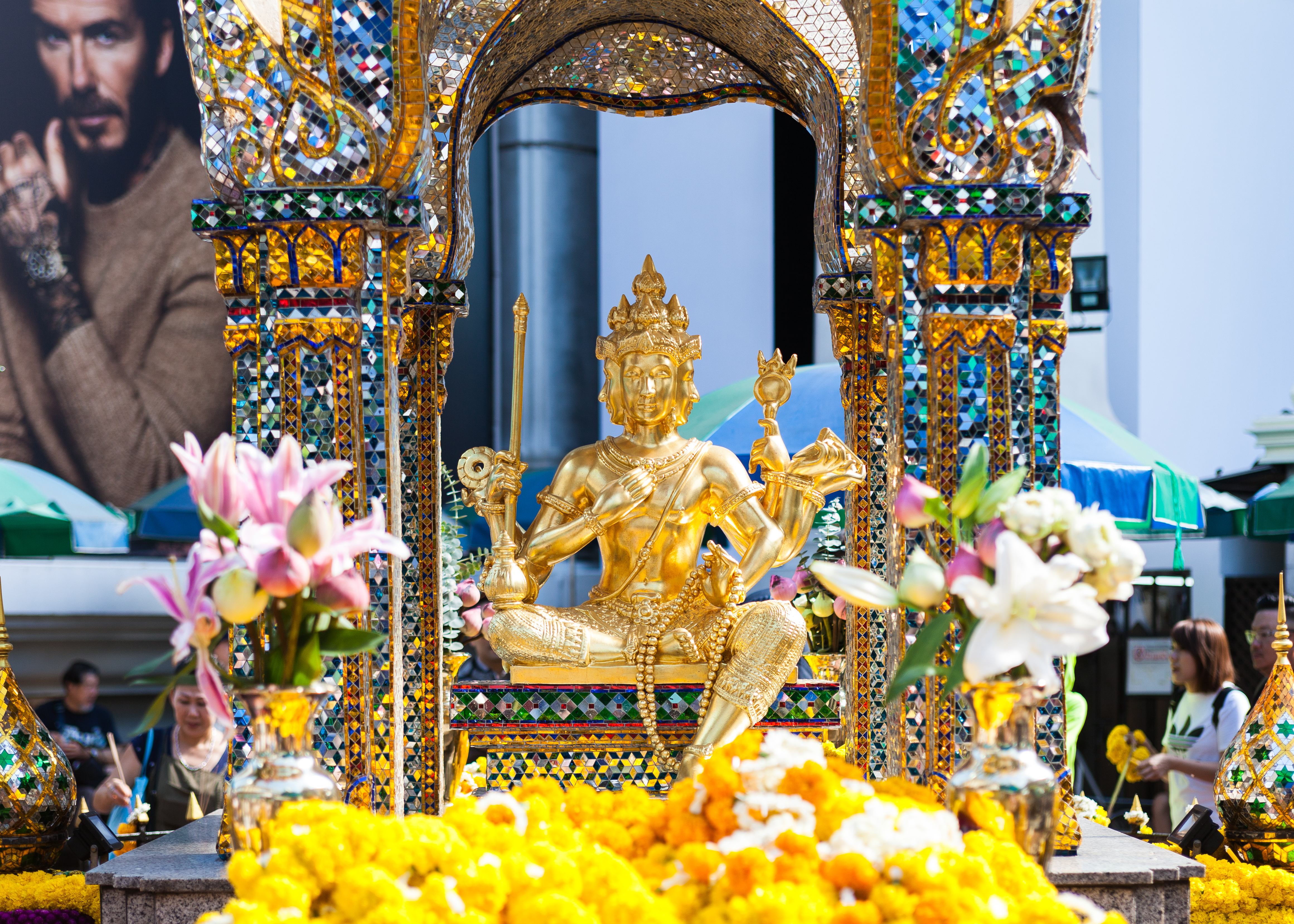
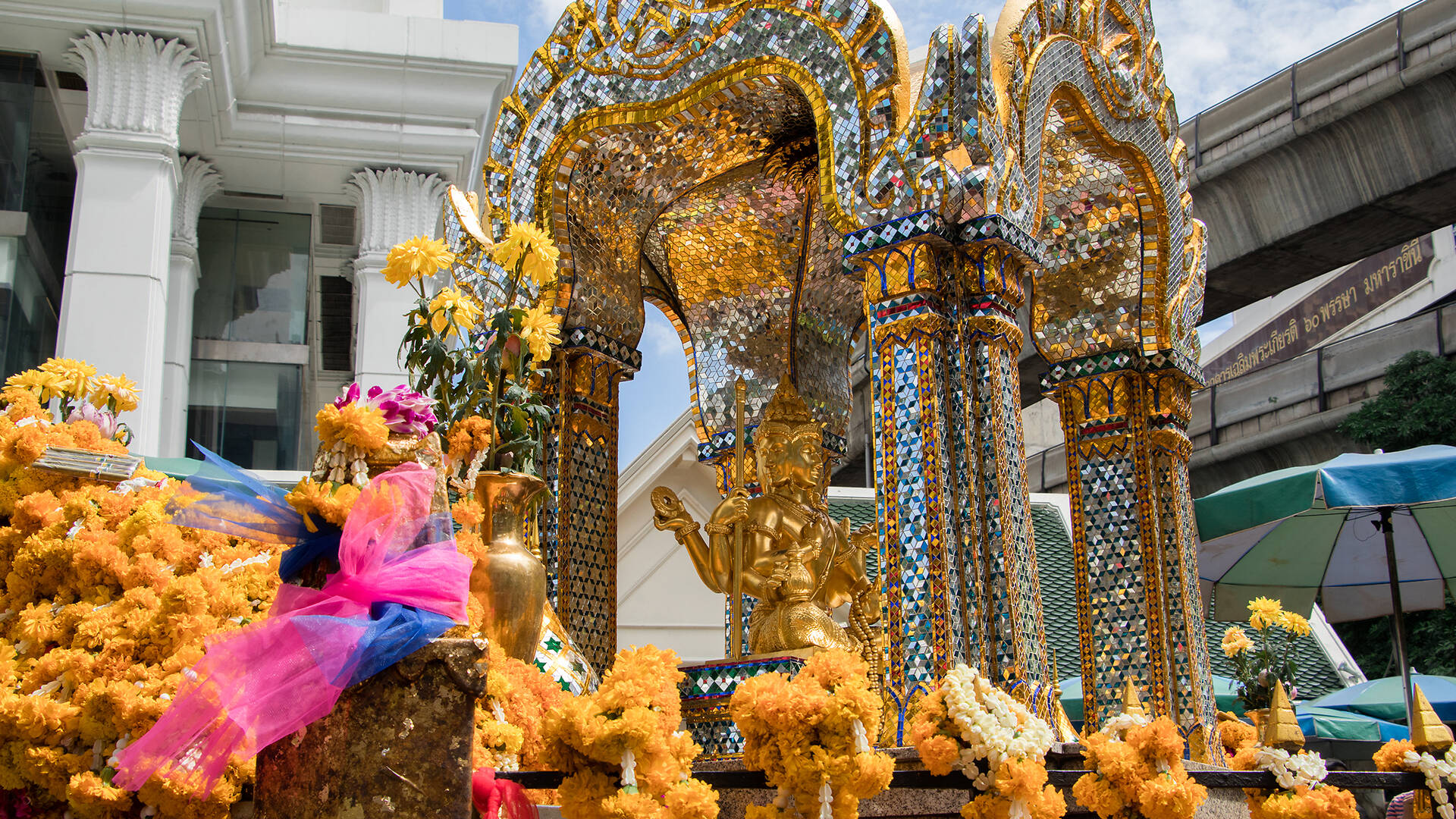
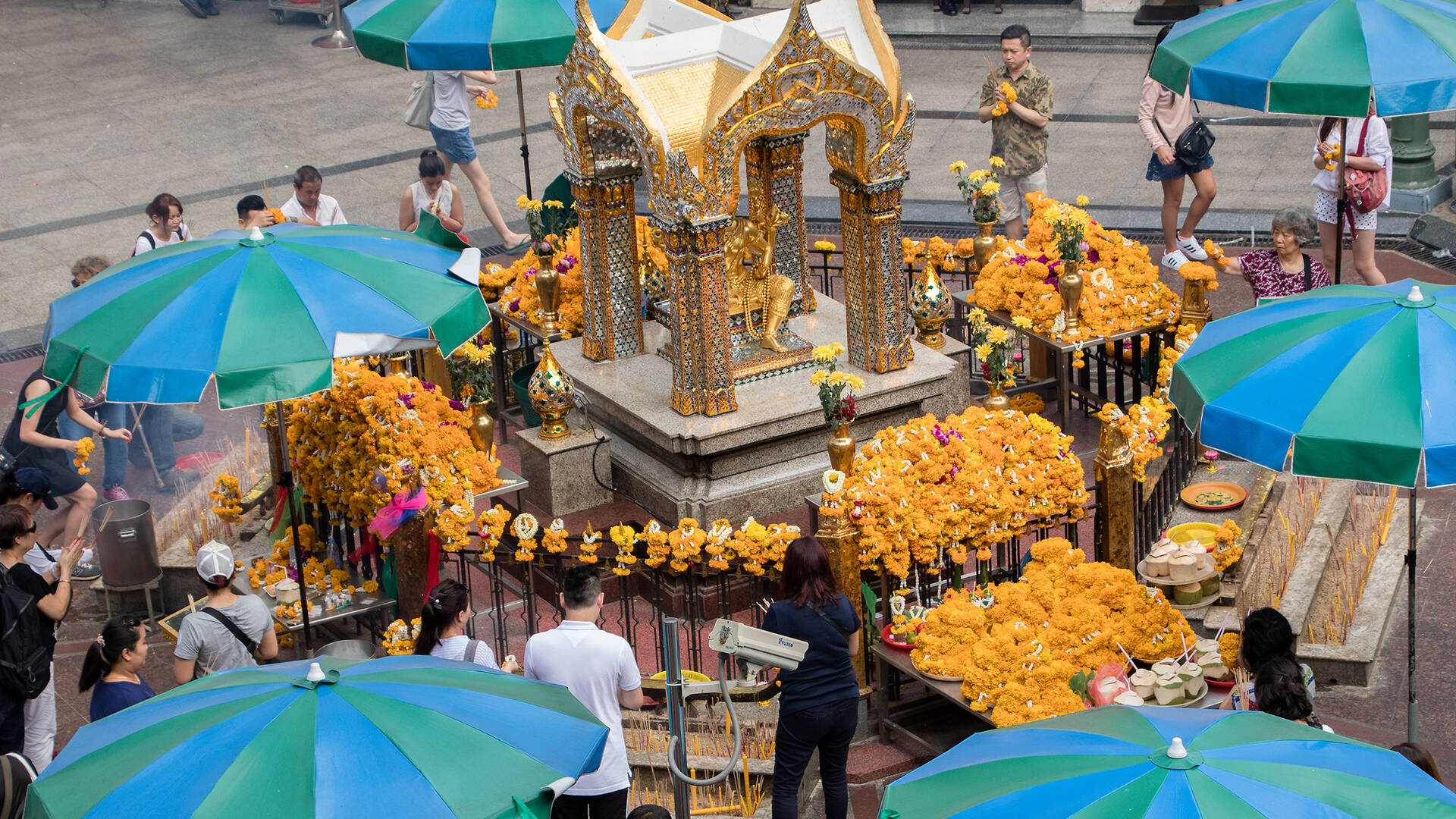
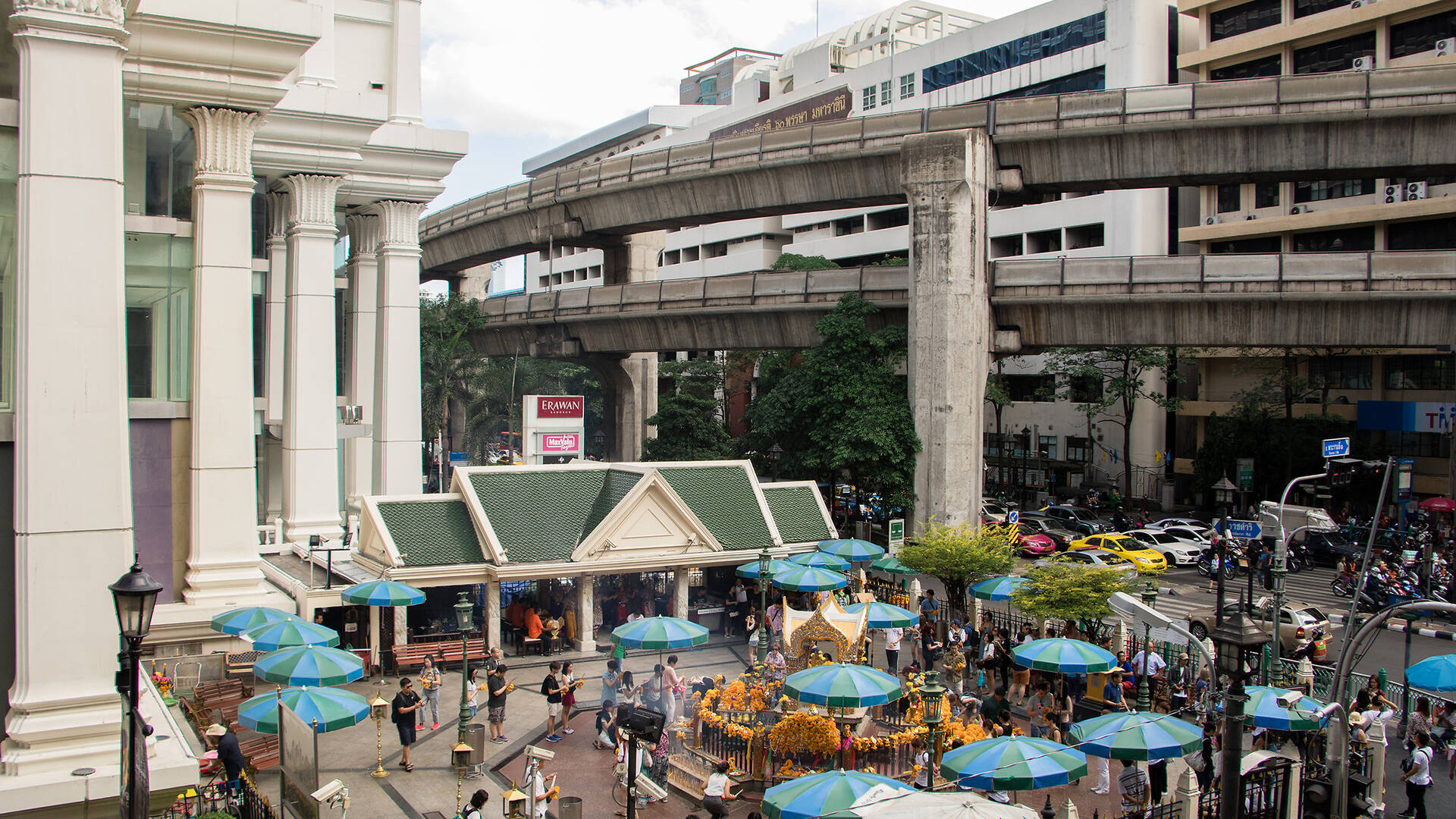
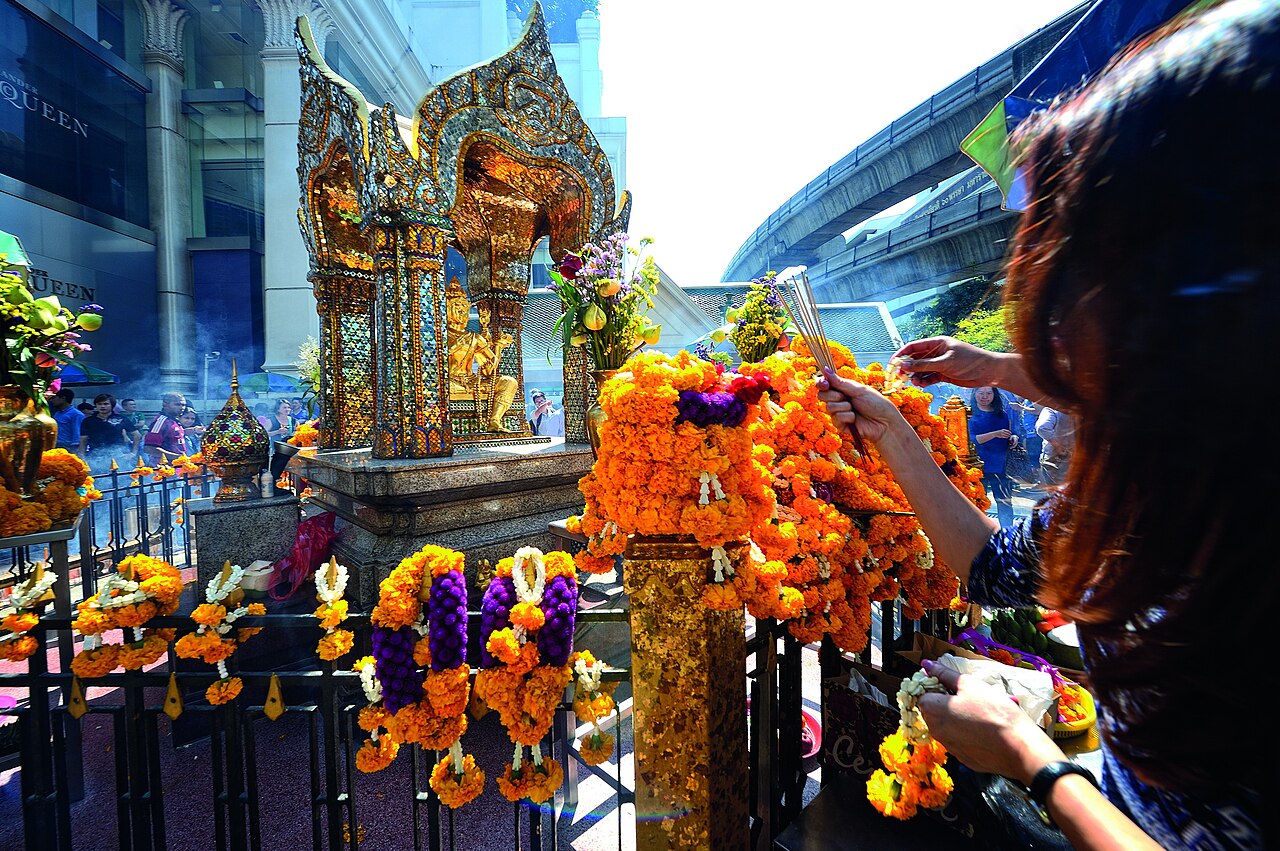
The shrine observes two formal offering times each day: a morning offering at 06:00 and an evening offering at 19:00. Devotees approach the shrine with garlands—particularly marigolds and lotus flowers—along with incense and candles, directing their offerings to the four faces of Brahma. This practice of floral and aromatic offering is typical of Hindu and Thai Buddhist devotional practice at shrines dedicated to Brahma.
A distinctive feature of worship here is the commissioning of classical Thai dance performances. When devotees' prayers are answered, they often hire the resident dance troupe to perform traditional Thai dance with accompanying music before the shrine as an act of thanksgiving. Small carved wooden elephants are also placed as votive offerings, connecting the physical act of giving to the mythological association between Erawan and Brahma.
Festivals and Busy Seasons
The shrine's anniversary, marked in November, draws particularly large crowds for special merit-making ceremonies, music, and thanksgiving offerings. The Thai New Year (Songkran) in April brings additional worshippers seeking blessings for the year ahead, while Bangkok's Thai-Chinese community swells the shrine's numbers during Chinese New Year in January or February, when offerings and dance performances intensify.
The shrine remains open and active throughout the year, operating from midnight to midnight daily. However, visitor experience varies considerably by season and time of day. November through February offers cooler weather, making the open-air setting more comfortable for extended visits. Early mornings and non-festival weekdays tend to be quieter, allowing for more contemplative darshan, while festival periods and evening hours draw substantial crowds.
Visiting Practicalities
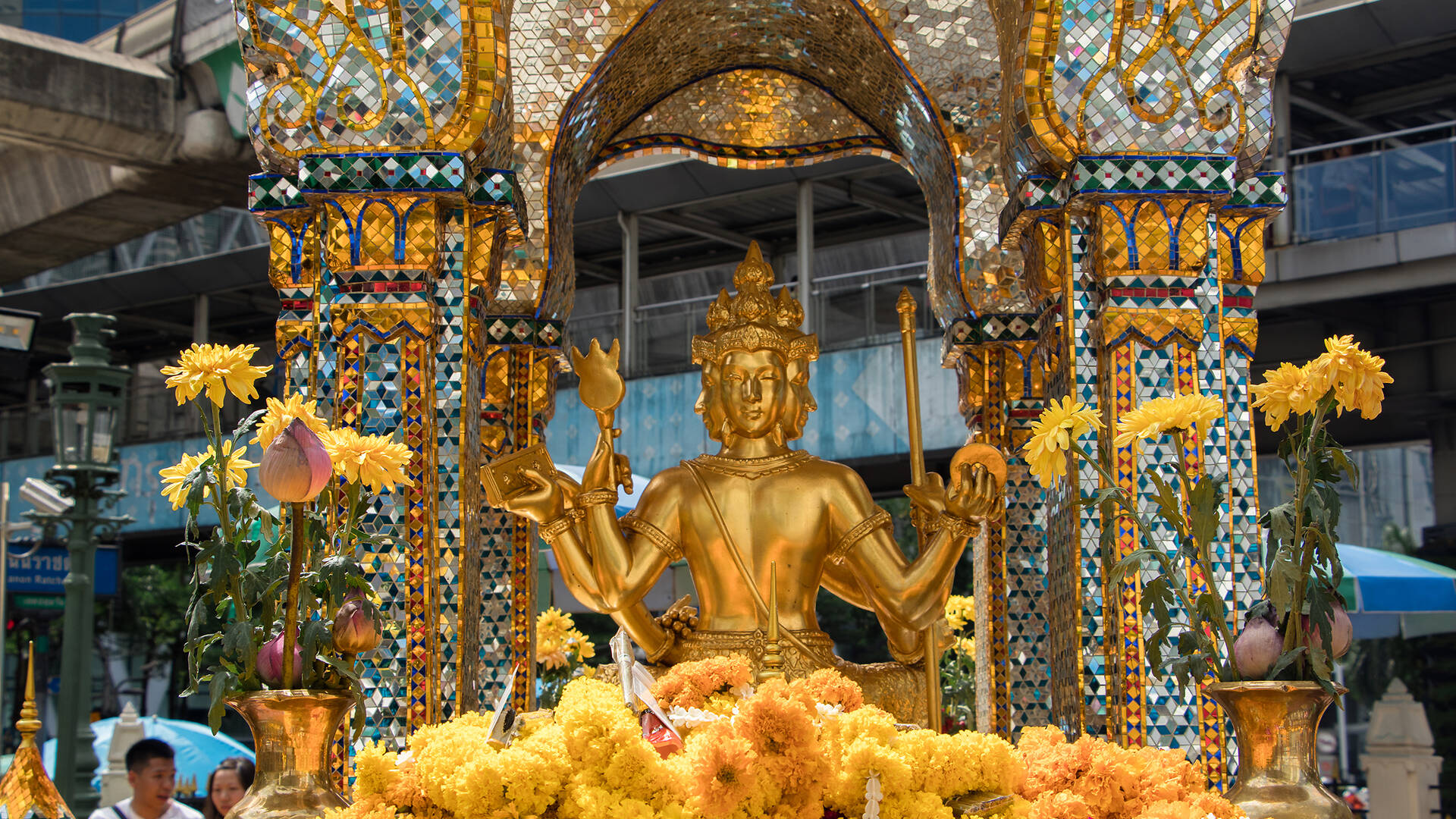
The shrine is most easily reached via the BTS Skytrain to Chit Lom station, which is steps away at the Ratchaprasong intersection. Suvarnabhumi Airport lies approximately 30 km away, while Don Muang Airport is about 25 km distant; the Skytrain provides the most convenient onward journey to the shrine.
Visitors should dress modestly and respectfully. As the shrine is open-air, footwear remains on, but comportment should be reverent in the presence of active worshippers. The shrine's round-the-clock opening means visitors can approach at any hour, though the experience and atmosphere differ markedly between peak and quieter times. Those wishing to participate in offerings can purchase garlands and incense near the shrine.
Nearby Temples
The Sri Maha Mariamman Temple (Wat Khaek), located approximately 3 km away, offers an opportunity to extend a pilgrimage to include another significant Hindu place of worship in Bangkok. Combining darshan at multiple temples is a common practice for devotees visiting the city.
How to reach
You may also visit
Agatheeswarar Temple, Karur
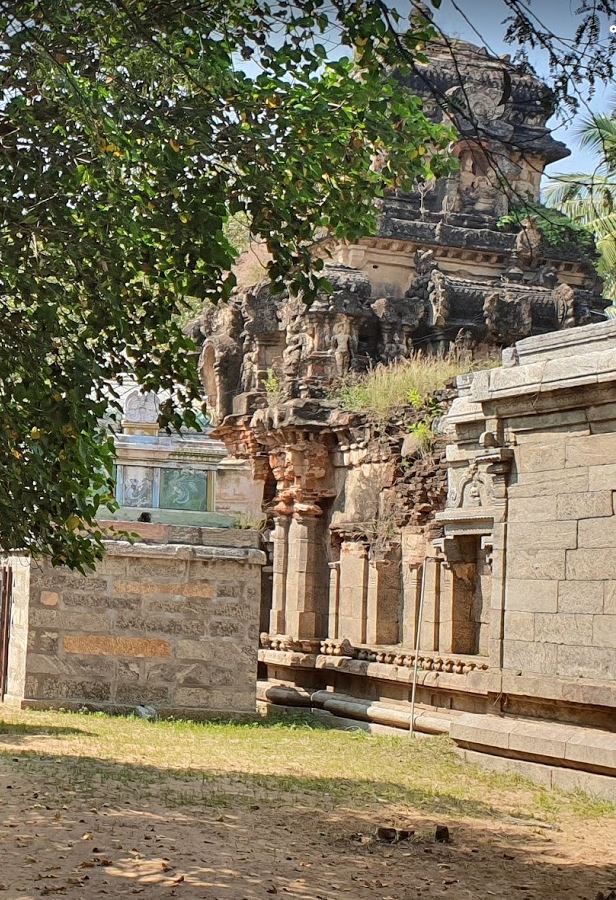
Agatheeswarar Temple in Thirumukkudalur, Karur district, is an ancient Hindu shrine dedicated to Shiva, situated at the sacred confluence of three rivers and believed to be over 1000 years old.
Kalyanji Temple
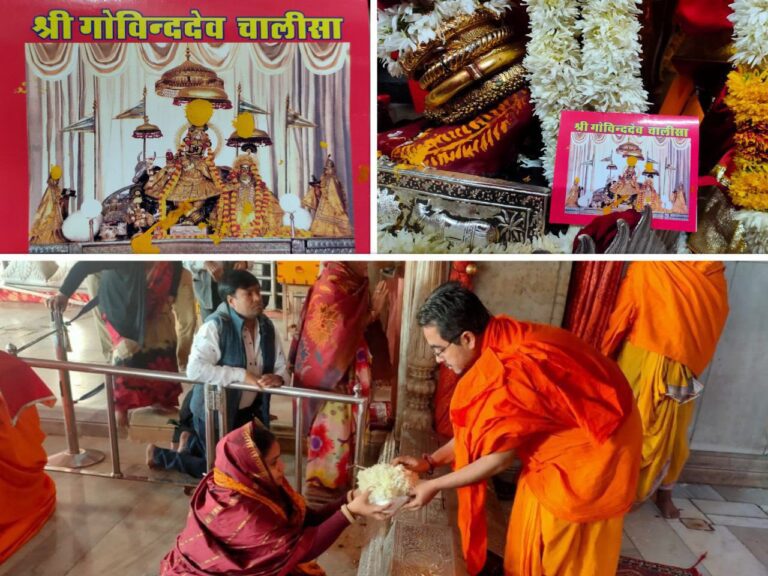
Kalyanji Temple in Jaipur's Chandpol Bazaar is an ancient Krishna shrine established in the 1820s, renowned for its seven daily aartis and special avatar darshan ceremonies during Akha Teej and Patottsav festivals.
Rani Sati Mandir Mahuda
Rani Sati Mandir in Mahuda, Dhanbad District, is a Hindu temple established in 1992 that serves as a spiritual center for the local community and attracts devotees seeking blessings.